The landscape of New York Fashion Week has long served as a high-stakes arena for avant-garde experimentation, commercial strategy, and cultural commentary. Yet, amidst the relentless pacing of the global fashion calendar, few designers maintain a creative trajectory as deeply rooted in community and socio-political inclusivity as Rio Uribe. On September 11, at The Lighthouse in Brooklyn, Uribe marked a triumphant return to the official New York Fashion Week schedule with his brand RIO—formerly known as Gypsy Sport—to unveil the Spring/Summer 2027 collection. Titled “HORIZONS,” the presentation was far more than a seasonal fashion show; it was a meditation on architecture, botany, sustainability, and the perennial cycle of creative rebirth.
Drawing inspiration from the striking imagery of a pink house in Mexico framed against an expansive blue sky, Uribe anchored his latest collection in the modernist legacy of legendary Mexican architect Luis Barragán. By translating Barragán’s mastery of sacred geometry, light, and saturated color into textile form, the designer delivered a profound exploration of how the built environment intersects with the natural world. Through a rigorous process of material innovation, community collaboration, and thoughtful garment construction, “HORIZONS” positioned itself as one of the most intellectually coherent and environmentally conscious presentations of the season, offering a much-needed breath of optimism to an industry frequently paralyzed by cyclical fatigue.
Architectural Foundations and the Barragán Influence
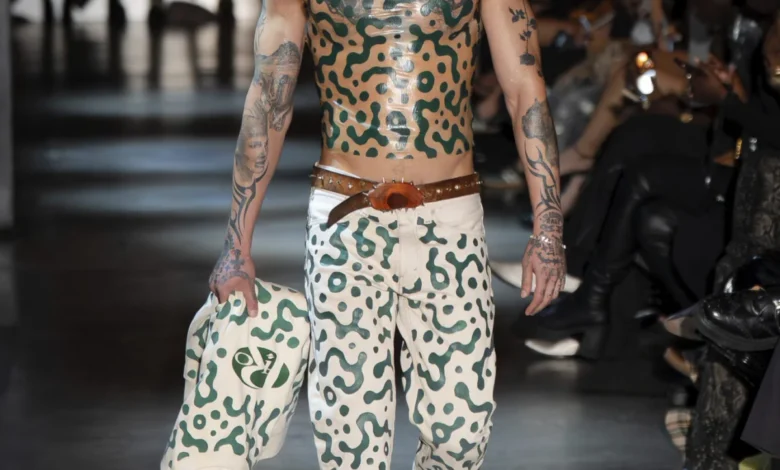
The genesis of RIO SS27 can be traced directly to the visual philosophy of Luis Barragán, whose architectural works are celebrated for their emotional use of color, minimalist planes, and harmonious integration with natural landscapes. For Uribe, Barragán’s distinct aesthetic provided a rich vocabulary to explore the emotional resonance of space and color. This influence manifested immediately in the collection’s vivid and sun-wrenched palette. Sun-faded pinks, deep cyan indigos, and lush succulent greens dominated the runway, capturing both the architectural warmth of Barragán’s structures and the diverse flora native to Mexico.
Rather than treating these architectural references as mere surface ornamentation, Uribe integrated them into the very structural integrity of the garments. The silhouettes themselves looked toward the natural world for cues, pulling inspiration from the complex geometries of flowers and carnivorous plants. These organic shapes were seamlessly woven into RIO’s signature lexicon of gender-fluid sportswear and artisanal construction. The resulting pieces blurred the lines between hard architectural lines and soft botanical contours, challenging conventional tailoring norms while maintaining a high degree of commercial wearability and sculptural elegance.
Botanical Alchemy and Radical Sustainability
Sustainability has long been a foundational pillar of Uribe’s design philosophy, evolving from early iterations of upcycling during the Gypsy Sport era into a sophisticated methodology of ecological stewardship. With “HORIZONS,” RIO expanded the sustainability conversation far beyond standard industry practices, treating garment production as an intimate collaboration with the natural world rather than an extraction from it.
The collection featured blue botanical cyanotypes that were individually printed by hand, capturing delicate plant forms directly onto photographic textiles. This artisanal approach ensured that no two prints were identical, celebrating the inherent imperfections of nature. Furthermore, the commitment to eco-friendly production extended to the dyeing process: shirting and denim were naturally dyed using organic materials such as beets and berries, yielding rich, earthy tones that evolved gracefully across the fabric.
In keeping with a zero-waste ethos, structural accessories were crafted from industrial leftovers. Repurposed wood and aluminum salvaged from previous operational projects were meticulously transformed into striking statement jewelry, demonstrating that utility and luxury can coexist without generating new environmental burdens. By closing the loop on material lifecycles, Uribe positioned RIO as a brand that not only critiques the environmental toll of traditional fashion manufacturing but actively models a viable alternative.
The Chronology of Creation: From Community to Runway
The development of the RIO SS27 collection broke away from traditional, isolated fashion week production models by embedding community engagement into every phase of the creative timeline. The journey toward the September 11 showcase at The Lighthouse in Brooklyn began months prior, transforming the venue from a simple exhibition space into a dynamic creative incubator.
Unlike traditional design houses that develop collections behind closed doors in elite ateliers, RIO utilized The Lighthouse as a centralized hub for open model castings, collaborative fittings, and intimate industry previews. This inclusive developmental timeline fostered a deep sense of shared ownership among the models, artisans, technicians, and creatives who brought the collection to life. When the collection finally debuted on the runway, the presentation felt less like a fleeting commercial spectacle and more like the living, breathing culmination of a collective artistic journey.
This community-centric approach has been a hallmark of Uribe’s career since he founded Gypsy Sport in 2013. Over the past decade, the independent fashion house has steadily built a reputation for championing diversity, representation, and artisanal craftsmanship long before such values became industry buzzwords. Uribe’s trailblazing perspective has earned widespread critical acclaim, most notably winning the prestigious CFDA/Vogue Fashion Fund in 2016 and subsequently earning induction into the Council of Fashion Designers of America in 2022. The SS27 presentation served as a testament to the brand’s resilience and its ability to continually reinvent itself while staying true to its core ethos.
Industry Implications and the Power of Optimism
The unveiling of “HORIZONS” arrives at a critical juncture for the global fashion industry, which is currently grappling with economic headwinds, shifting consumer values, and existential questions regarding overproduction and creative burnout. Within this climate, Uribe’s focus on cycles of creation, transformation, and rebirth offers a valuable analytical lens through which to view the current state of independent design.
Fashion, much like nature, experiences distinct periods of abundance and drought. Creative ideas emerge, saturate the cultural consciousness, disappear, and eventually return in mutated, evolved forms. For Uribe, the Spring/Summer 2027 season captures a vital inflection point—a moment when inspiration feels palpably renewed and an extended period of sustainable creative growth appears attainable. By focusing on rejuvenation rather than replication, RIO has demonstrated how independent labels can navigate industry volatility through authenticity and intellectual rigor.
Moreover, the overarching theme of optimism embedded within the collection addresses a growing psychological demand among contemporary consumers. In an era dominated by socio-political uncertainty and environmental anxiety, fashion consumers increasingly seek brands that offer emotional resonance alongside aesthetic value. A horizon, by definition, represents a destination that can be seen on the edge of perception but has not yet been reached. For Uribe, that spatial and temporal distance is not a barrier, but an invitation to keep moving forward.
As RIO steps resolutely toward the light, the brand’s SS27 outing serves as a powerful reminder of fashion’s capacity to inspire hope, foster true community, and reimagine the relationship between humanity and the natural environment. Through meticulous craftsmanship, botanical alchemy, and an unwavering commitment to inclusive storytelling, Rio Uribe has once again expanded the boundaries of contemporary design, leaving an indelible mark on the New York Fashion Week calendar and setting a high benchmark for the future of sustainable luxury.