The enduring legacy of George Frideric Handel’s 1742 masterwork, Messiah, continues to inspire new iterations in the classical recording landscape, which currently features well over 150 competing interpretations. For many dedicated collectors, the benchmark for period-instrument performance of the sacred oratorio remains the legendary 1983 Philips recording featuring the Monteverdi Choir and the English Baroque Soloists under the baton of John Eliot Gardiner. That landmark release fundamentally transformed audience expectations, shattering long-held performance traditions established by mid-20th-century monumental readings under conductors like Leonard Bernstein and Eugene Ormandy. Listeners were galvanized by Gardiner’s electric tempos, vibrant orchestral colors, and acute theatricality.
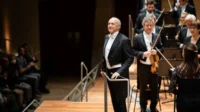
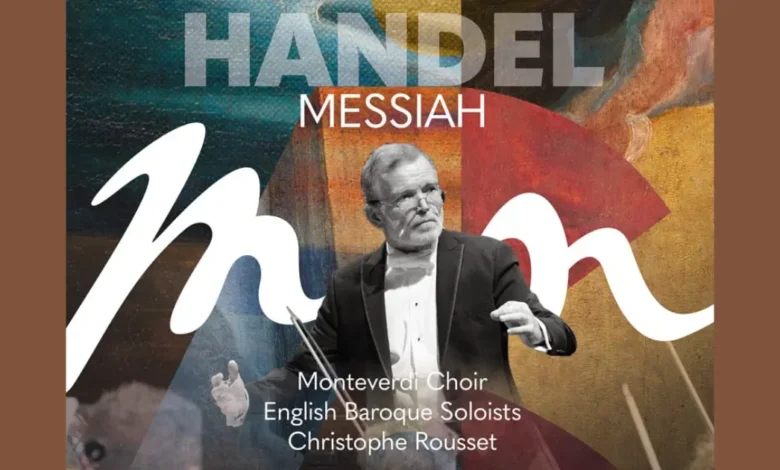
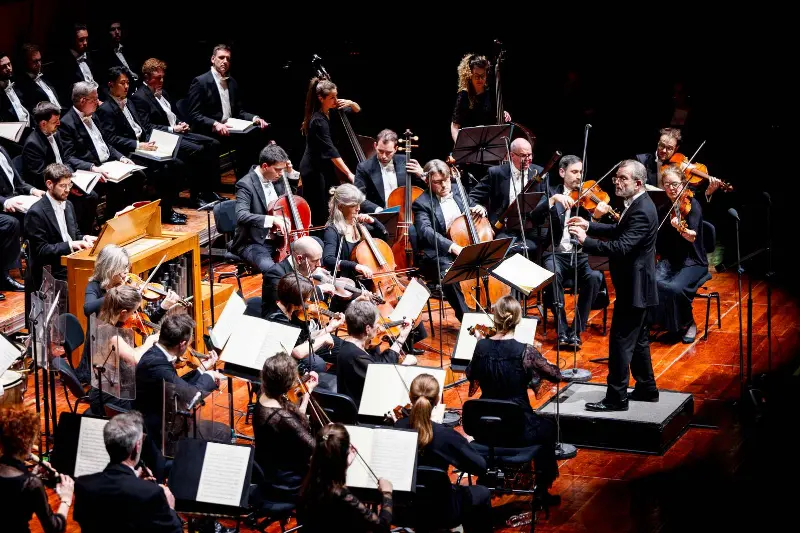
Entering this crowded and prestigious recorded history, a new collaborative release from Harmonia Mundi presents the Monteverdi Choir and the English Baroque Soloists performing Messiah under the direction of French harpsichordist and conductor Christophe Rousset. Recorded following live performances—including an acclaimed presentation at the Auditorium Parco della Musica in Rome in December 2025—the album marks a significant chapter for these renowned ensembles as they embark on a fresh partnership with Harmonia Mundi, moving away from their historical association with the Soli Deo Gloria label. Despite boasting the technical brilliance and stylistic agility of its world-class choral forces, the new recording ultimately yields an uneven artistic profile that balances moments of striking vocal splendor with interpretive limitations.
Historical Context and Performance Tradition
The theatrical DNA embedded within Messiah has long been a subject of both celebration and controversy. When the oratorio made its London debut in 1743, contemporary critics sharply objected to a sacred text being performed within a secular playhouse environment, arguing that it lacked the austere decorum demanded by the subject matter. Yet, it is precisely this dramatic heartbeat that modern period-performance ensembles seek to unlock.
The Monteverdi Choir retains the peerless technical precision and emphatic diction carefully cultivated during its decades under Gardiner’s directorship. The sheer clarity of the text and the unbridled gusto of the choral delivery powerfully heighten the dramatic nature of Charles Jennens’s libretto. However, this operatic immediacy is a double-edged sword; while contemporary audiences frequently embrace the vivid theatricality of such readings, purists and traditionalists may find the overarching aesthetic leaning toward the overly theatrical.
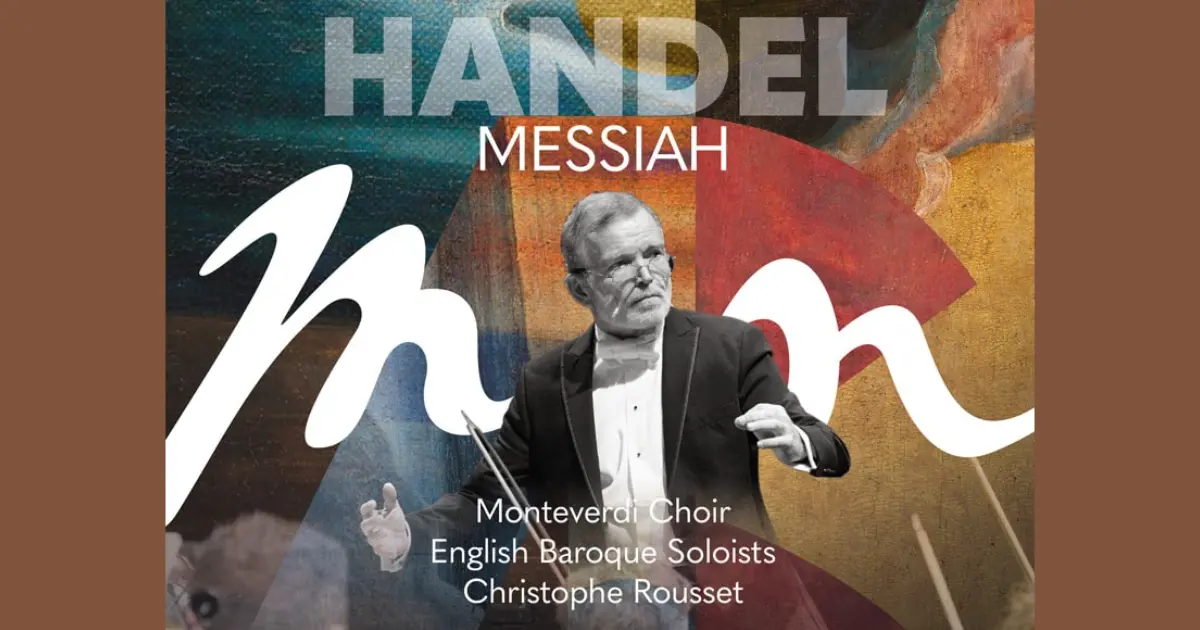
Rousset’s pacing navigates a middle ground within the broader performance history of the work. He successfully avoids the aggressively brisk tempos favored by French colleagues such as Hervé Niquet on Alpha and Marc Minkowski on DG Archiv—whose breathless tempo for the legendary Hallelujah chorus remains a polarizing touchstone. Conversely, Rousset equally steers clear of the overly reverential, expansive slowness adopted by Harry Christophers on Coro and Trevor Pinnock on DG Archiv. Under Rousset’s direction, the narrative maintains a steady momentum, with individual movements flowing seamlessly into one another.
Structural Shortcomings and Interpretive Analysis
Despite the fluidity of the performance, musicological analysis reveals a notable structural drawback. Rousset appears to demonstrate limited awareness of the tripartite architecture engineered by Handel and Jennens—a structure dividing Part I into five distinct scenes, Part II into seven, and Part III into four. Maestros such as Gardiner, Pinnock, William Christie, and Paul McCreesh have historically excelled at demarcating the distinct shape, emotional arc, and architectural gravity of each scene.
Furthermore, whereas comparative conductors typically adopt a meticulous, line-by-line approach to shaping the shifting sentiments and theological nuances of the text, Rousset frequently establishes a broad opening mood and sustains it homogeneously across entire movements. This methodological choice suggests a generalized aesthetic approach rather than a deeply individualized textual sensitivity.
Chorally, the performance incorporates several distinct ornaments—a clear nod to Rousset’s extensive musicological expertise in the French Baroque repertoire. Yet, these innovations are occasionally undercut by questionable editorial choices. Most notably, Rousset directs the choir to sing the word "us" as an eighth note rather than the historically documented quarter note in the movement For Unto Us a Child Is Born. This stylistic departure from Handel’s written score has puzzled critics and scholars alike.
Vocal Performances: Highs and Lows
The vocal soloist lineup assembled for the Harmonia Mundi release offers a mixed palette of exceptional achievements and notable shortcomings.
Soprano Ana Vieira Leite delivers a masterclass in Baroque vocal styling, emerging as the standout soloist of the recording. Her renditions of Rejoice Greatly and How Beautiful Are the Feet alternate between nimble agility and gorgeous lyricism, ensuring that the emotional and theological weight of the text is fully communicated to the listener. Furthermore, her reading of I Know That My Redeemer Liveth is taken at a notably brisk tempo yet maintains an exquisite, soaring vocal line.
Conversely, tenor Andrew Staples delivers a bifurcated performance. While his opening solos in Part I—specifically Comfort Ye and Ev’ry Valley—impress through refined tone and expressive phrasing, his work in Part II feels dramatically detached. Most notably, his delivery of Thou Shalt Break Them lacks the searing theatrical involvement required to drive the movement home. Fine as his vocalism is, it falls short of the burnished intensity brought by Anthony Rolfe Johnson on Gardiner’s recording or the benchmark brilliance of Charles Daniels on Paul McCreesh’s acclaimed DG Archiv release.
The lower registers face similar hurdles. Bass William Thomas exhibits a velvety richness in timbre, but his vocal production occasionally suffers from a woolly acoustic quality that blurs textual clarity during rapid passages. In comparison, bass Neal Davies on the McCreesh recording presents a far closer approximation of ideal Handel baritone/bass articulation.
Mezzo-soprano Sarah Connolly, an artist widely celebrated for her distinguished contributions to early music, unfortunately struggles with a persistent vocal wobble that proves distracting throughout the recording. Despite her obvious emotional investment in the sacred text, much of her melismatic singing sounds labored and cautious. This caution is particularly glaring when contrasted against the effortless vocal freedom and technical mastery she displayed in earlier benchmark oratorio recordings, such as her traversal of Handel’s Saul with Harry Christophers in 2012 and Solomon with Daniel Reuss in 2007.
Production, Packaging, and Market Implications
The transition from Soli Deo Gloria to Harmonia Mundi is also reflected in the physical and digital release formatting. Historically, recordings issued by the Monteverdi ensembles under their own label were accompanied by extensive, erudite scholarly essays, contextualizing the musicological background of each project. By contrast, this inaugural Harmonia Mundi release features a comparatively brief introductory note, though it commendably includes complete vocal texts and multi-language translations.
Catalogued under HMM 905428.29, the double-album release enters a saturated market where consumer choice is vast, spanning traditional physical media, high-resolution digital downloads, and streaming platforms such as Apple Music Classical and Presto Music.
Ultimately, Christophe Rousset’s interpretation of Handel: Messiah with the Monteverdi Choir and the English Baroque Soloists is an energetic, highly professional undertaking executed by world-class musicianship. Yet, when measured against the towering interpretive imagination, architectural clarity, and emotional depth of legendary historical predecessors, it occupies a middle tier in the pantheon of recorded Messiahs. While it offers dedicated early-music enthusiasts fine vocal moments—principally through the artistry of Ana Vieira Leite—it serves more as a testament to the enduring instrumental and choral standards of its performing forces than as a definitive rethinking of Handel’s immortal score.