Focker-In-Law Review: Ben Stiller And Robert De Niro Return In A Tired Legacy Sequel That Struggles To Justify Its Existence

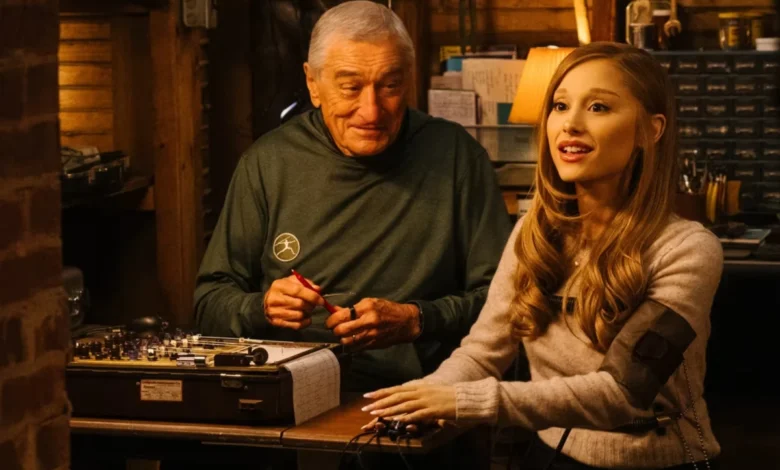
Over a quarter-century has passed since actor Ben Stiller was first strapped into a polygraph machine, sweating profusely under the intense, unblinking glare of Robert De Niro in the 2000 comedy hit Meet the Parents. Directed by Jay Roach, that initial feature grossed over $330 million globally against a modest $55 million budget, establishing a lucrative cinematic franchise and proving that De Niro—long revered for gritty, dramatic tour-de-forces in masterpieces like Taxi Driver and Raging Bull—could masterfully pivot to mainstream physical comedy. The runaway success of the original prompted two follow-ups: 2004’s Meet the Fockers, which introduced eccentric parental counterweights played by Dustin Hoffman and Barbra Streisand, and 2010’s critically reviled Little Fockers, which languished with a meager 10 percent approval rating on the review aggregator Rotten Tomatoes despite hauling in more than $310 million worldwide.
Sixteen years after the release of the third installment, Universal Pictures is once again getting the band back together for a fourth franchise entry, titled Focker-In-Law. Directed by franchise regular John Hamburg, who co-wrote the first three movies, this legacy sequel attempts to capture the chaotic comedic lightning of its predecessors. However, as the dust settles on this latest family gathering, critics and audiences alike are left questioning whether this nostalgic reunion can run smoothly, or if it merely serves as a repetitive echo of past cinematic triumphs.
The Plot and Narrative Dynamics of Focker-In-Law
Focker-In-Law rejoins protagonist Greg Focker (Ben Stiller), now established as a doting father of two grown children. The narrative kicks into motion as Greg prepares to travel to see his formidable father-in-law, Jack Byrnes (Robert De Niro), for a milestone birthday celebration. Naturally, tranquility is a foreign concept in the Focker-Byrnes household. Greg’s anxiety reaches a fever pitch when his son, Henry (played by Skyler Gisondo), announces plans to introduce his new romantic partner, Olivia (portrayed by pop superstar and actress Ariana Grande), to the extended family.
Olivia arrives bearing an intimidating resume: she is a professional life coach and a former FBI hostage negotiator. Her polished demeanor, quick wit, and adaptability immediately charm every member of the family—with the glaring exception of Greg. Plagued by deep-seated suspicion regarding her hidden motives and consumed by intense jealousy over her instant, effortless rapport with Jack, Greg embarks on a misguided mission to sabotage Henry’s heavily anticipated marriage proposal.
Rather than offering a fresh narrative arc or allowing Greg to come full circle—perhaps transitioning into a protective, stern future in-law matching wits with a chaotic newcomer—Focker-In-Law heavily recycles the structural beats of the original 2000 film. Instead of the classic dynamic where De Niro’s retired CIA operative terrorized a bewildered Stiller, the sequel pivots to position Grande’s character as the ultimate secret service-trained operative who easily outsmarts Greg at every single turn. While this gender-swapped adversarial dynamic provides temporary narrative friction, it ultimately feels derivative, relying on familiar comedic tropes that require audiences to heavily invest in nostalgic goodwill.
A Breakdown of the Cast and Performances
While the overarching narrative treads heavily worn ground, individual performances within Focker-In-Law offer sporadic highlights, most notably from its marquee additions and returning veterans.
Ariana Grande delivers what critics are identifying as one of the film’s few genuine bright spots. Fresh off her critically acclaimed, Oscar-nominated performance in the cinematic adaptation of Wicked and its subsequent sequel, Grande brings a surprising level of comedic agility to the screen. She effortlessly navigates the tricky dual role of serving as Stiller’s exasperated straight woman while simultaneously leaning into the absurd, slapstick-heavy wackiness of the franchise. Her natural, razor-sharp comic timing establishes her as an effective foil for Stiller, whose physical comedy remains largely unchanged.
Robert De Niro slips back into the tailored suit of Jack Byrnes with comfortable familiarity. De Niro’s performance relies on the same rigid, overly serious patriarchal eccentricities that defined the earlier films. In Focker-In-Law, these traits manifest in humorous, albeit predictable, ways: Jack insists on speaking exclusively in German to his newly adopted German Shepherd because it is “his native language,” and engages in aggressive, hostile competitions regarding the temperature and duration of his backyard cold plunge pool.
Notable Absences and New Additions to the Ensemble
Eagle-eyed fans of the franchise will immediately notice significant gaps in the family tree. Neither Barbra Streisand nor Dustin Hoffman return to reprise their roles as Greg’s eccentric, free-spirited parents, Bernie and Roz Focker. Streisand’s notable absence is largely attributed to well-documented contractual and financial disagreements regarding compensation following the grueling production of the previous two sequels. The film addresses their absence early on through quick, lowbrow expository humor, signaling a clear pivot away from the domestic dynamics that previously defined the series.
Meanwhile, Owen Wilson makes a brief, albeit largely pointless, cameo appearance as Kevin Rawley, the affluent, ultra-zen ex-fiancé of Greg’s wife, Pam (Teri Polo). Among the newer additions to the ensemble, Booksmart breakout star Beanie Feldstein brings a likeable, grounded energy to her role as Greg’s overly attached daughter, though her talent is noticeably underutilized within the script’s broader structural focus. Conversely, comedian Eduardo Franco manages to steal several scenes, delivering reliable laughs as Feldstein’s chronically boundary-less long-term boyfriend.
Historical Context and the Evolution of the Franchise
To fully understand the cultural and commercial weight of Focker-In-Law, it is necessary to examine the trajectory of the broader Meet the Parents franchise over the last quarter-century. When Meet the Parents premiered in October 2000, it arrived at a unique cultural crossroads. Romantic comedies and family-centric farces dominated the box office, and casting dramatic heavyweights in lighthearted comedies was still considered a relatively fresh, high-yield gamble. De Niro’s deadpan delivery of lines like “I have eyes everywhere” subverted his mobster persona to historic comedic effect.
The 2004 sequel, Meet the Fockers, expanded the sandbox by pitting De Niro’s conservative, buttoned-up ex-CIA operative against Hoffman and Streisand’s sexually liberated, hyper-liberal sex therapists. The resulting culture-clash comedy resonated massively with global audiences, grossing $522 million worldwide and cementing the franchise as a reliable box-office titan for Universal Pictures.
However, the creative cracks in the foundation widened significantly by the time Little Fockers rolled out in December 2010. Plagued by extensive reshoots, script overhauls, and a distinct lack of narrative momentum, the third film was eviscerated by contemporary critics. Despite its financial success—raking in over $310 million globally—the critical backlash was so severe that studio executives quietly shelved plans for any immediate continuations, leaving the franchise dormant for sixteen years.
The Economics and Strategy of Legacy Sequels
The release of Focker-In-Law fits squarely into a broader, highly calculated Hollywood trend: the proliferation of the "legacy sequel." Studios increasingly rely on nostalgic intellectual property, dragging dormant franchises out of retirement decades later to capture multi-generational audiences. From Top Gun: Maverick to Beetlejuice Beetlejuice, Hollywood has demonstrated that nostalgia, when executed with high production values and careful reverence, can yield billion-dollar box office results.
However, Focker-In-Law highlights the inherent risks of this economic strategy. Unlike action-oriented properties that benefit from technological advancements in special effects and stunt choreography, grounded character-driven comedies face an uphill battle when attempting to recapture lightning in a bottle after a sixteen-year hiatus. Physical comedy that feels fresh and frantic in an actor’s mid-forties can occasionally calcify into repetitive shtick when performed by actors approaching retirement age. Ben Stiller, now 60 years old, continues to throw himself into elaborate physical assault courses and slapstick mishaps—a commitment to the craft that commands respect, yet underscores a persistent creative stagnation.
Implications for the Future of Studio Comedy
The commercial and critical reception of Focker-In-Law carries broader implications for the current state of mid-budget studio comedies. In an era where superhero blockbusters and intellectual property-driven cinematic universes dominate global box office receipts, traditional live-action comedies have largely migrated to streaming platforms. When a major studio like Universal greenlights a legacy comedy sequel of this scale, it acts as a bellwether for the financial viability of theatrical comedic releases.
Industry analysts suggest that while older demographics may flock to theaters out of nostalgic affection, younger audiences—increasingly accustomed to short-form digital content and edgier comedic sensibilities—may find the formulaic, broad strokes of Focker-In-Law fundamentally out of touch. Ariana Grande’s prominent casting serves as a strategic bridge across this demographic divide, pulling in her massive, digitally native fanbase while older moviegoers turn out for the Stiller-De Niro reunion.
Ultimately, Focker-In-Law functions as a cinematic time capsule. For die-hard fans who hold an enduring affection for the previous misadventures of Greg Focker and Jack Byrnes, the film offers a comfortable, albeit predictable, trip down memory lane. Yet, viewed independently on its own artistic merits, the formula feels undeniably tired, forcing industry observers to ask a lingering question: after a quarter of a century and four cinematic installments, how many moviegoers will ultimately rush to theaters for more of the exact same family feud?