Swingin With Strings: Ella and Louis sing Gershwin, featuring the Jazz Repertory Company Orchestra conducted by Ryan Quigley at Cadogan Hall

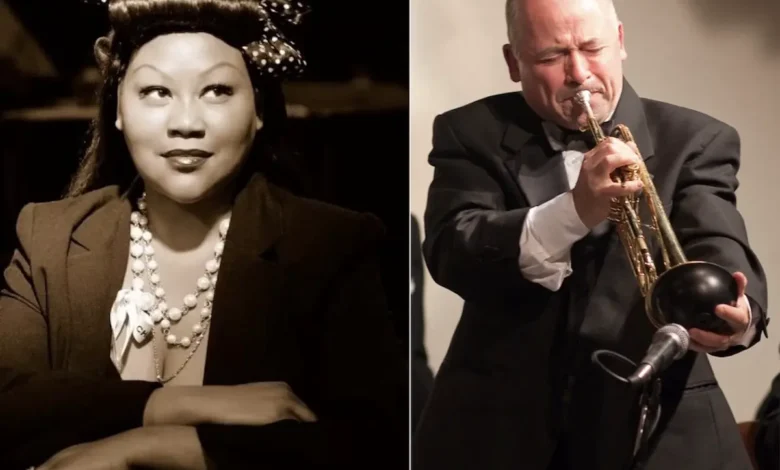
The recent performance at Cadogan Hall in London on November 22, 2026, served as a sophisticated bridge between the golden age of American jazz and contemporary musical preservation. Under the banner Swingin With Strings, the Jazz Repertory Company Orchestra, led by conductor Ryan Quigley, undertook the ambitious task of recreating the seminal 1959 collaborative album, Ella and Louis Sing Porgy and Bess. This event marked a significant cultural milestone, commemorating the 90th anniversary of the original Broadway premiere of George Gershwin’s folk opera, Porgy and Bess, which first graced the stage in 1936.
A Chronology of a Jazz Masterpiece
The lineage of the material presented at Cadogan Hall spans nearly a century of American musical history. George Gershwin, collaborating with his brother Ira and librettist DuBose Heyward, premiered Porgy and Bess in 1936. While the initial reception was mixed, the work eventually cemented its status as a cornerstone of the American operatic canon.
Twenty-three years later, in 1959, producer Norman Granz sought to capture the chemistry of Ella Fitzgerald and Louis Armstrong for the Verve label. Their interpretation of the Gershwin score became one of the most celebrated jazz recordings of the mid-20th century, juxtaposing Fitzgerald’s pristine, crystalline vocal agility with Armstrong’s gravelly, improvisational depth. Now, 67 years after that recording, the Jazz Repertory Company Orchestra sought to honor that legacy by recreating the orchestral arrangements—the "Strings" element—that gave the 1959 Verve release its lush, cinematic quality.
Artistic Interpretation and Performance Dynamics
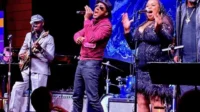
The success of such a tribute rests heavily on the ability of the lead performers to evoke the spirits of the original artists without descending into mere caricature. Nicola Emmanuelle, performing as the voice of Bess/Ella, and Enrico Tomasso, embodying the persona of Porgy/Louis, were tasked with this delicate balance.
Tomasso, a Leeds-born musician with a long-standing reputation for mastering the Armstrong idiom, delivered a performance that prioritized the technical nuances of the late jazz legend. He successfully replicated Armstrong’s signature trumpet tone and adopted his distinct stage mannerisms, including the characteristic scatting, comedic asides, and expressive eye-rolling that defined Armstrong’s live presence.
Emmanuelle, conversely, opted for a nuanced approach. Rather than attempting a literal vocal mimicry of Ella Fitzgerald, she channeled the essence of Fitzgerald’s phrasing and vocal authority. Her performance showcased a versatile range, effectively navigating the complex Gershwin melodies while maintaining the emotional weight of the opera’s narrative. Together, the duo provided a performance that was structurally faithful to the 1959 recording while allowing for the spontaneity required in a live orchestral setting.
The Orchestral Backbone: The Jazz Repertory Company
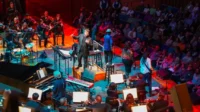
The 50-piece ensemble, known as The Jazz Repertory Company Orchestra, functioned as the evening’s structural foundation. Under the precise direction of conductor Ryan Quigley, the orchestra demonstrated a level of discipline comparable to the most acclaimed big bands in history, such as the Count Basie Orchestra.
The inclusion of a full string section was pivotal to the program’s success. The 1959 Verve album is distinguished by its sweeping, lush arrangements, which require a level of synchronization that smaller jazz ensembles often lack. The orchestra’s ability to transition seamlessly between the rhythmic intensity of the "Porgy and Bess" suite and the lighter, swing-oriented melodies of the second half of the program underscored the versatility of the ensemble.
Expanding the Gershwin Songbook
The first half of the concert was dedicated entirely to the Porgy and Bess repertoire. However, the production expanded in its second hour to encompass the broader Gershwin catalog as popularized by Fitzgerald and Armstrong during their peak collaboration years. This selection drew from three essential albums: Ella Fitzgerald Sings The George Gershwin Songbook, Ella and Louis, and Ella and Louis Again.
The setlist featured perennial standards that define the Great American Songbook, including S’Wonderful, Embraceable You, They Can’t Take That Away From Me, Our Love Is Here To Stay, and I Got Rhythm. By placing these standards alongside the more dramatic, narrative-driven pieces from Porgy and Bess, the performers demonstrated the structural consistency of Gershwin’s work, proving that his compositions are as effective in a concert hall as they are in a theatrical setting.
Technical and Historical Significance
From an analytical perspective, the 2026 performance serves as a case study in the longevity of jazz as a classical art form. The preservation of these arrangements is not merely a nostalgic exercise; it represents an essential effort to keep complex, non-improvisational jazz orchestration alive in an era often dominated by digital production.
The Jazz Repertory Company’s dedication to this archival work has broader implications for the UK jazz scene. By curating such extensive programs, they provide a platform for audiences to engage with historical scores that are rarely performed in their entirety. The logistical complexity of managing a 50-piece orchestra, ensuring the preservation of the original arrangements, and casting performers capable of navigating the high-pressure demand of the material reflects a sophisticated approach to musical curation.
Reception and Cultural Impact
While the 2026 concert season has featured a high volume of performances, the consensus among observers and attendees was that the Swingin With Strings event at Cadogan Hall stood out for its fidelity to its source material and its technical execution. The ability to bridge the gap between 1936, 1959, and 2026 suggests that the appeal of Gershwin’s music remains undiminished by the passage of time.
The production also highlights the importance of Cadogan Hall as a premier venue for this type of jazz preservation. Its acoustics are particularly suited to the blend of orchestral strings and jazz instrumentation, allowing the nuance of the vocal performances to remain clear even against a large musical backdrop.
Conclusion: The Future of Historical Jazz Performance
As the industry looks toward the next decade, the success of the Swingin With Strings performance offers a blueprint for future tributes. The emphasis on historical accuracy—specifically the use of a large, well-drilled orchestra—ensures that the soundscape of the mid-20th century is maintained for future generations.
The performance served as a testament to the fact that, nearly 90 years after the debut of Porgy and Bess, the music remains as vibrant and relevant as ever. For those in attendance, the concert was not merely a retrospective but a demonstration of how living performers can honor the legacy of legends while asserting the continued validity of the Great American Songbook in contemporary concert halls. As the year 2026 draws to a close, the event remains one of the most significant musical highlights of the period, setting a high standard for future repertory performances.
Related posts: