The Stan Kenton Orchestra Delivers A Titanic Performance At London’s Royal Festival Hall

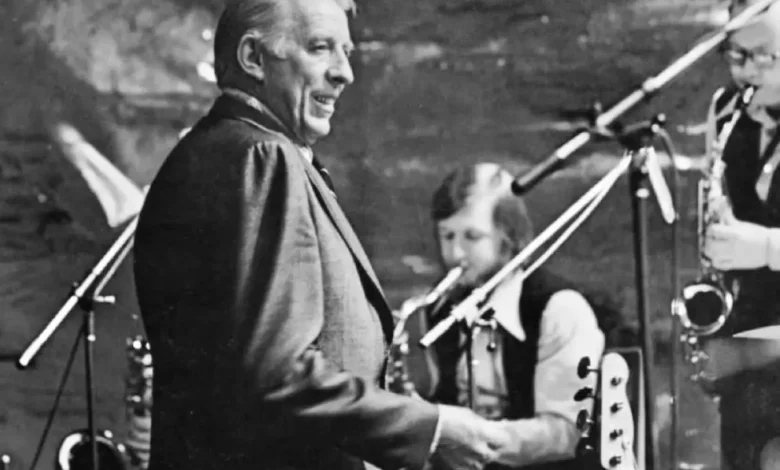
The arrival of the Stan Kenton Orchestra at London’s Royal Festival Hall on September 25 marked a significant waypoint in the ensemble’s ongoing international touring schedule. For aficionados of mid-century big band jazz, the performance served as a definitive demonstration of the “Kenton sound”—a monolithic, brass-heavy aesthetic that has defined the bandleader’s career for decades. As the eighteen-piece ensemble took the stage, the atmosphere was thick with the anticipation that typically accompanies one of the most polarizing yet technically proficient organizations in jazz history.
The Anatomy of the Kenton Machine
To understand the sonic impact of the September 25 performance, one must first analyze the unique instrumentation that Kenton has cultivated. The orchestra is undeniably bottom-heavy, a design choice that prioritizes low-end resonance and sheer power over the delicate, reed-focused textures found in contemporaries like the Duke Ellington or Count Basie orchestras.
The configuration includes a formidable section of five trombones, with one member doubling on tuba, complemented by two baritone saxophones. In contrast, the reed section is sparse, utilizing only a single alto saxophone. This architecture creates a soundscape where the reeds often struggle to penetrate the wall of brass, particularly when the ensemble reaches its characteristic “full cry.” While critics frequently point to this lack of lightness, it is an intentional trade-off. Kenton has consistently sacrificed traditional swing-era nuances for a modern, architectural approach to jazz that functions less like a conventional band and more like a high-precision, industrial-grade music machine.
A Chronology of the London Setlist
The concert followed a carefully curated arc that balanced fan-service staples with more nuanced, modern arrangements. The setlist progressed as follows:
- The Classics: The performance opened with the mandatory inclusions of "Intermission Riff," "Peanut Vendor," and "Artistry in Rhythm." These pieces, while arguably predictable, functioned as an anchor for the audience, providing the familiar thematic motifs that have become synonymous with the Kenton brand.
- Thematic Exploration: The inclusion of "Fire and Ice" served as a sonic metaphor for the evening. The piece highlighted the duality of Kenton’s work: the sudden, searing intensity of the brass followed by abrupt, cooling transitions that often left the audience longing for a more sustained jazz narrative.
- Introspective Moments: The concert found its emotional center during the arrangement of "Lush Life," which allowed the trombone section to display a rare, luxurious texture. Kenton’s own contributions on piano during "Street of Dreams" and "All the Things You Are" offered a necessary respite from the bombast, finally allowing the saxophone section to emerge from the shadow of the brass.
- Collaborative Highlights: The evening featured the work of arranger Marty Paich on "My Old Flame," providing a masterclass in orchestral texturing. Additionally, Chico O’Farrill’s composition for conga drummer Ramon Lopez introduced a Latin-jazz inflection that punctuated the middle of the set with percussive vitality.
Analysis of Soloist Contributions
Despite the inherent dominance of the 18-piece ensemble, the concert provided a stage for individual virtuosity. The standout performance of the evening was undoubtedly delivered by British-born tenor saxophonist Roy Reynolds. During his feature, Reynolds engaged in a clinical, almost academic exploration of his instrument’s frequency limits, demonstrating a technical maturity that cut through the density of the background arrangement.
Trumpeter Steve Campos offered a moment of levity with "Terry Talk," a tribute to the legendary Clark Terry. The piece acted as a bridge between the “Kenton sound” and the broader jazz canon, injecting a much-needed sense of humor into the proceedings. Furthermore, the performance of young altoist Terry Layne highlighted the band’s commitment to grooming new talent, though observers noted that his solos were arguably too infrequent given the caliber of his improvisation.
Historical Context and Institutional Impact
Stan Kenton’s influence on the post-war jazz scene cannot be overstated. Since the formation of his “Artistry in Rhythm” band in the 1940s, Kenton has consistently pushed the boundaries of the big band format. His work is often categorized as “Progressive Jazz,” a genre he pioneered by incorporating elements of symphonic composition, atonality, and complex harmonic structures.
The Royal Festival Hall performance is part of a larger historical trajectory where Kenton has sought to bridge the gap between popular dance music and concert-hall intellectualism. While this approach has drawn criticism from those who feel his music lacks the “elusive jazz glow”—a sentiment suggesting that Kenton often restricts the improvisational freedom of his players—the commercial and critical success of his tours suggests a continued market for this brand of jazz grandeur.
Technical Specifications: The Personnel
The efficiency of the Kenton machine is a direct result of the discipline maintained within the ensemble. The personnel for the London date included:
- Piano/Leader: Stan Kenton
- Saxophones: Terry Layne, Roy Reynolds, Teddy Anderson, Alan Yankee, Greg Metcalf
- Trumpets: Jay Sollenberger, Dave Kennedy, Steve Campos, Joe Casano, Tim Hagans
- Trombones: Dick Shearer, Mike Egan, Jeff Uusitalo, Allen Morrissey, Doug Purviance
- Rhythm Section: John Worster (bass), Gary Hobbs (drums), Ramon Lopez (Latin percussion)
Implications for the Jazz Industry
The September 25 concert at the Royal Festival Hall serves as a case study for the sustainability of the large-ensemble format. In an era where smaller, more agile jazz groups are increasingly common due to economic constraints and changing listener preferences, the Stan Kenton Orchestra remains a defiant outlier.
The primary implication of this tour is the reaffirmation of the “Big Band” as a viable vehicle for artistic expression, provided it maintains a rigid standard of technical excellence. However, the performance also highlights the ongoing tension between orchestration and improvisation. When a band is designed with such meticulous, top-down control—evident in the heavy reliance on pre-written arrangements by writers like Paich and O’Farrill—there is an inherent risk of stifling the very spontaneity that is the hallmark of jazz.
Critics have often argued that Kenton is a bandleader who “slams the oven door” just as the music begins to heat up. Yet, for the audience at the Royal Festival Hall, this controlled environment appears to be the point. The power of the brass, the precision of the rhythm section, and the sheer volume of the ensemble provide an experience that is less about individual risk-taking and more about the collective achievement of orchestral scale.
As the Kenton tour continues, the orchestra remains a testament to the idea that jazz can be both a popular attraction and a complex, highly structured discipline. Whether the listener prefers the “fire” of his frantic arrangements or the “ice” of his more introspective piano ballads, the Stan Kenton Orchestra continues to occupy a unique space in the musical landscape, one that is as polarizing as it is undeniably significant to the history of the genre. The London performance was a reminder that even as jazz evolves, the capacity for eighteen musicians to breathe as one, under the firm direction of a single visionary, remains one of the most compelling sights in modern music.