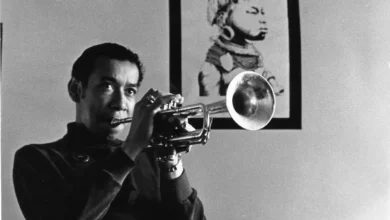
Alex Weitz Solidifies Artistic Standing with the Release of Luma a Sophisticated Exploration of Modern Jazz Composition


The contemporary jazz landscape is frequently defined by a tension between tradition and innovation, a balance that tenor saxophonist Alex Weitz navigates with remarkable precision in his second major quartet release, Luma. Following the critical success of his previous recording, Chroma, Weitz returns with a nine-track collection that functions as both a technical showcase and a deeply personal narrative. Luma represents a maturation of the artist’s voice, moving beyond the mere exhibition of virtuosity to embrace a cinematic, contemplative approach to the quartet format. Featuring a disciplined ensemble consisting of pianist Tal Cohen, bassist Ben Tiberio, and drummer Michael Piolet, the album explores the intersection of intellectual theory and visceral human experience, grounding complex improvisational flights in the concrete realities of modern existence.
The Evolution of the Alex Weitz Quartet
The trajectory of Alex Weitz’s career has been marked by a steady ascent within the competitive circles of the American jazz scene. A graduate of the University of Miami’s Frost School of Music, Weitz quickly established a reputation for a compositional style that is as rigorous as it is accessible. His debut album, Chroma, served as an introduction to his fascination with the relationship between sound and visual perception—a theme that continues in Luma, which takes its name from the mathematical representation of light in an image.
The continuity of the quartet is a significant factor in the cohesive sound achieved on this recording. Pianist Tal Cohen, a leader in his own right and a recipient of the Barry Harris National Jazz Piano Award, provides a harmonic depth that complements Weitz’s clean, dry saxophone tone. Bassist Ben Tiberio and drummer Michael Piolet offer more than just a rhythm section; they act as conversational partners in a four-way dialogue. This level of chemistry is the result of years of collaborative performance, allowing the group to navigate the transitions between structured ensemble passages and unrestrained improvisation with a fluidity that is often missing in "all-star" studio sessions.
Compositional Philosophy and Narrative Structure
Luma is structured as a series of nine movements that, while distinct, contribute to a larger, overarching narrative. Weitz’s compositions on this album are notably inspired by "real-world ideas and the intellect," yet they remain accessible through their "cinematic" quality. The music does not merely exist as a sequence of notes but functions as a living soundtrack to the human condition.
The album opens with "Did You Know," a piece that sets the tone for the record’s contemplative yet driving energy. This is followed by "Outer Noise," a track that explores the dissonance and complexity of modern life before resolving into the more structured "Song For Peace." The latter is presented in two parts, serving as the emotional centerpiece of the album. This two-part suite demonstrates Weitz’s ability to "mine a theme" with startling short-form improvisations, where ideas are introduced, "trussed, then released and shredded."
Throughout the performance, Weitz employs a playing style that is characterized by restraint. Unlike many of his contemporaries who rely on excessive vibrato or "histrionics" to convey emotion, Weitz maintains a characteristic sound that is elegant and seemingly weightless. His use of very little tremolo ensures that the emotional weight of the music comes from the melodic phrasing and the structural integrity of the compositions rather than from performative affectation.
Technical Analysis of the Quartet’s Performance
The technical brilliance of Luma lies in the "orchestral arrangements and voicings" that Weitz employs. Despite the small-group setting, the album often feels larger in scope, a feat achieved through the clever use of harmony and the dynamic range of the quartet.
- Alex Weitz (Tenor Saxophone): Weitz’s contributions are defined by an "intimate, restrained, and reflective" quality. His ability to mould disparate sources into a meaningful whole is evident in tracks like "Equilibrium" and "Azalea." His solos are not merely displays of speed but are "musical thoughts and viewpoints" pursued in the spur of the moment.
- Tal Cohen (Piano): Cohen’s role is pivotal in bridging the gap between the rhythm section and the lead voice. His playing on "Luma" and "Reminiscence" showcases a sophisticated understanding of space, providing a lush harmonic bed for Weitz while knowing exactly when to step forward with assertive, intellectual soloing.
- Ben Tiberio (Bass): Tiberio provides the "topographical" foundation of the album. His work on the lower frequencies is anchored in swing, providing a subtle but necessary pulse that keeps the more "out-of-body" musical experiences grounded in the "here and now."
- Michael Piolet (Drums): Piolet’s drumming is both a rhythmic engine and a source of textural color. On tracks like "Outer Noise," his ability to manage complex meters while maintaining a sense of forward motion is essential to the album’s success.
The "Song For Peace" Suite and Spiritual Resonance
A critical highlight of the album is the "Song For Peace" (Part 1 and Part 2). In these tracks, the quartet moves into a more "transcendental, spiritual" territory. The pieces suggest a yearning for tranquility amidst the chaos suggested by earlier tracks like "Outer Noise." The improvisation here is less about technical fireworks and more about "out-of-body musical experiences."
The two-part structure allows the ensemble to explore a single thematic idea from multiple angles—first through a more structured, ensemble-focused lens, and then through a more expansive, improvisational exploration. This movement exemplifies the "heady imagination" that critics have noted in Weitz’s work, transforming a simple musical resonance into a "vivacious musical adventure."
Broader Implications for Modern Jazz
The release of Luma arrives at a time when the jazz industry is increasingly looking for artists who can honor the genre’s history while speaking to contemporary sensibilities. Weitz is described as a musician who is "wise beyond his years," possessing an "accomplished knowledge of history" and a clear understanding of where he fits within that lineage.
The album’s reliance on "swing," however subtle, is a testament to Weitz’s commitment to the core tenets of the genre. Even as the music veers into "out-of-body" or experimental territory, it remains anchored in a rhythmic tradition that ensures its viability as a work of jazz. This balance makes Luma a significant contribution to the tenor saxophone canon, offering a template for how young musicians can utilize their virtuosity as an "outlet for artistry" rather than an end in itself.
Furthermore, the "cinematic" and "epic" nature of the recording suggests a potential for jazz to reach broader audiences. By creating music that feels like a "living soundtrack," Weitz taps into a modern preference for narrative-driven art. The album does not require the listener to be a musicologist to appreciate its beauty, yet it offers enough depth to satisfy the most discerning intellectual critics.
Production and Personnel Details
Luma was recorded with a focus on clarity and spatial awareness, reflecting Weitz’s preference for a "clean and dry" sound profile. The production allows each instrument to occupy its own space, ensuring that the "soloist-to-ensemble" transitions are seamless.
Track Listing:
- Did You Know
- Outer Noise
- Song For Peace – Part 1
- Song For Peace – Part 2
- Let It Go
- Luma
- Equilibrium
- Azalea
- Reminiscence
Personnel:
- Alex Weitz: Saxophone
- Tal Cohen: Piano
- Ben Tiberio: Bass
- Michael Piolet: Drums
Conclusion: A Solidified Reputation
With the release of Luma, Alex Weitz has effectively moved past the "promising young artist" stage of his career to become a formidable force in modern jazz composition and performance. The album is a testament to the power of the quartet format when helmed by a leader with a clear vision and a group of musicians with the technical facility to execute it.
By mining the "musical topography" of his own compositions, Weitz has created a work that is both a personal statement and a welcoming invitation to the listener. Luma is an uplifting recording that does not shy away from the melancholic or the contemplative, ultimately proving that the most satisfying musical experiences are those that are "inextricably rooted in the concreteness of human existence." As Weitz continues to "ride with his knowledge" of the jazz tradition, Luma will undoubtedly stand as a pivotal moment in his artistic evolution, marking the point where his creative firepower met a profound sense of spiritual and intellectual maturity.