The Evolution of Punch Brothers and the Transformative Trajectory of Progressive Bluegrass

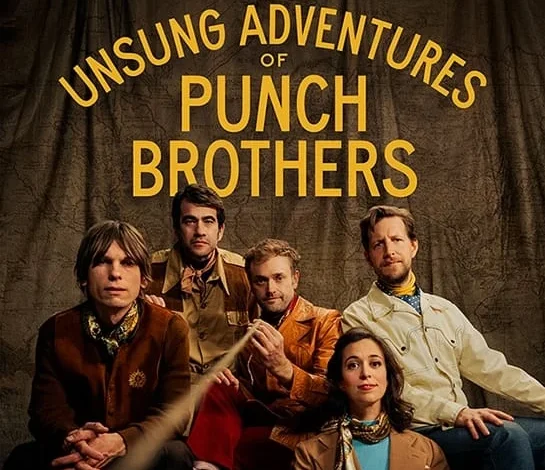
The trajectory of Punch Brothers represents one of the most significant architectural shifts in American acoustic music over the last two decades, moving from the explosive instrumental pyrotechnics of their early years to a more contemplative, atmospheric, and at times abstruse exploration of the folk idiom. Formed in 2006 by mandolinist Chris Thile following the hiatus of the multi-platinum acoustic trio Nickel Creek, the ensemble—comprising guitarist Chris Eldridge, bassist Paul Kowert, banjoist Noam Pikelny, and fiddler Gabe Witcher—has consistently challenged the boundaries of the bluegrass genre. Their discography serves as a chronological map of a band moving away from the "supergroup" label toward a unified, often experimental collective identity that prioritizes complex arrangements and thematic depth over the traditional "break-oriented" structure of mountain music.
The Foundations of Virtuosity: Antifogmatic and Who’s Feeling Young Now?
The initial phase of Punch Brothers’ career was defined by an uncompromising commitment to technical brilliance and the fusion of disparate musical traditions. While their debut, Punch, was centered around the 40-minute, four-movement suite "The Blind Leaving the Blind," it was their subsequent releases, 2010’s Antifogmatic and 2012’s Who’s Feeling Young Now?, that solidified their reputation as the premier progressive bluegrass outfit of their generation.
During this era, the band’s MO was characterized by what critics frequently described as "instrumental fusillades," spearheaded by Thile’s hyper-kinetic mandolin work. Antifogmatic, named after a 19th-century term for a morning cocktail intended to "dispel the fog," showcased a band reveling in the friction between classical precision and bluegrass spontaneity. Tracks like "Rye Whiskey" and "Next to the Trash" highlighted a riveting interplay where the five instruments functioned as a single, complex machine.
By 2012, with the release of Who’s Feeling Young Now?, the group began to incorporate more aggressive, rock-influenced textures. The inclusion of a cover of Radiohead’s "Kid A" signaled their intent to move beyond the traditional repertoire. The arrangements on this album were noted for their innovative use of the acoustic palette to mimic electronic and percussive sounds, pushing the instruments to their physical limits. This period is often cited by fans as the band’s most "immediate" era, defined by high-energy performances and a palpable sense of discovery.
The T Bone Burnett Era and the Introduction of Atmospheric Textures
A pivotal moment in the band’s evolution occurred in 2015 with the release of The Phosphorescent Blues. Produced by the legendary T Bone Burnett—known for his work on the O Brother, Where Art Thou? soundtrack—the album marked a departure from the raw, live-in-the-room feel of their earlier work. Burnett’s influence encouraged the group to balance their instrumental acumen with broader songwriting ambitions, focusing on the thematic core of modern isolation and technological disconnect.
For the first time in their recording history, the band integrated drums into their sound, recruiting acclaimed session percussionist Jay Bellerose. While the core of the music remained acoustic, Bellerose’s subtle, earthy rhythms allowed the band to explore down-tempo gestalts and sprawling, cinematic atmospheres. The opening track, "Familiarity," a ten-minute epic, epitomized this new direction, blending multi-part vocal harmonies with ethereal instrumental passages that favored mood over melodic speed.
This era demonstrated a maturation of the band’s "songcraft." While they maintained the ability to execute blazing instrumental segments, these moments were now subservient to the overall narrative of the track. The album was a critical success, peaking at number one on the Billboard Bluegrass and Folk charts, and it signaled that Punch Brothers were no longer content with being "bluegrass’s answer to a chamber orchestra," but were instead carving out a unique space in the broader indie-folk landscape.
All Ashore and the Shift Toward Vocal Sophistication
Following the success of The Phosphorescent Blues, the band’s 2018 release, All Ashore, represented a return to a self-produced, quintet-only format. However, rather than returning to the high-octane style of Antifogmatic, the group leaned further into nuanced vocal performances and intricate, sometimes opaque, lyrical themes. The album, which won the Grammy Award for Best Folk Album, was described by Thile as a meditation on committed relationships in a fractured political climate.
In All Ashore, the vocal harmonies became a central pillar of the band’s identity. The arrangements were frequently described as "abstruse," featuring shifting time signatures and non-linear melodic paths that required multiple listens to fully deconstruct. While the instrumental prowess remained evident, it was often buried within dense, polyphonic textures. For some long-time listeners, this period marked a move away from the "immediacy" of their early work, as the band traded foot-stomping energy for intellectual complexity and "strained" songcraft that challenged the listener’s expectations of the genre.
Chronology of Major Releases and Milestones
To understand the band’s development, it is essential to look at the timeline of their creative output:
- 2006: Formation of the band (initially as The Tensions Mountain Boys) for the recording of "The Blind Leaving the Blind."
- 2008: Release of Punch, their Nonesuch Records debut.
- 2010: Release of Antifogmatic, establishing their "virtuosic bluegrass" identity.
- 2012: Release of Who’s Feeling Young Now?, incorporating indie-rock sensibilities; Chris Thile receives the MacArthur "Genius" Grant.
- 2015: The Phosphorescent Blues is released; collaboration with T Bone Burnett and Jay Bellerose.
- 2018: All Ashore is released; the band wins the Grammy for Best Folk Album.
- 2022: Hell on Church Street is released, a complete reimagining of Tony Rice’s 1983 classic Church Street Blues.
Hell on Church Street: A Tribute to a Legend
The band’s most recent major project, 2022’s Hell on Church Street, serves as both a tribute and a reconfiguration. The album is a track-by-track cover of Tony Rice’s Church Street Blues, an iconic 1983 release that remains a touchstone for bluegrass guitarists. By tackling this specific repertoire, Punch Brothers acknowledged their roots while simultaneously deconstructing them.
The project was born out of a desire to honor Rice following his passing in late 2020. However, in typical Punch Brothers fashion, the renditions are far from carbon copies. They utilized the source material as a skeletal framework upon which to hang their increasingly complex harmonic language. While the album features some of their most focused vocal work to date, it also highlights the "expanding MO" of the band—taking a traditional solo guitar record and expanding it into a five-piece experimental suite.
Technical Analysis of Evolving Instrumentation
The shift in the band’s sound can be quantified by their changing approach to "interplay." In the early 2010s, the interplay was often rhythmic and percussive—the banjo and mandolin acting as a high-tension "engine" for the songs. In later projects, the interplay became more contrapuntal, resembling the works of 20th-century classical composers like Béla Bartók or Claude Debussy more than Bill Monroe or Flatt & Scruggs.
The use of the double bass by Paul Kowert has also evolved. Initially providing the rhythmic "thump" essential to bluegrass, Kowert’s role has expanded to include melodic bowing (arco) and jazz-inflected walking lines that provide the "atmospheric gestalts" noted in The Phosphorescent Blues. Similarly, Noam Pikelny’s banjo work has moved away from the standard Scruggs-style rolls toward a more melodic, "single-string" approach that allows him to participate in the band’s complex, often dissonant harmonic clusters.
Broader Impact on the Bluegrass and Folk Communities
The implications of Punch Brothers’ evolution extend beyond their own discography. They have been instrumental in the "Newgrass" or "Progressive Bluegrass" movement, influencing a generation of musicians to view acoustic instruments as versatile tools capable of playing any genre. Their success has proven that there is a significant commercial and critical market for "challenging" acoustic music that does not rely on traditional tropes.
However, the band’s move toward the "abstruse" has not been without its detractors within the traditionalist community. By prioritizing "atmospheric gestalts" and complex vocal harmonies over the driving rhythms of traditional bluegrass, Punch Brothers have occasionally alienated purists who value the "immediacy" and social function of the genre.
Conclusion: The Legacy of Innovation
Ultimately, the journey from Antifogmatic to Hell on Church Street reveals a band that refuses to remain static. While their later work may lack the raw, visceral punch of their early 20s, it offers a level of compositional sophistication rarely seen in acoustic music. Punch Brothers have successfully transitioned from a group of individual virtuosos to a singular musical entity, one that continues to redefine what it means to be a "bluegrass band" in the 21st century. Their legacy is not just one of technical mastery, but of a relentless pursuit of new sonic territories, even when those territories lead them away from the familiar comforts of the genre’s origins.