Salzburg Festival Unveils Comprehensive 2026 Opera Broadcast Schedule Featuring Major New Productions and International Star Casts

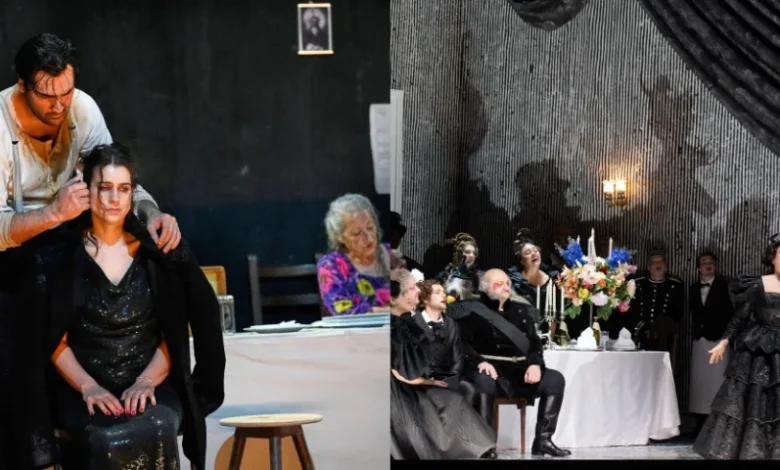
The Salzburg Festival, widely regarded as the most prestigious event in the international classical music calendar, has officially announced its broadcast schedule for the summer of 2026, highlighting three major operatic productions that will be brought to global audiences through partnerships with leading European broadcasters. This announcement reinforces the festival’s commitment to digital accessibility and its long-standing tradition of documenting its high-profile artistic endeavors for posterity. The 2026 lineup is set to feature a diverse array of repertoire, ranging from the quintessential French realism of Georges Bizet to the intricate Bel Canto of Gioachino Rossini and the sophisticated German modernism of Richard Strauss. By partnering with organizations such as ORF, Mezzo, 3SAT, and ORF III, the festival ensures that its world-class performances reach beyond the historic confines of the Grosses Festspielhaus and the Haus für Mozart to a global viewership.
The broadcast initiative begins in early August with a highly anticipated new production of Bizet’s "Carmen," followed closely by Rossini’s "Il Viaggio a Reims" and Strauss’s "Ariadne auf Naxos." Each production represents a significant investment in contemporary stagecraft, featuring directors known for their avant-garde approaches and conductors who are recognized as leading interpreters of their respective genres. The inclusion of stars such as Asmik Grigorian, Cecilia Bartoli, and Kate Lindsey underscores the festival’s ability to attract the highest caliber of vocal talent, maintaining its status as a focal point for the operatic world.
The Reimagining of Carmen: A Bold New Vision
The first major broadcast of the 2026 season will take place on August 8, featuring Georges Bizet’s "Carmen." This production is expected to be one of the most talked-about events of the summer, as it marks a collaboration between the innovative director Gabriela Carrizo and the idiosyncratic conductor Teodor Currentzis. Carrizo, known for her work with the dance-theater collective Peeping Tom, is expected to bring a visceral, movement-based aesthetic to Bizet’s tale of passion and fate. This choice of director signals the Salzburg Festival’s continued interest in blurring the lines between traditional opera and contemporary performance art.
Musically, the production is anchored by Teodor Currentzis, a conductor whose interpretations are frequently characterized by extreme dynamic contrasts and meticulous attention to orchestral texture. Currentzis has become a regular fixture at Salzburg, often leading his own ensemble, Utopia, or the MusicAeterna orchestra. For "Carmen," he will collaborate with a cast of international heavyweights. Asmik Grigorian, who has achieved legendary status at Salzburg following her breakthrough as Salome in 2018, will take on the title role. Grigorian is renowned for her dramatic intensity and vocal flexibility, making her an ideal candidate for a modern reimagining of the iconic cigarette girl.
Supporting Grigorian is the American tenor Jonathan Tetelman as Don José. Tetelman has seen a meteoric rise in the opera world, praised for his "old-school" Italianate ring and charismatic stage presence. The cast is rounded out by Kristina Mkhitaryan as Micaëla and Davide Luciano as Escamillo. The broadcast will be handled by ORF, the Austrian national broadcaster, and Mezzo, the French television channel dedicated to classical music and jazz, ensuring wide coverage across Europe and beyond.
Rossini’s Il Viaggio a Reims: A Masterclass in Bel Canto
Following the intensity of "Carmen," the festival shifts focus to the comedic and virtuosic world of Gioachino Rossini. On August 9, 2026, ORF III will broadcast "Il Viaggio a Reims," a work originally composed for the coronation of Charles X of France. Because the opera requires an unusually large cast of world-class soloists—traditionally ten principal roles—it is rarely staged by smaller houses, making it a perfect showcase for the resources of the Salzburg Festival.
The 2026 production is helmed by Barrie Kosky, one of the most influential directors in contemporary opera. Kosky, the former artistic director of the Komische Oper Berlin, is celebrated for his imaginative, often flamboyant stagings that prioritize theatricality and rhythm. His approach to Rossini is expected to be both humorous and visually spectacular. Conducting the performance is Gianluca Capuano, a specialist in period performance and the Bel Canto repertoire, who has worked extensively with Cecilia Bartoli and the Les Musiciens du Prince-Monaco.
The cast for "Il Viaggio a Reims" is a "who’s who" of the operatic stage. Led by the legendary Cecilia Bartoli, the ensemble includes Marina Viotti, Mélissa Petit, Tara Erraught, Edgardo Rocha, Dmitry Korchak, Ildebrando D’Arcangelo, Florian Sempey, Misha Kiria, Peter Kellner, Giovanni Romeo, Helena Rasker, Rodolphe Briand, and Rafał Pawnuk. Such a dense concentration of talent is a hallmark of the Salzburg Festival’s casting philosophy, ensuring that even the smaller roles in Rossini’s ensemble piece are performed with technical perfection.
Ariadne auf Naxos: A Return to Festival Roots
The final broadcast in this announced series focuses on Richard Strauss’s "Ariadne auf Naxos," a work deeply intertwined with the history of the Salzburg Festival. Strauss, along with Hugo von Hofmannsthal and Max Reinhardt, was a founding father of the festival, and his works remain the bedrock of the institution’s identity. The 2026 production will be broadcast on August 15 and August 24 via 3SAT and ORF II.
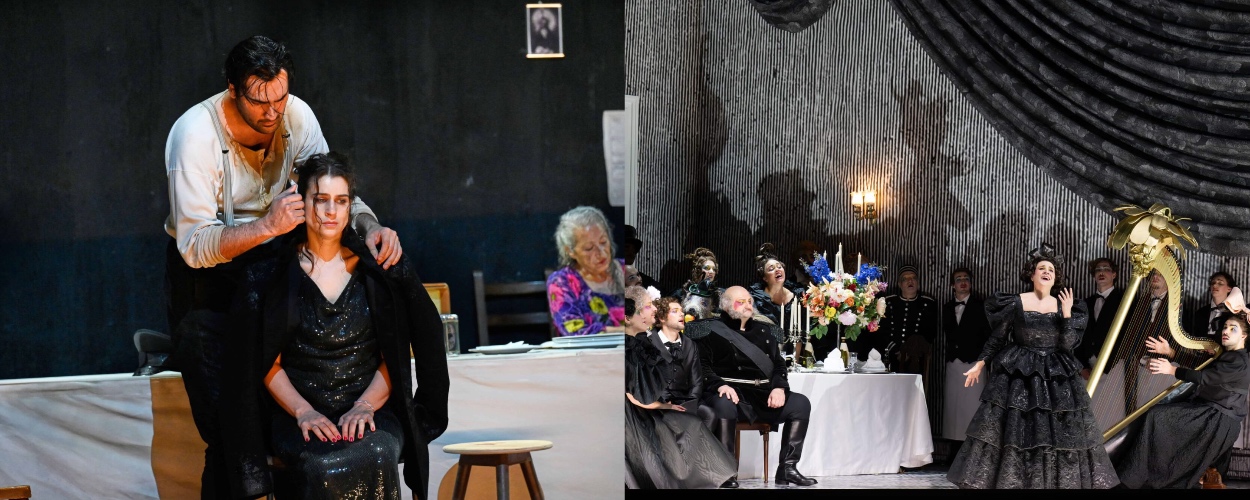
This new production is directed by Ersan Mondtag, a director known for his visually striking and often provocative sets that draw heavily from film and contemporary art. His interpretation of the "opera within an opera" is expected to explore the tensions between "high" and "low" art that are central to the work’s libretto. Under the baton of Manfred Honeck, the Music Director of the Pittsburgh Symphony Orchestra and a conductor with deep roots in the Austrian musical tradition, the production promises a reading of the score that is both lush and intellectually rigorous.
The cast features Kate Lindsey as the Composer, a role that demands both mezzo-soprano agility and profound dramatic conviction. Christina Nilsson stars as Ariadne/Prima Donna, with Eric Cutler as Bacchus/Tenor and Ziyi Dai as the coloratura firebrand Zerbinetta. The interplay between these characters, particularly in the contrasting styles of the opera seria and the commedia dell’arte, provides the core of the work’s enduring appeal.
Chronology of Broadcast Events
The 2026 broadcast schedule is strategically timed to capture the peak of the festival season:
- August 8, 2026: "Carmen" (Bizet). Directed by Gabriela Carrizo, conducted by Teodor Currentzis. Starring Asmik Grigorian and Jonathan Tetelman. Broadcast by ORF and Mezzo.
- August 9, 2026: "Il Viaggio a Reims" (Rossini). Directed by Barrie Kosky, conducted by Gianluca Capuano. Starring Cecilia Bartoli and an international ensemble. Broadcast by ORF III.
- August 15, 2026: "Ariadne auf Naxos" (Strauss). Directed by Ersan Mondtag, conducted by Manfred Honeck. Starring Kate Lindsey and Christina Nilsson. Initial broadcast by 3SAT and ORF II.
- August 24, 2026: "Ariadne auf Naxos" (Strauss). Encore or secondary broadcast window provided by 3SAT and ORF II.
The Role of Media Partnerships in Cultural Preservation
The Salzburg Festival’s decision to broadcast these three specific works reflects a broader strategy of cultural diplomacy and audience development. By utilizing various channels—ORF for a broad national audience, Mezzo for international classical enthusiasts, and 3SAT for the German-speaking cultural sphere—the festival maximizes its visibility.
Historically, Salzburg broadcasts have served as definitive recordings of major productions. In an era where physical media sales have declined, high-definition broadcasts and subsequent streaming availability have become the primary way for opera houses to maintain their relevance in a digital-first world. The involvement of ORF is particularly significant; the broadcaster has been a partner of the festival since the early days of radio, evolving its technology to meet the demands of 4K broadcasting and multi-channel audio in the 21st century.
Official Context and Artistic Implications
While official statements from the festival management emphasize the "artistic necessity" of these broadcasts, industry analysts point to the economic benefits as well. High-profile broadcasts act as a global advertisement for the festival, encouraging future tourism to Salzburg. Furthermore, for artists like Asmik Grigorian and Jonathan Tetelman, these broadcasts serve as career-defining documents that circulate among critics and fans worldwide.
The choice of directors—Carrizo, Kosky, and Mondtag—suggests that the festival is leaning into its role as a laboratory for modern staging. By documenting these productions, the festival is not just capturing a performance, but also contributing to the ongoing debate about the evolution of opera as a theatrical medium. The juxtaposition of Currentzis’s radical musicality in "Carmen" with Honeck’s traditionalist excellence in "Ariadne auf Naxos" showcases the festival’s ability to house a wide spectrum of musical thought.
Broader Impact on the Global Opera Community
The announcement of the 2026 broadcast schedule more than a year in advance allows international audiences and educational institutions to plan around these events. For many opera lovers who cannot travel to Austria due to the high cost of tickets and accommodation, these broadcasts represent their only opportunity to experience the Salzburg "standard" of production.
Furthermore, the inclusion of "Il Viaggio a Reims" is seen as a major win for fans of the Bel Canto revival. As Cecilia Bartoli continues to curate unique projects within the festival framework, the broadcast of this Rossini masterpiece ensures that her influence on the genre is documented during her peak years.
In conclusion, the Salzburg Festival’s 2026 broadcast lineup is a testament to the institution’s enduring power and its ability to adapt to the modern media landscape. By combining star-studded casts with visionary directors and the technical expertise of Europe’s leading broadcasters, the festival continues to set the benchmark for excellence in the performing arts. As August 2026 approaches, the global classical music community will undoubtedly look toward Salzburg as the center of the operatic universe.