In the contemporary landscape of music production, the philosophical approach to studio infrastructure has undergone a profound paradigm shift. With the staggering advancements in digital audio workstations (DAWs) and virtual studio technology (VST) plugins, producers and recording engineers can now mix, master, and manipulate audio entirely "in the box." Hardware compressors once relied upon solely for tracking are frequently relegated to the status of luxury processors, deployed primarily to impart analog character and sonic vibe rather than out of absolute functional necessity. Yet, despite the undeniable efficiency and versatility of modern software ecosystems, hardware continues to occupy a revered, albeit occasionally debated, space in professional and project studios alike.
Music production remains a tactile discipline deeply rooted in workflow psychology and tactile engagement. The choices creators make regarding their physical signal chains are often dictated not just by raw utility, but by how specific tools influence the creative process and establish a more immediate connection with the sound source. This evolving philosophy prompts a critical re-evaluation of specialized equipment often dismissed as redundant or unnecessary in a streamlined digital workflow. By examining industry-standard hardware—ranging from hybrid interfaces and digital patchbays to compact mixers, advanced monitor controllers, and vintage-spec levelers—producers can uncover hidden efficiencies and sonic advantages that software alone cannot replicate.
The 500-Series Conundrum: Cranborne Audio 500R8 and the Hybrid Workflow
The introduction of the 500-series modular format revolutionized hardware integration by offering a cost-effective pathway to incorporate high-end analog processing directly into a studio setup. Designed for tracking, channel inserts, and DAW bus processing, 500-series lunchboxes democratized access to custom preamps, equalizers, and dynamics processors. However, a persistent logistical hurdle has always plagued these modular setups: routing signals seamlessly into a 500-series chassis and routing them back out into a digital audio workstation typically requires a complex network of cabling, external converters, and dedicated patchbays, depending on the capabilities of the user’s audio interface.
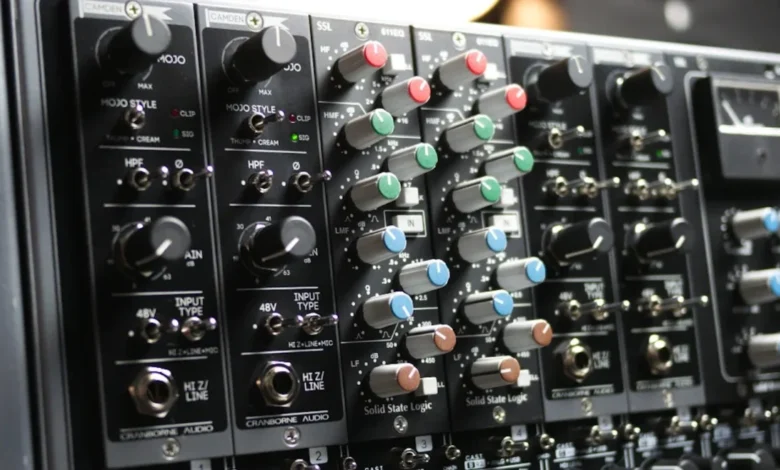
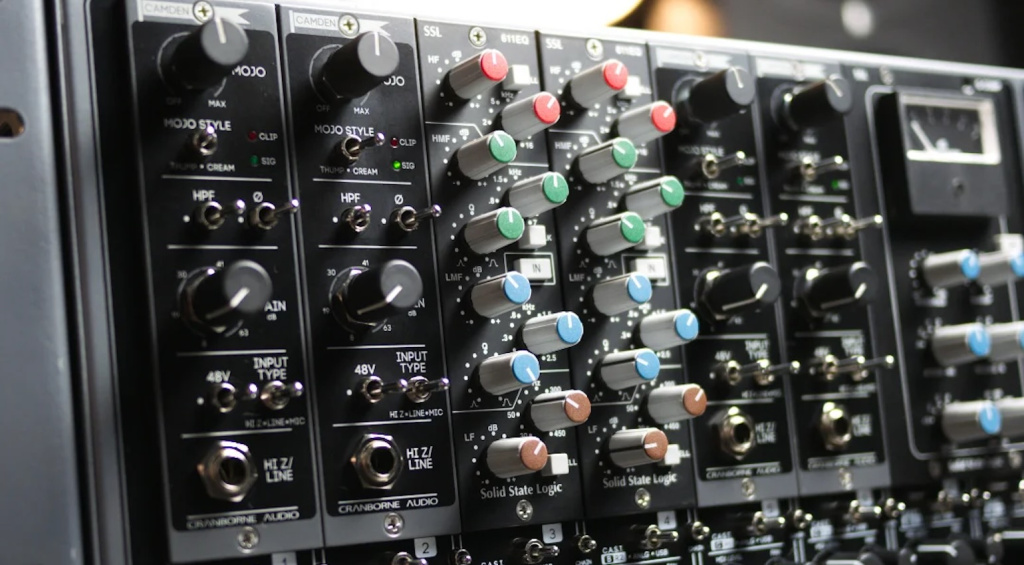
Addressing this specific friction point, Cranborne Audio engineered the 500R8, a comprehensive hardware solution that recontextualizes the 500-series chassis. Rather than serving merely as an empty housing for third-party modules, the 500R8 functions as a fully integrated 28×30 USB audio interface, reference-grade master clock, and comprehensive monitor controller complete with onboard talkback functionality. By housing eight slots for user-selected modules directly within the interface architecture, Cranborne Audio eliminated the redundant conversion stages and cabling clutter that historically discouraged producers from adopting modular hardware. Furthermore, the system provides a flexible analog summing solution, allowing engineers to mix directly from their DAW through physical 500-series modules. Expandable via the companion 500ADAT chassis and integrated with the proprietary CAST analog format—which transmits four balanced audio channels over standard CAT5 cabling—the 500R8 bridges the gap between traditional analog routing and modern computer-based production environments.
Taming the Spaghetti: Flock Audio and Digitally Controlled Analog Patchbays
As project and commercial studios expand to incorporate multiple synthesizers, outboard processors, microphones, and interface I/O, the traditional analog patchbay transitions from a luxury to an absolute necessity. The foundational concept of a patchbay remains brilliant in its simplicity: by terminating all studio inputs and outputs to a centralized grid, engineers can instantly reroute complex signal chains using patch cables. Yet, the integration of a massive analog patchbay within a modern digital studio introduces a formidable operational bottleneck—recallability. In an industry where clients frequently demand mid-session revisions days or weeks after initial tracking, remembering or physically documenting complex patch configurations via smartphone photographs is both inefficient and prone to human error.
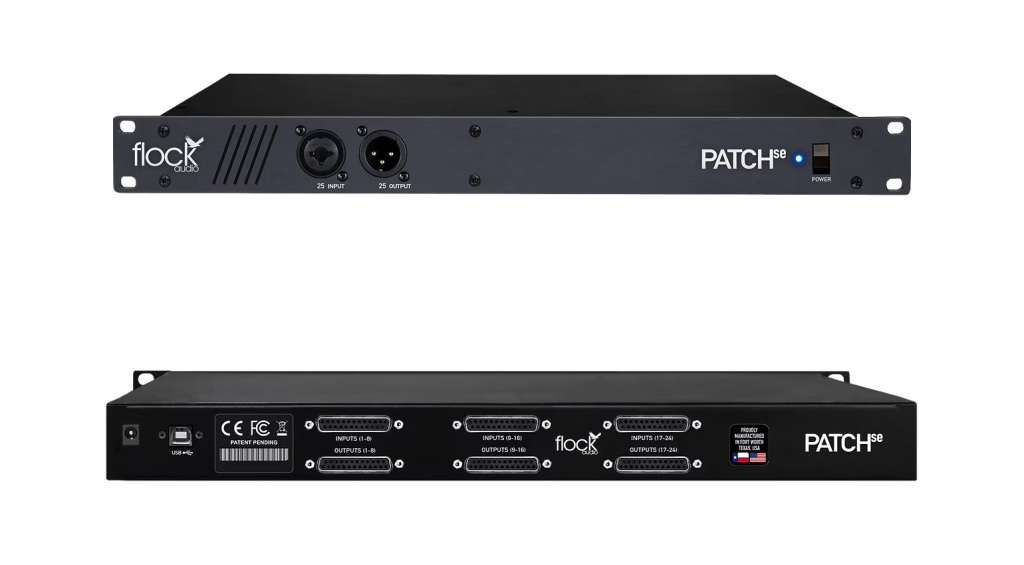
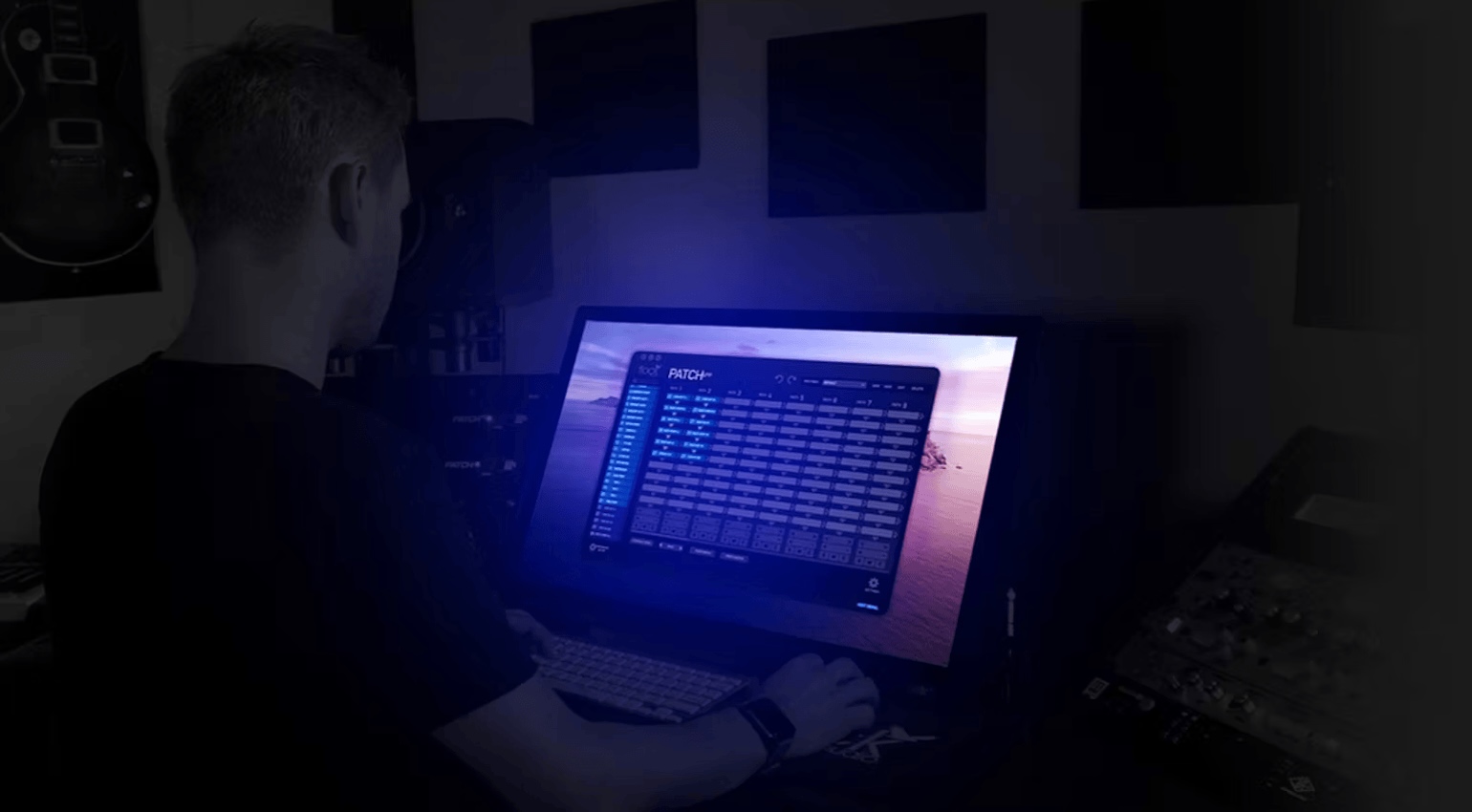
Flock Audio disrupted this decades-old workflow challenge by introducing a revolutionary class of digitally controlled analog patchbays, spearheaded by systems like the PATCH and PATCHse. Eschewing traditional physical patching in favor of a software-driven routing matrix, Flock Audio allows producers to reconfigure complex hardware signal chains via an intuitive digital graphical user interface. Crucially, this software management system operates entirely within the analog domain; contrary to assumptions regarding digital routing matrices, Flock Audio systems incorporate zero internal AD/DA conversion stages. Instead, a sophisticated solid-state analog switching matrix executes routing commands sent via USB, preserving the pure electrical integrity of the audio path while offering instantaneous session recall. For modern studios balancing the sonic benefits of outboard gear with the rigorous timeline demands of contemporary commercial production, digitally controlled analog patching effectively eliminates the historical drawbacks of hardware integration.
The Re-emergence of the Compact Analog Mixer

Within the context of a minimalist home studio, the traditional analog mixing console is frequently categorized as an expensive and redundant relic of the past. Modern multi-channel audio interfaces boast expansive I/O configurations capable of accommodating dozens of simultaneous inputs, leading many producers to question the need for a physical mixing desk. However, this calculation shifts dramatically when a production environment relies heavily on a hybrid setup featuring hardware synthesizers, drum machines, modular gear, and external guitar effects pedals. Managing the physical routing and level staging of multiple electronic instruments without a centralized mixing hub can quickly devolve into a logistical nightmare of constant recabling.
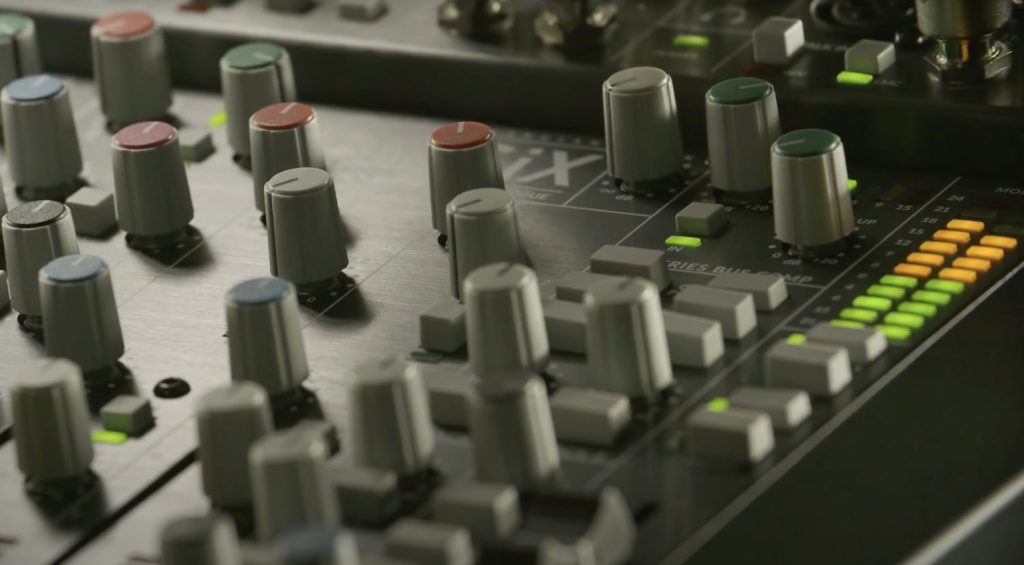
Compact analog mixing desks, exemplified by the SSL SiX, provide a pragmatic and space-saving solution to this modern connectivity challenge. Rather than manually plugging and unplugging instruments ahead of every tracking session, a compact mixer permits producers to leave electronic setups permanently connected, utilizing auxiliary sends to route signals through preferred effects chains. Beyond straightforward signal management, contemporary small-format mixers often incorporate legendary bus compression topologies and sophisticated monitor sections that facilitate seamless collaboration with visiting artists. Furthermore, a physical mixer allows producers to sum signals from the DAW with external hardware in real-time, generating organic saturation, harmonic blending, and workflow dynamics that static VST plugins struggle to replicate.

Precision Monitoring: SPL 2Control and the Evolution of Speaker Management
Monitor controllers are frequently viewed by novice producers as non-essential studio accessories, an understandable perspective given that virtually all modern audio interfaces and desktop mixers feature a master volume potentiometer capable of adjusting studio monitor levels. Furthermore, many interface software suites allow users to toggle between primary and secondary speaker outputs digitally. Consequently, dedicating financial resources to a standalone hardware monitor controller might initially appear superfluous.

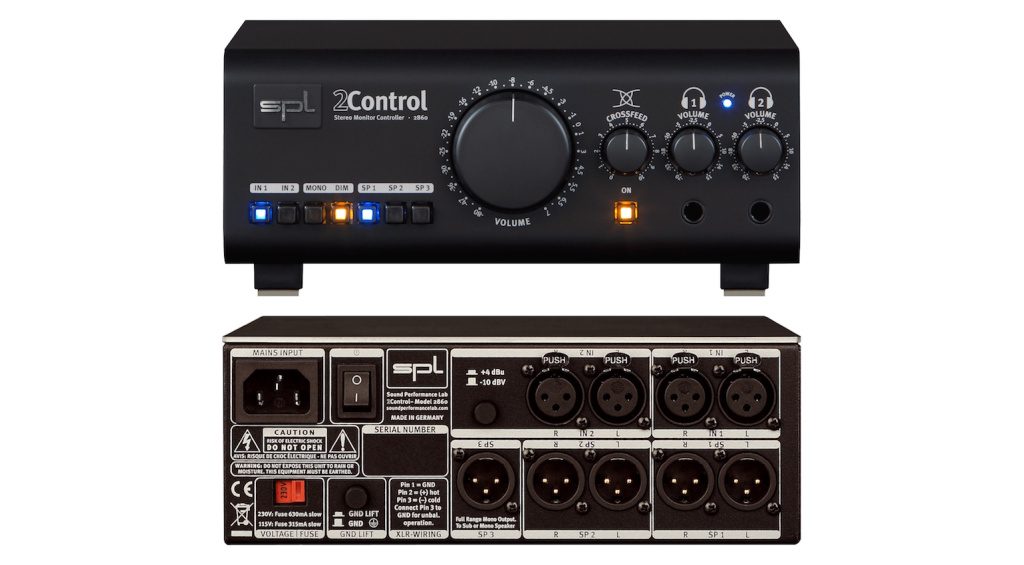
Despite these interface-level conveniences, dedicated monitor controllers occupy a critical tier of studio infrastructure, particularly in professional environments utilizing complex acoustic evaluation setups. When an engineer relies on multiple sets of monitoring references—such as primary nearfield production monitors contrasted with secondary mono "mix cubes" designed to check translation on consumer playback systems—precise gain staging, signal routing, and instantaneous switching become paramount. Devices like the SPL 2Control address these precise requirements by offering a dedicated analog signal path with illuminated, color-coded switching architecture that eliminates latency and digital artifacts. Additionally, the inclusion of discrete headphone amplifiers featuring advanced crossfeed circuitry allows engineers to simulate the acoustic crossfeed of physical studio monitors within a headphone environment, mitigating ear fatigue and improving spatial decision-making during late-night mix sessions.
Tracking with Dynamics: The Enduring Legacy of the Summit Audio TLA-100A
The philosophical debate regarding whether to commit compression during the initial tracking phase remains a perennial point of discussion among recording engineers. A prevalent modern-school philosophy suggests that tracking pristine, uncompressed audio into the DAW is the safest approach, leaving all dynamic control to plugins applied later in the mixing stage. Historical precedent, however, reveals that tracking through hardware dynamics processors was an indispensable foundational practice in the creation of classic recorded music.
Embodying this time-tested methodology, the Summit Audio TLA-100A tube leveling amplifier stands as one of the longest continuously manufactured single-origin outboard compressors in audio history, remaining a studio staple since its introduction in the 1980s. Often deployed as a set-and-forget peak leveler—particularly for lead vocal tracking—the TLA-100A bridges the gap between optical and transistor-based compression topologies. While it shares the intuitive, program-dependent operational simplicity of classic optical levelers like the LA-2A, its proprietary solid-state compression cell delivers a markedly faster onset time. This technical characteristic allows the unit to transparently shave off aggressive vocal transients without imparting excessive unwanted coloration or pumping artifacts. The enduring commercial viability of the TLA-100A underscores a broader truth about studio hardware: tools that solve fundamental acoustic problems efficiently will always retain their value, regardless of how drastically software processing evolves.
Implications for the Modern Production Landscape
As the audio technology sector continues to advance, the boundary between hardware and software continues to blur, giving rise to hybrid workflows that leverage the best attributes of both domains. While items such as hybrid 500-series interfaces, digital patchbays, compact mixers, dedicated monitor controllers, and analog leveling amplifiers may initially be categorized as non-essential expenditures by budget-conscious creators, their practical implications for workflow efficiency and sonic distinction are profound. By mitigating operational friction, enhancing session recall, and fostering a more tactile, engaged creative process, these so-called "unnecessary" tools frequently prove to be among the most valuable investments a recording studio can make.
Related posts: