The Future of Home Cinema: Are New Ultra-Short Throw Projectors Finally Solving the Black Depth Dilemma

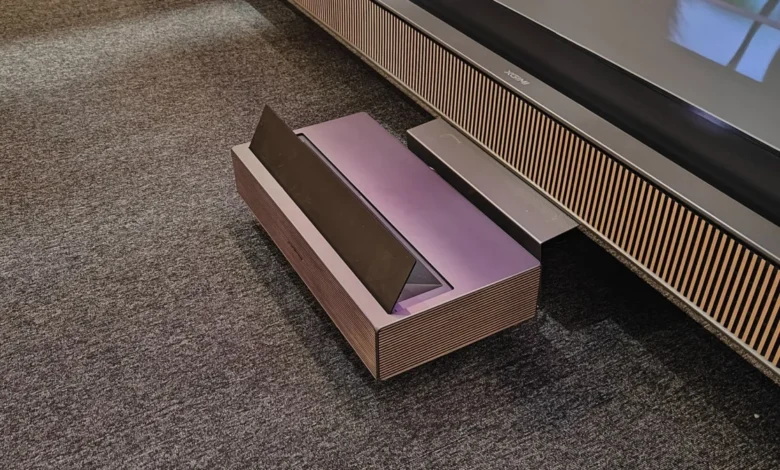
In theory, an ultra-short throw (UST) projector offers the most streamlined and practical path to achieving a true cinematic experience within the home. By positioning an all-in-one unit mere inches from a wall or dedicated screen, users can project images exceeding 200 inches without the spatial constraints of traditional long-throw setups, which often require ceiling mounts and complex cable routing. Yet, the transition from theoretical convenience to practical execution has historically been fraught with technical hurdles. While these devices eliminate the "clutter" associated with traditional projection, they frequently introduce a secondary set of challenges: complex manual calibration, geometric distortion, and persistent difficulties in achieving true, deep-black reproduction.
The Persistent Challenges of UST Technology
For years, the home cinema industry has grappled with the physical limitations of projection. Unlike OLED or Mini-LED television panels, which emit light from individual pixels—allowing for "perfect blacks" by turning off specific diodes—projectors rely on beaming light onto a reflective surface. This inherent reliance on reflected light has traditionally led to washed-out shadows and a lack of contrast. Many manufacturers have attempted to mask these deficiencies by aggressively boosting contrast levels via software, a practice that often results in the loss of shadow detail and an unnatural, crushed image.
Furthermore, the initial setup phase for many premium UST projectors remains notoriously labor-intensive. Even for enthusiasts, the "fiddling" required to align the image perfectly with a screen is often a multi-hour endeavor. Whether using proprietary mobile applications or manual keystone adjustment dials, the process is rarely the "plug-and-play" experience that marketing materials promise. Recent testing conducted by industry experts, including the editorial team at What Hi-Fi?, underscores this; even award-winning units often require significant time-consuming adjustments to achieve a crisp, properly aligned picture that respects the intended aspect ratio and resolution.
A New Wave of Innovation at IFA 2026
The landscape of home entertainment appears to be shifting, as evidenced by recent product unveilings at the 2026 IFA consumer electronics exhibition in Berlin. The event, which serves as a global barometer for the state of the home cinema market, showcased two prominent entries into the premium UST category: the Xgimi Aura 3 Max and the AWOL LuxVision. These devices represent a significant technological leap, addressing the two primary pain points of the category: image calibration complexity and poor low-light performance.
The Xgimi Aura 3 Max has set a new industry benchmark by becoming the first 4K UST projector to support a 120Hz refresh rate. With 5,700 ISO lumens of peak brightness and a native contrast ratio of 8,000:1, the device is designed to provide a more robust dynamic range than its predecessors. Similarly, the AWOL LuxVision has introduced a proprietary "optical shift" feature. This is the first time such technology has been integrated into a 4K/120Hz UST unit, allowing users to physically adjust the image positioning without resorting to digital keystone correction, which inherently degrades resolution.
Technical Specifications and Performance Metrics
The shift toward 4K/120Hz compatibility is a response to the growing demands of both modern cinematic content and high-end gaming. As console and PC gaming push toward higher frame rates, projectors that can only manage 60Hz are becoming increasingly obsolete for the enthusiast market.
Xgimi Aura 3 Max Key Metrics:
- Resolution: 4K UHD
- Refresh Rate: 120Hz
- Peak Brightness: 5,700 ISO Lumens
- Contrast Ratio: 8,000:1
- Smart Integration: Google TV OS
- Audio: Integrated Dolby Atmos support
AWOL LuxVision Key Metrics:
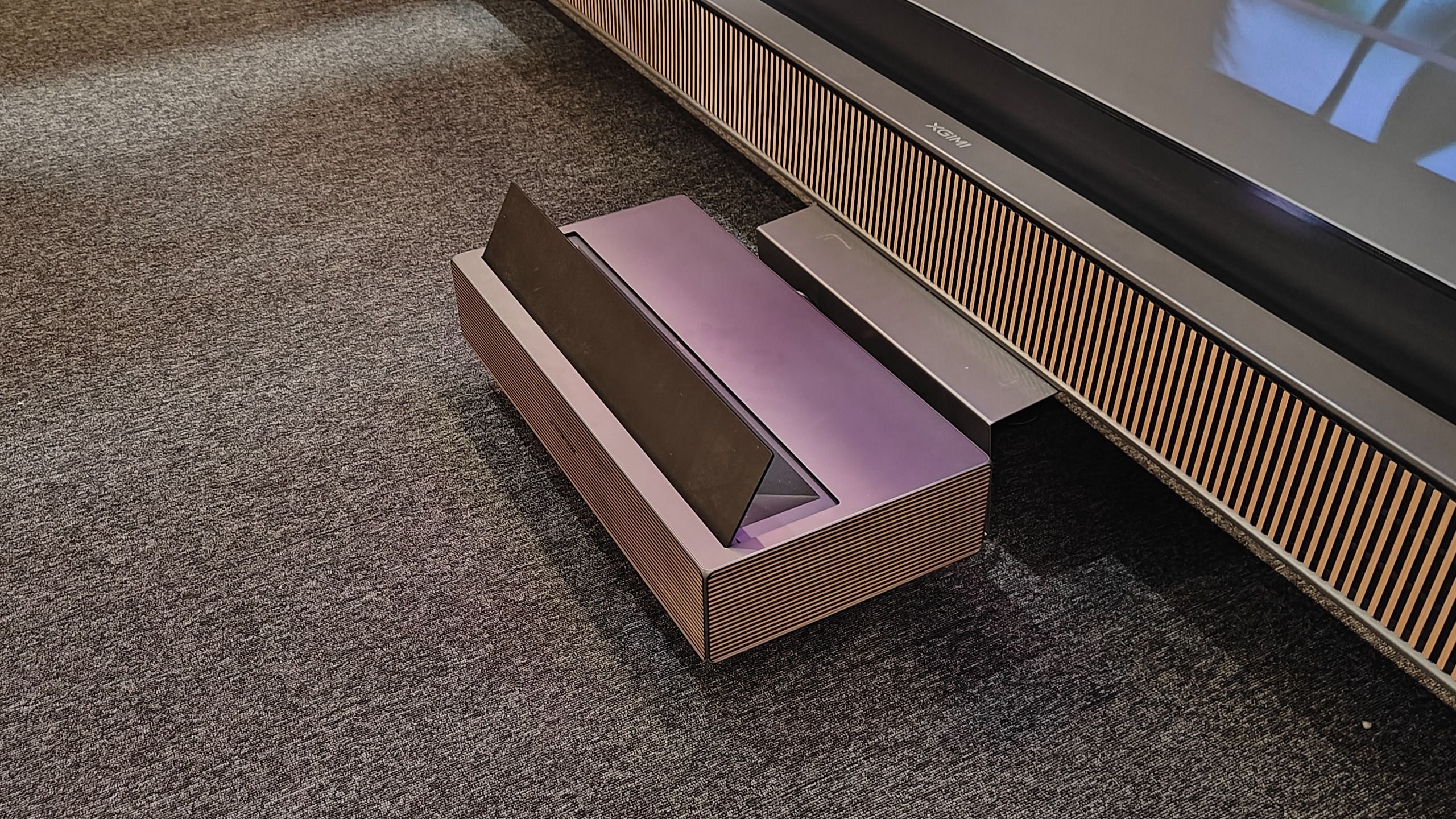
- Resolution: 4K UHD
- Refresh Rate: 120Hz
- Key Feature: Optical Shift (non-degradative image alignment)
- Peak Brightness: 6,000 ISO Lumens
- Smart Integration: Google TV OS
- Audio: Integrated Dolby Atmos support
The integration of Google TV as a standard operating system across these platforms ensures a cohesive user interface, allowing for seamless streaming of high-bitrate 4K content from major platforms without the need for additional external hardware.
Initial Observations and Field Testing
Demonstrations at IFA provided a preliminary look at how these technical specifications translate to real-world performance. Despite the challenges of exhibition lighting—which typically washes out projected images—both units demonstrated marked improvements in image processing.
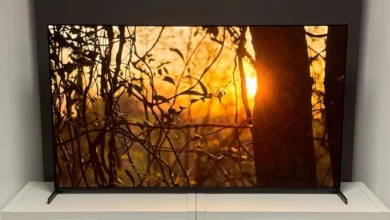
The Xgimi Aura 3 Max, when displaying nature documentary footage, rendered high-frequency textures with remarkable clarity. The reproduction of fur and organic patterns suggests that the unit’s image processing engine is capable of handling complex detail without the "oversharpening" artifacts that often plague lower-end projectors. Crucially, the shadow detail observed in the darker areas of the image indicated a genuine improvement in black depth, moving beyond the crude contrast boosting of the past.
The AWOL LuxVision, tested during a playback of high-contrast music video content, emphasized color saturation and peak brightness. With its 6,000-lumen output, the projector managed to maintain a punchy, engaging image even under ambient light conditions. While controlled environments remain the only way to fully assess black-level performance, the initial results from these trade show demonstrations suggest that the category is finally maturing.
Industry Implications and Future Outlook
The introduction of optical shift technology in the AWOL LuxVision could be the most significant development for the average consumer. For years, the reliance on digital keystone correction has been the "Achilles’ heel" of UST setup. By enabling physical adjustment, the manufacturer is signaling a move toward user-friendliness that could dramatically widen the appeal of high-end projectors.
The shift in focus—from simply chasing higher lumen counts to refining the user experience and improving native contrast—reflects a broader trend in the home cinema market. As consumer expectations rise, driven by the ubiquity of high-quality OLED panels, manufacturers of UST projectors are under increasing pressure to deliver a comparable viewing experience.
Looking forward, the industry must address the remaining gap between the "showroom experience" and the "living room reality." While these new models are undeniably impressive, their performance in the complex, uncontrolled lighting environments of typical homes remains the final test. If these units can maintain their 4K/120Hz fidelity and improved contrast levels in standard residential settings, they will likely solidify their position as the preferred alternative to large-format flat-panel televisions.
Conclusion: A Maturing Category
The advancements seen at IFA 2026 indicate that the ultra-short throw category is exiting its experimental phase. The convergence of high-refresh-rate gaming capabilities, intelligent image alignment, and refined light-source management suggests that the "simplicity" promised by UST technology may finally be catching up to its "performance" potential. For the consumer, this signifies a future where the trade-off between the convenience of a projector and the image quality of a high-end television is becoming increasingly negligible. As these units transition from the trade show floor to the laboratory for final, rigorous testing, the home cinema industry stands on the precipice of a significant, and much-needed, technological evolution.