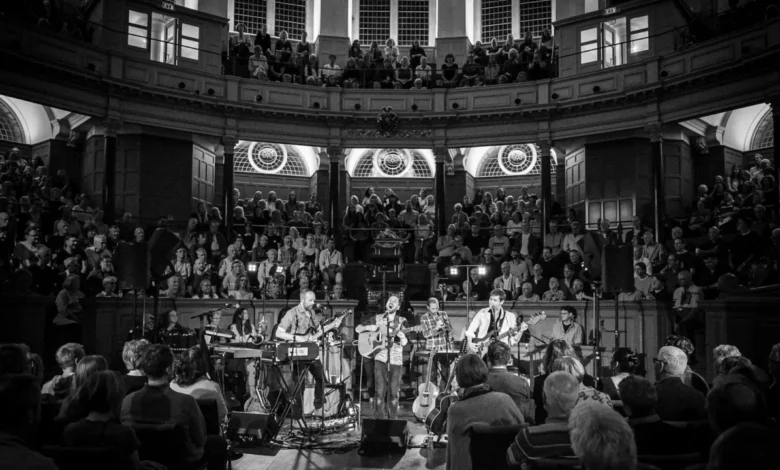
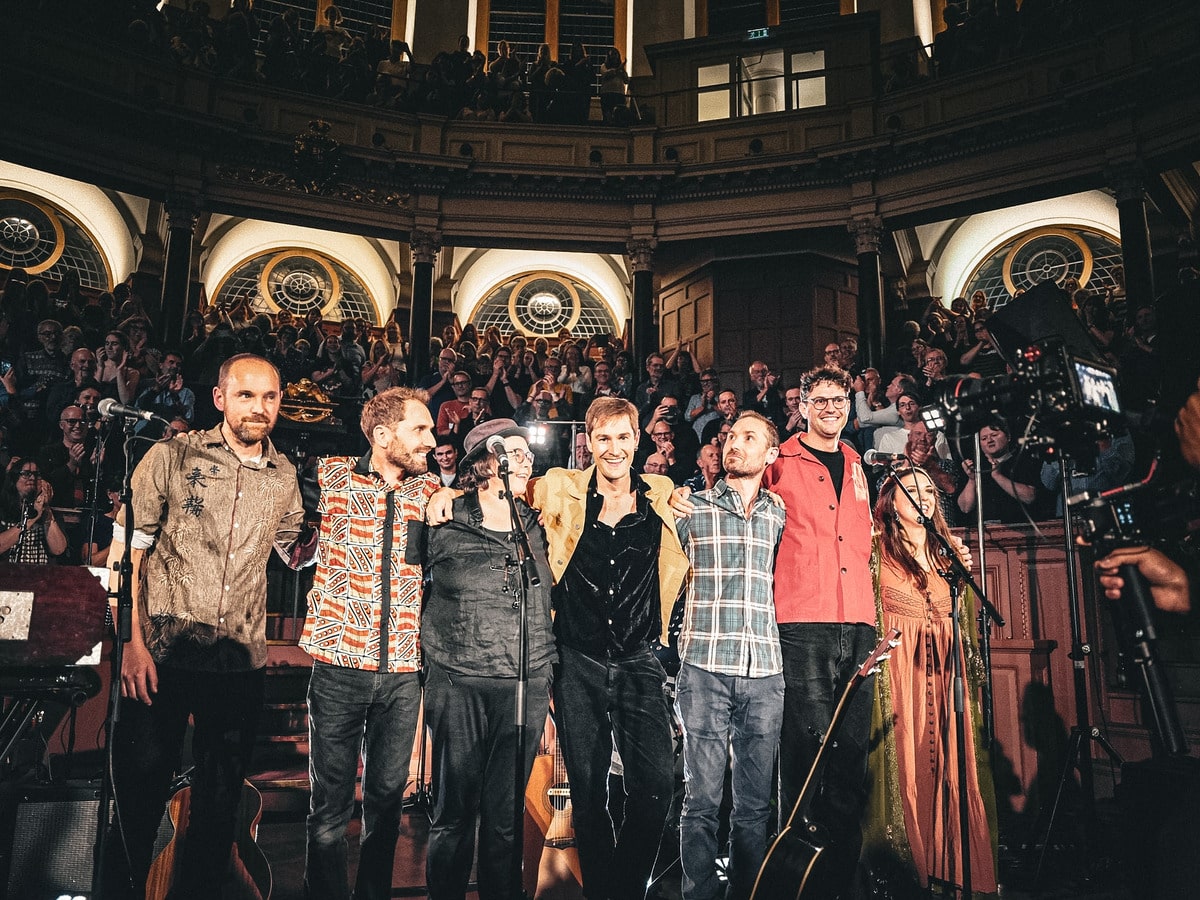
The Sheldonian Theatre, a 17th-century architectural marvel designed by Sir Christopher Wren, served as the backdrop for an ambitious album launch by Oxford-based indie-folk band Stornoway. Celebrating the release of their latest record, "Beyonder," the band transformed the historic ceremonial hall of the University of Oxford into a site of modern musical synthesis. The performance marked a significant milestone for the group, blending their established indie-folk roots with a newly formed, 400-strong ensemble known as the River of Voices Choir, effectively bridging the gap between historical acoustics and contemporary collaborative art.
A Chronology of the Evening
The evening commenced with a palpable sense of anticipation as the audience filled the circular, tiered seating of the Sheldonian. Stornoway, whose formation is deeply intertwined with the cultural fabric of Oxford, opted for this venue to frame what they have described as their most ambitious project to date. The proceedings began with "Marco Polo," the lead single from "Beyonder," which set a rhythmic, forward-moving tone. This was followed by "Farewell Appalachia" and "Fuel Up," tracks that established a sonic trajectory from the introspective to the nostalgic.
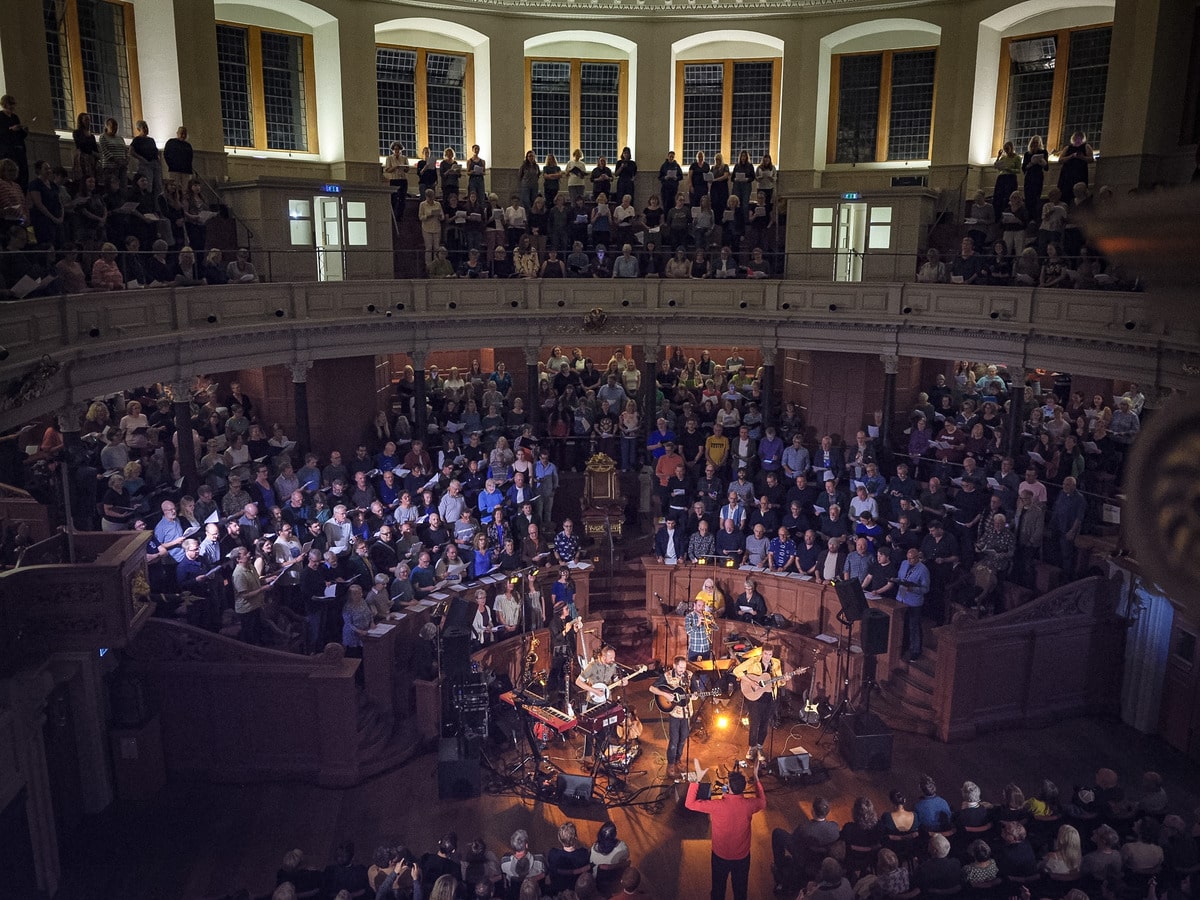
Midway through the set, the band transitioned into more experimental territory with "Fire and Water," a track characterized by its stripped-back, raw production. The second half of the performance was dominated by the debut of the River of Voices Choir. The choir, an evolving community project that seeks to unify participants through collective vocal performance, created a profound acoustic experience, particularly during the rendition of "Josephine." This song, previously reimagined in collaboration with the South African choral group Ladysmith Black Mambazo, served as the emotional centerpiece of the evening, demonstrating the band’s commitment to large-scale choral arrangements.
Background and Context: The Evolution of "Beyonder"
"Beyonder" represents a shift in Stornoway’s creative process. According to lead singer Brian Briggs, the album’s conceptual roots can be traced to the remote landscapes of St Kilda, an archipelago in Scotland. The transition from the isolation of that "wild place" to the academic, communal setting of the Sheldonian reflects the band’s thematic interest in geography and human connection.
The River of Voices Choir itself is not a static entity. Following a high-profile debut at the Royal Albert Hall earlier this year, the choir has functioned as an open-access platform. By hosting a workshop in Oxford hours before the Sheldonian concert, the band ensured that the ensemble remained a dynamic, participant-led project. This approach echoes broader trends in the music industry where artists are increasingly prioritizing community-based engagement over traditional, isolated performance models.
Supporting Data and Acoustic Significance
The Sheldonian Theatre poses unique acoustic challenges for modern amplified music. Constructed in 1669, the hall features a flat ceiling and a highly resonant interior, designed primarily for oratory and academic ceremonies rather than rock instrumentation. The decision to integrate 400 voices into this space required a sophisticated approach to sound engineering and spatial arrangement.
Data regarding the project’s scale highlights the logistical complexity of the evening. The event required approximately ten times the standard preparation time of a typical tour stop. The "scratch" nature of the choir—comprised of locals and music enthusiasts recruited via workshops—added a layer of unpredictability. However, by utilizing the natural architecture of the hall, the band managed to achieve a balance between the band’s intimate songwriting and the overwhelming sonic power of a large-scale choral backing.
Official Responses and Artistic Philosophy
While the band’s front-man, Brian Briggs, has maintained a focus on the artistic merit of the new material, the broader implications of this performance center on the philosophy of "collective singing." Throughout the event, the band consistently emphasized that singing in unison serves as a primary form of human connection. This sentiment was echoed in the band’s decision to perform covers, such as "Leave your Light On" by local band The Epstein, and spontaneous moments like the birthday acknowledgement for an audience member.
These gestures underscore a specific brand of professional altruism. By ceding the spotlight to the choir and honoring local contemporaries, Stornoway reinforced their status as an "Oxford band" in the truest sense—one that draws from and contributes back to its local ecosystem. Observers noted that the anecdotal introductions to songs, such as the inspiration behind "Dig the Mountain," served to demystify the creative process, turning the formal setting of the Sheldonian into a more accessible, communal space.
Broader Impact and Industry Implications
The success of the Sheldonian launch provides a case study for mid-sized bands looking to scale their live performances without losing intimacy. In an era where ticket prices are rising and the demand for "experience-based" live music is at an all-time high, Stornoway’s model offers a viable alternative. By turning a concert into a participatory event—where the audience and the choir are essentially the same entity—the band has bypassed the traditional "performer-spectator" divide.
Furthermore, the integration of local choirs into touring schedules is an emerging trend that bolsters the sustainability of the arts. By utilizing local resources, artists can reduce the carbon footprint associated with touring large ensembles while simultaneously increasing local ticket demand through direct community involvement.
Conclusion: The Future of Stornoway’s Sound
As the final notes of "Zorbing"—the song that launched the band’s career—echoed through the 17th-century rafters, it became clear that Stornoway is currently operating at a peak of creative confidence. Whether or not "Beyonder" achieves commercial dominance on the charts is perhaps secondary to the precedent the band has set with this launch.
The performance demonstrated that a band’s legacy is not solely defined by the records they sell, but by the community they cultivate. By maintaining their connection to Oxford and championing the power of collective vocal performance, Stornoway has secured a niche that is both historically grounded and forward-looking. As the industry continues to grapple with the changing landscape of live entertainment, the "River of Voices" model stands as a testament to the enduring power of community-based art. The band’s ability to coordinate 400 voices in such a demanding acoustic environment serves as a significant professional achievement, marking a new chapter in their ongoing career.
Related posts: