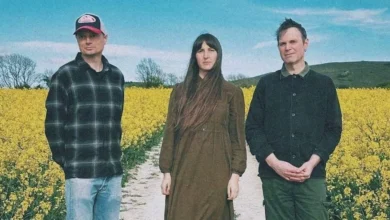
Acclaimed Western folk and Americana singer-songwriter Margo Cilker has officially marked a profound new chapter in her evolving career with the release of her third full-length studio album, Little White Cross. Issued independently via Fossil Records—a newly minted boutique label she co-founded alongside fellow musician ISMAY—the 10-track collection represents both a geographical and emotional departure for the Pacific Northwest-rooted artist. Recorded deep in the heart of Texas under the stewardship of veteran writer, producer, and Texas music royalty Bruce Robison, the album has already begun drawing critical praise for its sharp lyrical introspection, traditional instrumentation, and unvarnished emotional candor.
Describing the genesis of the project with her characteristic self-deprecating wit, Cilker noted of the album’s overarching themes: "You could definitely call it a concept record, if that concept is that I got really sad and went to Texas."
This relocation and subsequent creative immersion have yielded a body of work that synthesizes Cilker’s signature itinerant storytelling with the dusty, time-honored textures of Texas country and Western folk traditions. As Little White Cross makes its way into the hands of listeners and critics worldwide, the release signals not only a major artistic milestone for Cilker herself but also serves as the flagship launch for Fossil Records, positioning the artist firmly at the helm of her own commercial and creative destiny.
The Journey to Lockhart: Background and Production Context
The story of Little White Cross begins in the wake of significant personal and professional transition for Margo Cilker. Known for her critically lauded previous releases—which established her as one of the most vital, road-worn voices in modern Western folk—Cilker found herself navigating a period of emotional turbulence and creative searching. Seeking a change of pace and a fresh sonic palette, she made the decisive choice to leave her familiar surroundings and head south to Lockhart, Texas, a historic town renowned for its barbecue, its deep musical roots, and its slower, more deliberate pace of life.
To anchor the project, Cilker enlisted the production talents of Bruce Robison at his studio near Lockhart. Robison brings a formidable resume to the table, having previously shaped the sound of celebrated projects for major artists such as Charley Crockett, Lee Ann Womack, George Strait, and The Chicks. Robison’s production style—which expertly balances commercial accessibility with raw, organic instrumentation—proved to be the ideal foil for Cilker’s distinctively vulnerable songwriting.
Working alongside Robison, Cilker captured a sound that feels both timeless and urgent. The recording sessions prioritized live-room energy and human imperfection over digital polish, allowing the natural resonance of acoustic guitars, pedal steel, and rhythm sections to breathe. The resulting 10 tracks map out an internal landscape of grief, displacement, and eventual resilience, utilizing the wide-open spaces of the Lone Star State as a mirror for Cilker’s internal emotional weather.
A Chronology of Artistic Growth
To understand the weight and trajectory of Little White Cross, it is necessary to examine the rapid chronology of Cilker’s ascent within the Americana and independent folk communities. Over the past several years, she has systematically built a reputation as a relentless touring troubadour, logging thousands of miles across North America and Europe. Her music has consistently resonated with audiences looking for authentic narratives about the American West, working-class realities, and the bittersweet nature of life on the road.
The timeline leading up to the release of her third album highlights a deliberate shift toward artistic autonomy:
- Formative Years and Touring Roots: Cilker spent years cutting her teeth in various music scenes, absorbing the regional folk traditions of the Pacific Northwest and beyond, which heavily informed her early songwriting approach.
- Breakthrough Releases: Earning widespread critical acclaim from prominent roots music publications and platforms like No Depression, Cilker established herself as a formidable new voice in the Americana genre, characterized by poetic lyricism and sharp character studies.
- The Texas Pivot: Facing a period of personal stagnation and emotional heaviness, Cilker made the pivotal physical and creative move to Texas, setting up camp in Lockhart to begin writing and conceptualizing her next major body of work.
- Collaboration with Bruce Robison: Entering the studio with Robison, Cilker spent intensive weeks recording the material that would comprise Little White Cross, utilizing veteran session players to flesh out her arrangements.
- Founding of Fossil Records: In a move toward complete self-determination, Cilker partnered with fellow musician ISMAY to launch Fossil Records, establishing an independent home for their art free from the constraints of traditional major-label gatekeeping.
- Official Album Release: Little White Cross drops worldwide, accompanied by extensive promotional singles such as "State Line," signaling a fresh commercial and creative era for the artist.
Fossil Records and the Rise of Artist-Owned Infrastructure
Beyond the music itself, the launch of Little White Cross represents a significant structural development in Cilker’s career through the establishment of Fossil Records. Co-founded by Cilker and contemporary artist ISMAY, the label was born out of a shared desire among independent musicians to take control of their master recordings, distribution strategies, and career trajectories in an increasingly volatile music industry.
In recent years, the Americana and folk genres have seen a notable wave of artists opting out of legacy label systems in favor of independent setups or artist-owned imprints. This shift allows creators like Cilker to retain higher percentages of streaming royalties, maintain complete creative control over their visual and sonic branding, and cultivate more direct, unmediated relationships with their core fanbases.
Industry analysts have pointed out that launching a boutique label concurrently with a major album campaign requires a high degree of organizational fortitude and financial risk. However, by aligning with a seasoned producer like Bruce Robison and leveraging established digital distribution networks, Fossil Records has positioned itself as a viable, artist-first alternative in the modern roots-music ecosystem. The early success of Little White Cross under this banner suggests that artist-led models are not only sustainable but can also yield deeply focused, uncompromised artistic statements.
Broader Impact and Critical Implications for the Americana Genre
The release of Little White Cross arrives at a fascinating cultural crossroads for the Western folk and Americana genres. As mainstream music markets increasingly fragment into hyper-niche digital communities, authenticity and narrative depth have become the primary currency for independent artists. Cilker’s work has consistently challenged the polished, Nashville-centric formulas of commercial country music, offering instead a gritty, highly localized perspective that honors the traditions of storytelling pioneers while remaining thoroughly contemporary.
Critics have already begun drawing parallels between Cilker’s trajectory and the paths carved by legendary Texas singer-songwriters who found their footing by leaning into vulnerability and regional specificity. By transporting her Pacific Northwest sensibilities into the heart of Texas musical heritage, Cilker has crafted a trans-regional dialogue that broadens the traditional boundaries of what constitutes "Western folk."
Furthermore, the album’s thematic focus on mental health, emotional fatigue, and the healing power of travel speaks directly to a post-pandemic listenership that continues to grapple with collective burnout and social isolation. By rendering her personal sadness with such poetic clarity and musical warmth, Cilker transforms private grief into a communal experience, offering listeners a mirror for their own internal struggles.
As Little White Cross continues to circulate across radio playlists, streaming platforms, and critical roundups, its broader implications are clear. Margo Cilker has solidified her status not merely as a promising regional act, but as a central pillar of the modern independent folk movement. Backed by her own record label, seasoned by miles of touring, and sharpened by her transformative sojourn in Lockhart, Cilker stands at the vanguard of a new generation of artists who are rewriting the rules of the music industry on their own terms.