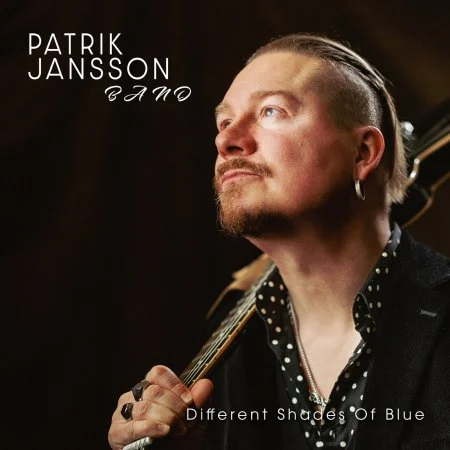
The contemporary European blues scene continues to evolve through the meticulous craftsmanship of artists who respect traditional idioms while infusing them with contemporary sensibilities. Swedish guitarist, vocalist, and songwriter Patrik Jansson has firmly established himself within this vibrant musical ecosystem. Sneaky Foot Records has officially announced the 2026 release of Different Shades Of Blue, the fifth full-length studio album by the Patrik Jansson Band. Spanning eight original compositions across a tightly curated 39-minute runtime, the record showcases Jansson’s distinct artistic evolution, moving fluidly through swinging instrumental openings, high-energy rhythm and blues, soulful shuffles, and introspective slow-burning ballads. Recorded entirely in Sweden, the project captures the seasoned interplay of a tight-knit ensemble while highlighting Jansson’s sophisticated compositional skills and adept guitar work.
Main Facts and Album Overview
Different Shades Of Blue arrives as a significant milestone in Jansson’s discography, which began with his debut album in 2011. Since that initial offering, Jansson has maintained a steady creative output, delivering three additional band albums alongside a solo project recorded during the unprecedented disruptions of the COVID-19 pandemic. For this latest release, Jansson anchored his creative vision entirely in original material, writing every track featured on the 2026 record.
The core lineup supporting Jansson features Robin Hillgren on keyboards and backing vocals, Thomas Andersson on bass guitar, and Daniel Sohlberg holding down the rhythm section on drums. To expand the sonic palette of the arrangements, the ensemble welcomed guest contributors on select tracks. Jesper Larsson infuses a sharp dynamic into the proceedings with his harmonica work on one track, while a dynamic horn section featuring Stephen Spenser on saxophone, Erik Forsberg on trumpet, and Yahlmar Olofsson-Tuisku on trombone enriches three separate arrangements. The resulting sound is a robust, multi-layered contemporary blues experience that balances technical proficiency with emotional accessibility.
Chronology and Background Context
Patrik Jansson’s journey as a recognized recording artist spans a decade and a half of consistent touring, writing, and studio production. When Jansson released his debut album in 2011, he entered a Swedish blues market deeply appreciative of both American traditional blues and British blues-rock revivals. Over the subsequent years, Jansson methodically refined his tone, vocal delivery, and song structures through successive releases with his backing band.
The timeline of Jansson’s career took a unique turn during the global health crisis, which prompted many independent musicians to pivot toward isolated home-recording formats. Jansson utilized this period of restricted public performance to focus inward, culminating in a solo release that tested his capacity for self-production and solitary instrumentation. Returning to the full-band format for Different Shades Of Blue represents a triumphant synthesis of those solitary reflections and the kinetic energy of collective ensemble playing. Recorded in professional studio facilities in Sweden, the album bridges the gap between Jansson’s introspective acoustic experiments and the high-octane live shows that originally built his European following.
Track-by-Track Musical Analysis

The structural sequencing of Different Shades Of Blue demonstrates a keen understanding of dynamic pacing, ensuring that the listener is guided smoothly through contrasting emotional states and musical styles.
The album commences with an instrumental piece titled "What’s Up?". Rather than easing the listener in with a conventional vocal number, the band immediately establishes a swinging, infectious groove. Jansson’s fluent guitar lines take center stage, quickly demonstrating his technical dexterity before yielding space to the horn section for well-crafted solo turns. This high-spirited opening establishes a confident tone for the remainder of the record.
Transitioning into vocal-driven material, Jansson displays a clear, resonant singing style characterized by only a faint trace of his native Swedish accent. "Gold Digger" introduces a distinctly funky rhythm, exploring thematic territory centered on a partner whose primary motivation appears to be financial gain, leaving the narrator behind. This track highlights the rhythm section’s capability to lock into a tight, syncopated groove.
The energy shifts back toward traditional foundations with "Keep Me Satisfied," a driving shuffle anchored by drummer Daniel Sohlberg’s crisp pocket. The track serves as a showcase for Jansson’s versatile fretboard work, featuring a solo that varies dynamically from melodic phrasing to sharper blues-rock phrasing.
Slowing the tempo down significantly, "Know Where To Go" functions as a philosophical meditation on personal decision-making and resilience. Jansson offers reassuring advice through contemplative lyrics, noting that while making life-altering choices is never simple, following one’s heart ultimately leads to resolution. Discreet horn accents color the chorus, while Jansson delivers a spiraling, emotive guitar solo that gradually dissolves into the track’s fade-out.
The emotional weight deepens with "Love Is A Gamble," a slow blues composition underscored by melancholic introspection. Jansson reflects on the inherent risks of romance, singing that despite the universal uncertainty of love, he invariably finds himself on the losing end of the emotional transaction.
Midway through the sequence, the album subverts expectations with "Joline." Despite a title reminiscent of Dolly Parton’s famous country classic, Jansson pivots into an uptempo rhythm and blues number. The integration of harp and horns injects an undeniable vitality into the arrangement, creating an infectious rhythm that encourages physical movement.
Reflecting on personal accountability, "Love And War" opens with delicate guitar picking before evolving into a reflective slow ballad. Jansson examines the anatomy of a failed relationship, demonstrating refreshing self-awareness by acknowledging his own shortcomings and priority missteps during the partnership’s decline.
The album closes with a serene stylistic departure, "Lullaby For Deci." True to its descriptive title, the track is a quiet, delicate instrumental piece that pairs Jansson’s understated guitar styling with a warm, enveloping wash of organ sound, offering a peaceful resolution to the musical journey.

Supporting Data and Production Metrics
Different Shades Of Blue by Patrik Jansson Band
- Release Year: 2026
- Label: Sneaky Foot Records
- Total Track Count: 8 original compositions
- Total Runtime: 39 minutes
- Primary Recording Location: Sweden
- Core Personnel: Patrik Jansson (lead vocals, guitars); Robin Hillgren (keyboards, backing vocals); Thomas Andersson (bass); Daniel Sohlberg (drums).
- Featured Guest Musicians: Jesper Larsson (harmonica); Stephen Spenser (saxophone); Erik Forsberg (trumpet); Yahlmar Olofsson-Tuisku (trombone).
Official Responses and Industry Perspectives
While major commercial radio formats rarely prioritize contemporary independent blues releases, underground European blues publications and specialty curators have greeted the announcement of Different Shades Of Blue with considerable enthusiasm. Representatives for Sneaky Foot Records have emphasized that the album represents a high-water mark for independent Swedish roots music, noting the exceptional synergy achieved by combining Jansson’s mature songwriting with the precise horn and keyboard arrangements.
Although formal statements from competing artists are unavailable, independent blues critics have frequently praised Jansson’s commitment to self-penned material rather than relying exclusively on standard blues covers. This dedication to original composition is widely viewed within the European blues community as essential for the genre’s long-term sustainability and artistic credibility.
Broader Impact and Implications
The release of Different Shades Of Blue carries notable implications for the positioning of Scandinavian artists within the broader, traditionally American-centric blues landscape. For decades, European blues acts faced skepticism regarding their authenticity when interpreting a genre born out of the African American experience in the American South. However, artists like Patrik Jansson have systematically dismantled these geographical boundaries by developing a distinct voice that honors historical foundations while incorporating contemporary European melodic sensibilities and rigorous musicianship.
Furthermore, the economic and operational model behind this release—managed via independent imprints like Sneaky Foot Records—underscores the viability of niche genre production in the digital age. By focusing on concise, highly polished physical and digital releases rather than bloated tracklists, independent artists can maintain creative control while delivering cohesive artistic statements that appeal to dedicated genre enthusiasts globally.
Ultimately, Different Shades Of Blue stands as a testament to Patrik Jansson’s artistic maturation. Through disciplined songwriting, stellar guest contributions, and a balanced track sequence spanning swinging instrumentals, funky grooves, and reflective ballads, the Patrik Jansson Band has delivered an accessible yet sophisticated body of work destined to resonate across the international blues community throughout 2026 and beyond.