Sharon Carty Bridges Classical Performance with Community Leadership and Dramatic Depth in Irish Opera

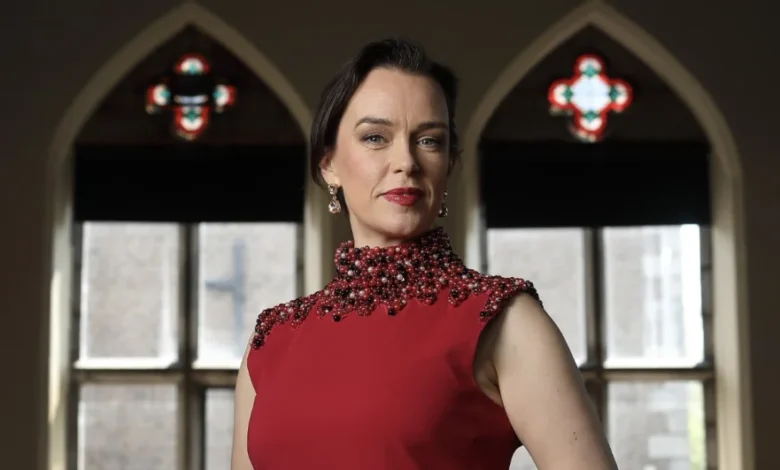
The landscape of Irish classical music is defined by versatility, rigorous artistic standards, and a continuous willingness to engage with diverse audiences. At the center of this dynamic ecosystem is acclaimed mezzo-soprano Sharon Carty, whose career defies the traditional boundaries of a modern opera singer. Balancing a demanding international performance schedule with leadership roles, educational initiatives, and administrative duties, Carty has established herself as a multifaceted cultural figure. Her recent artistic endeavors, including her leadership of the Sligo Baroque Festival and her critically lauded portrayal of Mary in the Irish National Opera production of Testament, underscore a career driven by intellectual curiosity, vocal flexibility, and a deep-seated commitment to community engagement.
A Career Shaped by Adaptability and Diverse Influences
Carty’s journey in the classical music world is characterized by an unconventional trajectory. Unlike many artists who specialize early in a narrow vocal fach, Carty’s career resembles a carefully assembled jigsaw puzzle. Beginning her formal path as a singer later than many of her peers, she initially felt she was playing catch-up. However, this later start provided her with a unique perspective, shaped in part by her professional background as an educator. Her natural vocal flexibility allows her to transition seamlessly between lieder recitals, complex oratorios, and operatic roles spanning various centuries and musical styles.
This adaptability has not only sustained her presence on prominent European stages, particularly in Italy and across Ireland, but has also informed her off-stage ventures. Her pedagogical background remains a foundational element of her artistic identity, equipping her with the skills required to collaborate effectively with amateur choirs, community groups, and non-traditional ensembles, such as her work with Gamelan music practitioners. Carty maintains that artists carry a social responsibility to share their craft beyond elite performance spaces, engaging children, adults, and local communities alike.
Directorial Leadership at the Sligo Baroque Festival
In addition to her performance commitments, Carty assumed the role of artistic director for the Sligo Baroque Festival less than two years ago, marking a significant transition into arts administration and strategic cultural leadership. While her immediate priority remains her active singing career—an instrument she carefully safeguards with a view toward performing for another decade—she envisions festival direction as a vital mechanism for supporting historical performance in the northwest of Ireland.
The transition from freelance performer to festival director required the cultivation of an entirely new suite of skills. While collaboration is inherent to both chamber music and team sports—two of Carty’s lifelong passions—administrative leadership introduces complex layers of institutional management, budgeting, marketing, and stakeholder communication. Carty emphasizes the necessity of maintaining strict boundaries between her administrative responsibilities and her vocal preparation, ensuring that she ring-fences the time required to achieve the intense focus demanded of a principal performer.
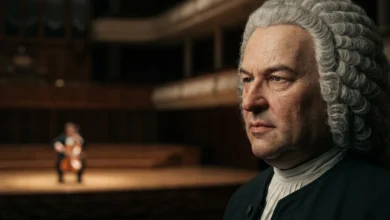
Building on the success of her inaugural festival year—which featured a celebrated performance of Vivaldi’s Gloria by a newly established festival chorus and record-breaking gala concert attendance—the Sligo Baroque Festival continues to expand its scope. The upcoming September installment features a performance of Handel’s demanding Dixit Dominus, alongside thematic programming dedicated to German Baroque music.
Community Integration and Youth Development
A central pillar of Carty’s vision for the Sligo Baroque Festival is deep community integration. Recognizing a deficiency in specialized early-music training infrastructure in the region, the festival actively collaborates with local schools and instrumental ensembles. The Sligo Baroque Orchestra, directed by founding conductor Rod Alston, actively engages young musicians from early childhood through their teenage years.
Furthermore, the festival secured critical funding from the Carne Group to establish a pilot youth choral program. Slated to launch in October, immediately following the festival’s conclusion, this initiative aims to cultivate a pipeline of young choral singers who will eventually feed into the main festival chorus. By integrating open choral rehearsals, masterclasses on the St. Matthew Passion led by tenor Simon Bode, and family-friendly historical programming such as Telemann’s Gulliver Suite, the festival actively lowers barriers to entry for classical music appreciation.
Theatrical Depth in Testament: A Feminist Reimagining
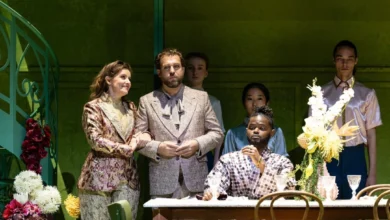
Beyond her administrative duties in Sligo, Carty has garnered significant critical acclaim for her dramatic and vocal work on the contemporary operatic stage. Most notably, she recently originated the role of Mary in Testament, a new opera composed by Tarik O’Regan with a libretto by renowned Irish author Colm Toíbín. Following its premiere at the Galway Arts Festival, the production is scheduled for a high-profile Dublin run in October.
Testament offers a radical departure from traditional liturgical depictions of the Virgin Mary. Based on Toíbín’s novel The Testament of Mary, the opera presents a fictionalized, first-hand account of the events surrounding the Wedding at Cana, the Crucifixion, and its harrowing aftermath. Unlike the novel, which relies entirely on a solitary internal monologue, the operatic adaptation introduces a chorus and five supporting characters who interact directly with the protagonist.
Set against a stark visual backdrop inspired by the colors of the Turin Shroud, with costumes crafted from authentic Irish linen, the production deliberately avoids modernizing the biblical narrative. Carty approaches the character not as an idealized icon, but as a traumatized, middle-aged mother navigating an environment of intense political and social hostility. Eschewing the notion that Mary’s expressions of fear stem from paranoia, Carty interprets the character’s guarded demeanor as a realistic response to the extreme dangers faced by associates of a condemned dissident.
Vocal Demands and Contemporary Score Construction
Musically, Testament presents an intricate challenge for its performers. Scored for an intimate ensemble of seven instrumentalists—comprising cello, violin, viola, clarinet, flute, mandolin, and accordion—the musicians are physically integrated into the staging as members of the surrounding village.
The score, praised by reviewers for its understated power, utilizes a complex blend of quasi-recitatives, delicate concordant choral writing, and jarring, aggressive harmonic shifts during the crucifixion sequence. Working closely with the composer and conductor, Carty utilized a vibratoless vocal delivery to convey the character’s emotional containment, punctuated by explosive outbursts reflective of mortal peril. This stylistic choice has drawn praise for its raw humanity and psychological precision.
Navigating Public Reception and Artistic Freedom
The production’s provocative framing has not been without controversy. On opening night, public demonstrations reflected tensions surrounding contemporary artistic interpretations of religious figures. Carty, however, defends the work as a vital exploration of human vulnerability. By examining the perspective of a woman thrust into the center of historic trauma without the safety net of modern agency, the opera invites audiences to reconsider familiar narratives through a deeply human lens.
Looking Ahead: Future Engagements
As Carty prepares for her upcoming Dublin performances of Testament, her schedule shows no signs of slowing down. Looking further ahead, she is slated to make a highly anticipated debut as Mistress Page in a new production of Otto Nicolai’s The Merry Wives of Windsor at the Longborough Festival. Conducted by Christopher Ward and directed by Anna Morrissey, this role will add another dimension to a career that continually bridges historical performance, contemporary opera, and cultural leadership.
Through her commitment to artistic excellence, regional arts advocacy, and pedagogical mentorship, Sharon Carty continues to shape the trajectory of classical music in Ireland, demonstrating that a modern career in the arts can successfully encompass both virtuosic performance and community-driven leadership.