The High-Stakes Battle Between the American Federation of Musicians and Major Labels Over Generative AI Licensing Deals

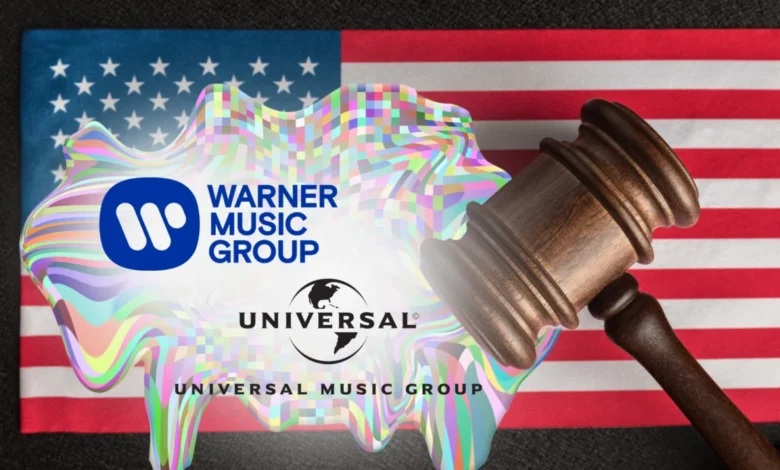
As the global music industry rushes headlong into the lucrative and contentious frontier of artificial intelligence, a high-stakes legal battle in the United States is exposing deep divisions over who truly profits from technological advancement. The American Federation of Musicians (AFM), one of the most prominent labor organizations representing instrumentalists in the United States and Canada, remains locked in a bitter court dispute with two of the world’s largest record conglomerates: Universal Music Group and Warner Music Group. At the heart of this legal confrontation is a fundamental disagreement over contractual obligations, specifically how decades-old collective bargaining agreements apply to the modern phenomenon of training generative AI models on copyrighted master recordings.
The unfolding litigation highlights a glaring blind spot in the music business: while major labels secure multi-million-dollar partnerships with AI audio startups like Udio and Suno, the session musicians, background instrumentalists, and orchestral players whose performances form the bedrock of these catalogues are largely being left out of the financial equation. As both sides trade aggressive legal filings in an attempt to sway the presiding judge, the outcome of this case could establish a monumental precedent for labor rights, copyright enforcement, and fair compensation in the age of machine learning.
Background Context and the Genesis of the Dispute
To understand the gravity of the current lawsuit, one must examine the legal and economic architecture of the modern recording industry. For generations, session musicians have operated under union-negotiated frameworks designed to protect their intellectual labor. Among the most critical of these frameworks is the Sound Recording Labor Agreement (SRLA), a comprehensive master contract that governs the terms under which musicians are hired, compensated, and credited by major record labels.
The SRLA establishes standardized session rates, health and pension contributions, and strict guidelines regarding how finished master recordings can be utilized. Crucially, the agreement includes a heavily scrutinized provision known as the "new use clause." Drafted in an era before digital streaming, data scraping, and generative neural networks, this clause was designed to protect performers when their recorded works were repurposed in ways not originally anticipated by the parties at the time of the recording session. For instance, if a track recorded for a standard commercial release was later licensed for a television commercial, a video game, or a movie soundtrack, the new use clause historically triggered an obligation for the label to compensate the participating musicians and notify the union.
Fast forward to the present day, and the music industry has entered a gold rush of generative AI licensing. Over the past two years, major record labels have signed various commercial agreements with technology firms that develop AI models capable of generating synthetic vocals, instrumentation, and complete musical compositions. These technology companies require vast troves of high-quality audio data to train their algorithms—a process that involves ingesting, analyzing, and learning from copyrighted master recordings.
When Universal Music Group and Warner Music Group entered into landmark partnerships involving AI platforms such as Udio and Suno, they did so as corporate rightsholders. However, they omitted a crucial step from the perspective of organized labor: they neither consulted nor offered compensation to the session musicians whose performances were baked into the training data. This oversight prompted the AFM to take decisive legal action.
Chronology of the Legal Confrontation
The legal hostilities between the music union and the major labels have escalated rapidly over a matter of months, moving from tense behind-the-scenes negotiations to a formal courtroom battle.
- June 2024: The American Federation of Musicians officially files a federal lawsuit against Universal Music Group and Warner Music Group. The complaint alleges that both major labels breached their contractual obligations under the Sound Recording Labor Agreement by failing to apply the "new use clause" to their respective AI licensing and data-sharing agreements with generative platforms like Udio and Suno.
- Summer and Autumn 2024: Legal teams for Universal and Warner move aggressively to have the lawsuit dismissed entirely. The labels argue that the union’s legal interpretation of the SRLA is fundamentally flawed and legally untenable.
- Current Developments: Both the AFM and the major record companies submit new, highly detailed legal filings to the court. The defense continues to press for a dismissal, insisting that the contractual language is unambiguous and favors the labels, while the union pushes back, arguing that its interpretation is at the very least plausible enough to let the case proceed to discovery.
The Core Legal Argument: Contractual Interpretation of the "New Use Clause"
The entire lawsuit hinges upon a fierce battle of legal interpretation regarding the precise wording and intent of the SRLA’s new use clause. Both sides present starkly opposing views of contract law, leaving the presiding judge with the delicate task of parsing decades-old labor language in the context of twenty-first-century artificial intelligence.
Universal Music Group, in its recent court filings, insists that the disputed clause is "clear and unambiguous." The label argues that the text explicitly dictates how compensation for a new use must be calculated: when a label utilizes a covered recording for a purpose not explicitly covered by the base agreement, it must pay "an amount equal to all payments that would be required under the AFM agreement that would then be effective if the recording were originally made for the purpose set forth under that agreement."
In simpler terms, Universal contends that the new use clause does not actually state a standalone rate; instead, it "imports" a rate from a separate, specific AFM agreement governing that exact new purpose. The fatal flaw in the union’s case, according to the majors, is that no such separate AFM agreement currently exists for artificial intelligence training or generative music creation. Because there is no existing standard union agreement covering AI session rates, Universal and Warner argue that the new use clause cannot logically be triggered, rendering the lawsuit legally baseless. Furthermore, Universal criticized the union’s legal strategy as a "scattershot series of arguments that obscure rather than confront what the contract makes clear."
The American Federation of Musicians firmly rejects this narrow interpretation. In its counter-filings, the union maintains that there is no absolute legal requirement for a separate, pre-existing AI-specific agreement for the new use clause to take effect. The text of the SRLA, according to AFM, clearly imposes a mandatory payment obligation the moment a signatory record company puts a covered master recording to a purpose not covered by the baseline agreement—such as feeding audio into a machine-learning neural network.
Addressing the labels’ argument regarding the absence of a specific AI rate sheet, the union points out that existing provisions within the broader SRLA—including standard session rates, streaming residuals, and commercial sampling rates—provide entirely objective mathematical measures from which judicial damages can be readily calculated.
Crucially, while Universal and Warner are staking their entire dismissal motion on the assertion that the contract has only one possible meaning (their own), the AFM adopts a more flexible legal posture. The union concedes that the new use clause could be viewed as "reasonably susceptible to more than one interpretation." Under civil procedure standards, if a contract is found to be ambiguous and the plaintiff’s interpretation is merely "plausible," the case must survive a motion to dismiss and proceed to the discovery phase, denying the defendant an early exit. AFM remains fully confident that its reading of the contract easily meets this plausibility threshold.
Broader Industry Impact and Economic Implications
Beyond the courtroom theatrics, the outcome of this litigation carries monumental economic and structural implications for the entire entertainment industry. As generative AI continues to blur the lines between human artistry and machine generation, the question of consent and compensation remains an unresolved powder keg.
While high-profile pop stars and legacy heritage acts negotiate individual buyout clauses or bespoke opt-out provisions in their modern recording contracts, rank-and-file session players enjoy no such leverage. These instrumentalists—who provide the dynamic, human heartbeat behind countless hit records—frequently work on a flat fee basis per session, relying on backend royalties, union protections, and statutory funds to sustain long-term careers.
If major record labels are legally permitted to monetize these master recordings by licensing them to AI companies without triggering new use obligations, session musicians face an existential economic threat. AI models trained on human performances can rapidly generate endless competing content, effectively utilizing the artists’ own labor to build tools that threaten to displace them in the commercial marketplace.
Conversely, if the AFM succeeds in forcing the majors to recognize AI training as a compensable "new use," it could fundamentally reshape the economics of AI licensing deals. Record companies would be forced to account for union labor and distribute a portion of their multi-million-dollar AI windfalls back to the creators whose works trained the algorithms. This would likely accelerate broader industry reforms, compelling copyright lawmakers and corporate boardrooms to institutionalize permanent protections for human performers.
As the judge evaluates the latest round of motions to dismiss, the music community watches with bated breath. This legal showdown is no longer just about interpreting a dusty contractual clause from a bygone era; it is a defining battleground for the future survival of human musicians in an increasingly automated world.