Now Showing: The Essential Films and Series Currently Defining Home Cinema Performance Testing


The modern home cinema experience has evolved into a sophisticated intersection of high-fidelity audio engineering and advanced visual processing, requiring a curated selection of reference-grade content to push consumer hardware to its absolute limits. As the What Hi-Fi? test labs currently navigate the rigorous demands of annual product evaluations—ranging from immersive Dolby Atmos soundbar arrays to ultra-short-throw laser projectors—the necessity for standardized testing material remains paramount. While manufacturers and enthusiasts alike look toward the latest technical benchmarks, the industry relies on a consistent library of film and television content to evaluate color accuracy, contrast depth, and spatial audio precision. This month’s editorial selection highlights four distinct productions that currently serve as the gold standard for calibrating high-end home entertainment systems.
The Last Duel: A Masterclass in Visual Texture and Color Grading
Ridley Scott’s 2021 historical epic, The Last Duel, has emerged as a cornerstone for evaluating display performance, particularly in the realm of color saturation and shadow detail. The film’s narrative structure, which recounts a 14th-century judicial duel through three conflicting perspectives, is supported by a production design that eschews the saturated, romanticized aesthetics of traditional period dramas. Instead, cinematographer Dariusz Wolski opted for a stark, de-saturated palette characterized by cool blue-grey tones and biting, overcast natural light.

From a technical testing perspective, the film provides a challenging environment for OLED and Mini-LED display panels. The persistent "chilly" aesthetic demands high-level calibration to ensure that the subtle shifts in grey tones do not devolve into muddy, crushed blacks. During the film’s climactic duel, the interplay between the metallic sheen of knightly armor and the bleak, rain-soaked terrain serves as an excellent test for a display’s peak brightness and its ability to maintain contrast in low-light environments. For audio enthusiasts, the sound design—marked by the oppressive weight of plate armor and the visceral, localized thuds of medieval combat—demands a soundbar or surround system capable of precise transient response.
Spider-Man: Brand New Day and the New Benchmark for Blockbuster Performance
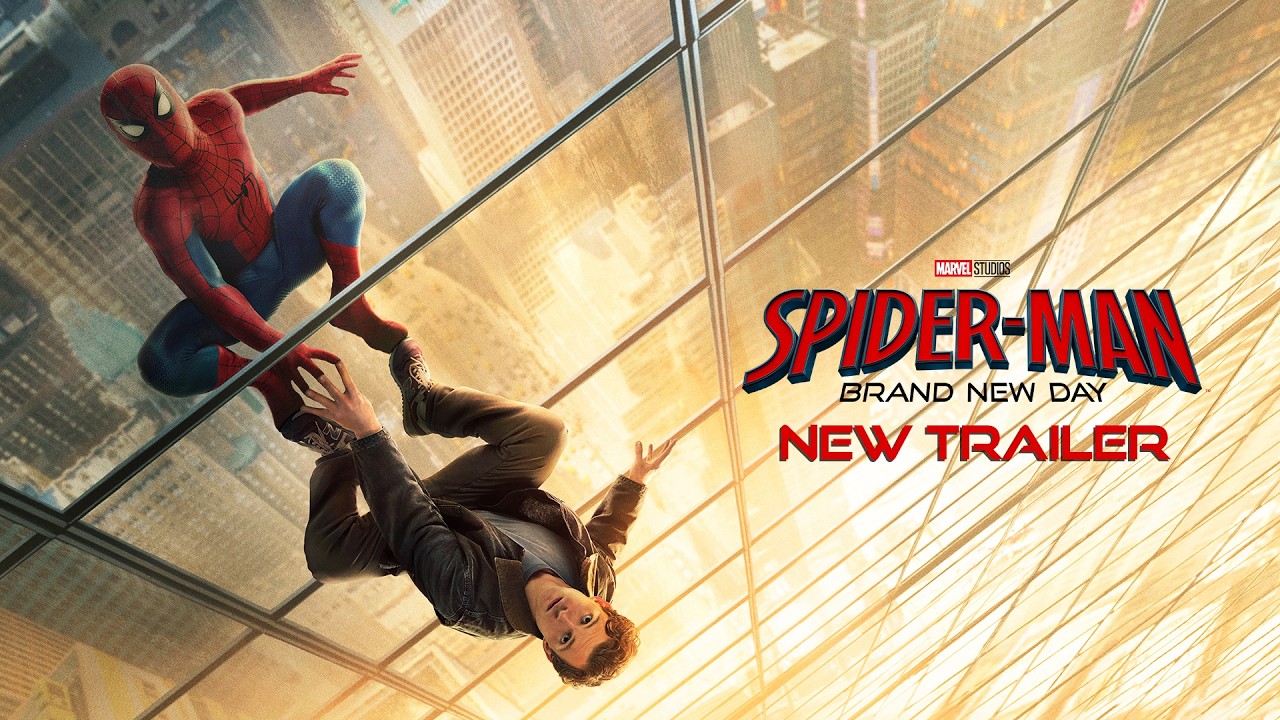
The 2026 release of Spider-Man: Brand New Day represents a significant shift in the landscape of superhero cinema, both in narrative scope and technical execution. With a global box office haul exceeding $2.45 billion, the film has not only eclipsed the domestic performance of industry titans like Avengers: Endgame but has also set a new standard for modern digital cinematography. Directed by Destin Daniel Cretton, the film signals a departure from the high-tech, CGI-saturated aesthetic that has dominated the Marvel Cinematic Universe for the past decade, moving toward a grittier, street-level realism.
For home cinema testing, this film is proving to be an essential tool for evaluating dynamic range. The contrast between the neon-drenched night sequences in New York and the intimate, dimly lit interiors of Peter Parker’s apartment allows for a thorough assessment of local dimming zones and HDR performance. Furthermore, the film’s sound mix—which integrates Michael Giacchino’s nuanced, percussive score with complex environmental soundscapes—provides an ideal test for object-based audio systems. The integration of Dolby Atmos in this production is particularly notable for its verticality; the spatial audio rendering of high-speed aerial sequences requires a robust setup to avoid phase issues or lack of clarity in the dialogue-heavy segments.

Bumblebee: An Auditory Benchmark for Low-Frequency Impact
Despite being released in 2018, Bumblebee continues to serve as an industry-standard test disc for evaluating the low-frequency performance of home cinema subwoofers and soundbar systems. The film’s opening sequence, which features a catastrophic arrival on Earth, serves as a masterclass in the use of LFE (Low-Frequency Effects) channels.
The sound team behind Bumblebee achieved an equilibrium between high-decibel explosive force and the delicate, crystalline sounds of mechanical transformation. For technicians in the test room, this provides a clear metric for judging bass distortion. A system failing to manage the intense sub-bass frequencies during the film’s opening sequence will often manifest as "boomy" or resonant distortion, whereas a high-performing system will deliver tight, controlled, and authoritative impact. As the film transitions from the high-energy combat scenes into the quieter, character-driven moments of the 1980s-set narrative, it also tests the ability of a system to maintain clarity during sudden transitions in volume.
Metal Lords: Capturing the Nuance of Musical Passion
While not a technical showcase in the same vein as a blockbuster action film, Peter Sollett’s 2022 film Metal Lords has become a recurring favorite for testers focusing on audio fidelity and dialogue clarity. The film, which follows a group of high school students forming a heavy metal band, prioritizes the raw, unpolished sound of garage-rehearsal audio over the hyper-produced scores found in larger studio productions.

This shift in audio engineering makes the film an excellent tool for evaluating how soundbars handle mid-range frequencies. The challenge lies in accurately reproducing the harsh, distorted textures of electric guitars and the aggressive, percussive nature of heavy metal drumming without losing the nuance of the human voice. For systems struggling with mid-range muddiness, the fast-paced, complex instrumentation of the film’s climactic battle of the bands sequence provides a clear indicator of the system’s ability to separate individual audio elements. It serves as a reminder that a great home cinema system should be as adept at rendering the grit of a basement rehearsal as it is at the spectacle of a CGI-heavy action set piece.
Slow Horses Season 6: Mastering the Shadows of Streaming Media
The sixth season of the Apple TV+ espionage series Slow Horses offers a timely case study in the challenges of streaming media optimization. As high-bitrate content becomes the standard for home entertainment, the series provides a rigorous test for display technology in handling compressed, low-light footage. The production’s visual style is deliberately drab, relying on heavy rain, fog, and the dim, fluorescent-lit interiors of an MI5 safehouse.
For the modern viewer, the primary challenge with this production is shadow detail. Displays that struggle with grayscale linearity will often fail to render the subtle textures within the dark suits worn by the protagonists or the shadowy corridors of the safehouse. When tested on high-end 4K panels, the series demonstrates the potential of modern streaming, provided the hardware is capable of resolving the fine detail within the darkest 5% of the luminance range. Additionally, the series’ sound mix is a study in "dry" suspense. The dialogue, which is often delivered in hushed, cynical tones, requires a center-channel speaker or soundbar capable of high vocal clarity. The background ambiance—the distant bustle of London traffic or the rhythmic ticking of a clock—is vital to the show’s tension, and testing this on a variety of setups confirms that even a modest soundbar can provide an immersive experience if the channel separation is tuned correctly.
Implications for the Home Cinema Market
The rotation of these titles through the What Hi-Fi? test rooms underscores a broader trend within the industry: the move toward content that demands more than just "loud" audio or "bright" images. As consumers move toward increasingly sophisticated hardware, the industry is seeing a higher demand for equipment that can handle complexity. Whether it is the subtle color grading of a historical drama or the extreme dynamic range of a modern superhero spectacle, the synergy between software and hardware remains the defining factor of the home cinema experience. By utilizing a diverse array of content—from the explosive, bass-heavy sequences of Bumblebee to the quiet, shadow-filled espionage of Slow Horses—the industry ensures that hardware development remains aligned with the realities of modern media consumption.
Related posts: