D. Smith Announces Detransition After Twelve Years as a Transgender Woman Following a Distinguished Career in Music and Film

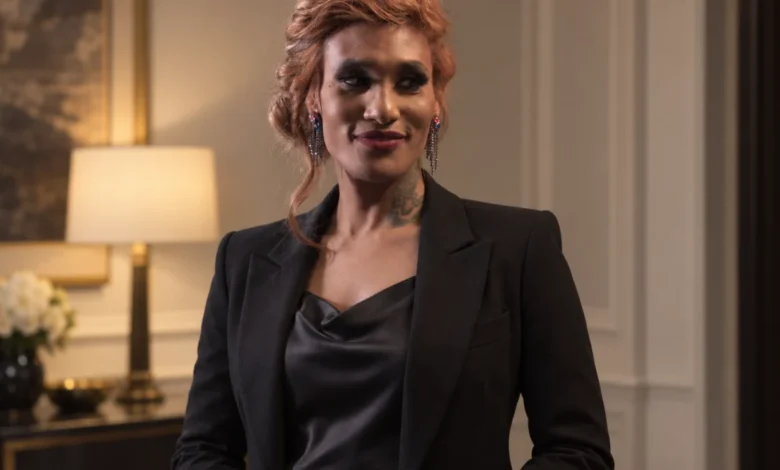
In a significant personal revelation that has resonated throughout the entertainment industry, Grammy-nominated producer and filmmaker D. Smith announced on Thursday his decision to detransition after living publicly as a transgender woman for over a decade. The artist, known for his prolific contributions to music production and his acclaimed work in documentary filmmaking, shared the news via Instagram, signaling a return to identifying as a man and adopting he/him pronouns. This shift marks a pivotal moment in Smith’s public journey, one he characterizes not as an erasure of his past, but as a definitive step toward his authentic self-actualization.
A Journey of Self-Discovery and Purpose
For Smith, the transition—and subsequent detransition—is framed as a developmental process rather than a binary mistake. In his public statement, he emphasized that the twelve years spent living as a woman were instrumental in shaping his understanding of his own identity. "Living my life as a woman for 12 years showed me the man that I wanted to become," Smith wrote. This perspective challenges the common, often stigmatized narrative surrounding detransition, positioning it instead as an evolution of self-discovery.
Smith’s public trajectory has been marked by high-profile professional achievements, beginning with his early career as a multi-platinum music producer. Before his transition in 2014, he had already solidified his reputation in the music industry, having worked with high-profile artists such as Katy Perry, Lil Wayne, and CeeLo Green. His production work earned him Grammy nominations, cementing his status as a formidable creative force. However, his decision to come out as transgender in 2014 brought a shift in his industry standing, resulting in what Smith has previously described as a period of professional isolation and rejection from the very circles he helped build.
Chronology of a Public Life
The timeline of Smith’s public life illustrates a consistent pattern of advocacy and creative output, often against the backdrop of systemic barriers:
- Pre-2014: Smith achieves significant success as a music producer, contributing to multi-platinum records and earning Grammy nominations.
- 2014: Smith publicly comes out as a transgender woman, a move that coincides with a significant decline in his mainstream industry opportunities.
- 2016: Smith makes history as the first openly transgender cast member of the reality television series Love & Hip Hop: Atlanta. During his tenure, he utilized the platform to engage in public discourse regarding the diversity and challenges faced by the transgender community.
- 2023: Smith marks a major career milestone with the release of his documentary directorial debut, Kokomo City. The film received critical acclaim for its raw, unflinching look at the lives of four Black transgender sex workers, effectively bridging the gap between niche advocacy and mainstream documentary cinema.
- 2024: Smith announces his decision to detransition, citing a desire to live as a man and moving forward with a focus on his evolving sense of purpose.
The Landscape of Transition and Detransition
Public discourse surrounding detransition is often fraught with political polarization. However, experts in gender studies and mental health professionals often emphasize that the reasons for detransition are multifaceted, ranging from evolving personal identity to social, medical, or professional pressures. Data on detransition remains limited and often subject to varying definitions. According to studies published by the Williams Institute at UCLA School of Law and various clinical psychological journals, individuals who detransition often cite a combination of factors, including internalized societal expectations, a shift in gender identity, or, in some cases, a reassessment of the medicalized transition process.
Smith’s approach, characterized by a lack of regret regarding his past, stands in contrast to the often hostile rhetoric that surrounds the topic. By framing his previous twelve years as a necessary path to reaching his current state, he complicates the narrative, suggesting that identity is a fluid, longitudinal experience rather than a static arrival point.
Professional Repercussions and Resilience
The music industry’s treatment of Smith after his 2014 transition serves as a case study for the challenges faced by transgender artists in high-stakes creative sectors. Smith has spoken openly about the "shunning" he faced, noting that the industry, which had previously embraced his talent, became inaccessible following his transition. Despite these obstacles, Smith’s creative output did not cease. Instead, he pivoted toward storytelling that was deeply personal and socially conscious.
The success of Kokomo City demonstrated Smith’s ability to maintain artistic relevance and critical respect despite his marginalization in the music industry. By centering the experiences of Black transgender sex workers, Smith ensured that his voice remained central to the cultural conversation, even when he was being sidelined in other arenas. This resilience is a recurring theme in his public messaging; as he stated, "Life is constantly pushing me to grow. Even when I feel tired, discouraged, or alone, life has given me strength because I chose purpose over fear."
Societal and Cultural Implications
The announcement of a high-profile figure detransitioning carries weight in contemporary cultural politics. As discussions regarding gender identity move from niche academic circles to the center of mainstream social discourse, figures like D. Smith provide a human dimension to a complex issue. His insistence on personal autonomy—both in his initial transition and his current decision to live as a man—challenges observers to move beyond simplistic labels.
From a sociological perspective, Smith’s transparency may serve to normalize a conversation that is often silenced by shame or external pressure. By speaking with "grace and clarity," as many industry observers have noted, he is reclaiming the narrative of his own life. While the full story behind his decision is yet to be shared, his current statement provides a framework for understanding his journey: a rejection of fear in favor of a personal, deeply held sense of truth.
Looking Forward
As Smith prepares to share more of his story in the coming months, the public response has been largely defined by those acknowledging his right to self-determination. His career as a producer and filmmaker suggests that his transition will likely continue to be an aspect of his creative process rather than a hindrance. The industry that once turned its back on him now watches as he navigates another significant change, one that he views as the next logical step in a life defined by growth.
The implications of this announcement reach beyond the individual. It prompts a broader reflection on how society views identity, the permanence of labels, and the capacity for individuals to reinvent themselves in the public eye. For D. Smith, the past twelve years were a bridge to the present, and his latest shift suggests that he intends to keep moving forward, with the same commitment to purpose that has guided his career thus far. Whether this will lead to a shift in his creative output or a new phase of activism remains to be seen, but his public clarity has already established a new tone for the discourse surrounding the complexities of human identity.