The landscape of American jazz-fusion underwent a significant transition in the mid-1980s, characterized by a move away from the sprawling, improvisational epics of the 1970s toward a more structured, technically demanding, and highly arranged aesthetic. Central to this development was the emergence of guitarist Scott Henderson, whose 1985 recording sessions in Hollywood captured a pivotal moment in the synthesis of West Coast jazz, blues, and heavy metal. Henderson’s work, recorded during a period of high creative output in the Southern California music scene, stands as a critical case study in the intersection of academic musical instruction and the professional recording industry.
The Institutional Backdrop: The Guitar Institute of Technology
To understand the stylistic lineage of Scott Henderson, one must examine the environment of the Guitar Institute of Technology (GIT) in Los Angeles. Founded in the late 1970s, GIT became the epicenter for a new generation of virtuoso guitarists. Henderson, alongside the English-born guitarist Allan Holdsworth, both held instructional roles within the institution during this era.
This environment fostered an exchange of techniques that defined the "California Sound." Holdsworth, renowned for his fluid, horn-like legato phrasing and complex harmonic vocabulary, provided a template for technical excellence. Henderson adopted this legato approach but tempered it with a distinctly American sensibility—a synthesis of hard-bop improvisation, blues-inflected pentatonic phrasing, and the aggressive sonic textures of contemporary heavy metal. This combination was not merely a matter of stylistic preference but a response to the evolving demands of the music industry, which sought players capable of navigating increasingly complex arrangements with surgical precision.
Chronology of the 1985 Hollywood Sessions
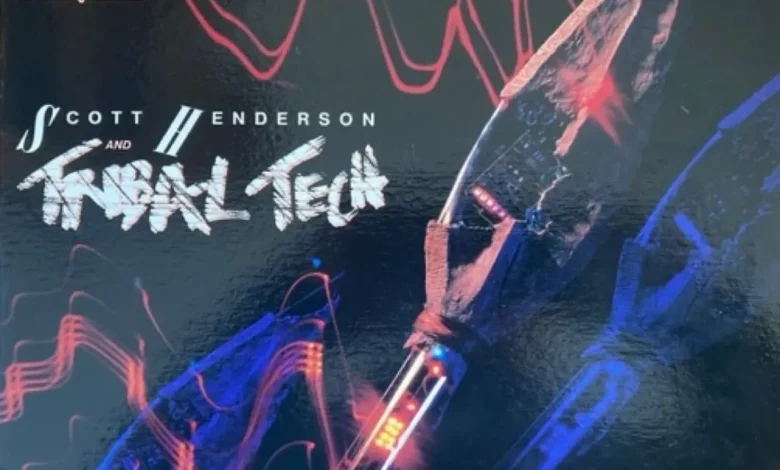
The record, released on the Passport label (PJ 88010), was the culmination of intensive recording sessions held in Hollywood in June 1985. The project brought together a formidable ensemble of session musicians who were integral to the Los Angeles jazz-fusion circuit:
- Scott Henderson (Guitar): The primary composer and leader, whose focus was the integration of complex time signatures with melodic accessibility.
- Pat Coil (Keyboards): Provided the harmonic bedrock, utilizing the polyphonic synthesizers that dominated mid-80s production.
- Gary Willis (Bass): A long-term collaborator whose rhythmic synergy with Henderson would define their later projects, such as Tribal Tech.
- Steve Houghton (Drums): A versatile percussionist who managed the transition between jazz-swing and the rigid, punchy requirements of fusion-rock.
- Brad Dutz (Percussion) and Bob Sheppard (Saxophone/Flute): Added the textural depth required for the more atmospheric movements of the record.
The recording was segmented into two distinct halves: "Caribbean," "Punkin Head," "Ivy Towers," and "Tribal" (totaling 21:24) on the initial side, followed by "Spears," "Island City Shuttle," and "Big Fun" (totaling 22:36). This track listing suggests a deliberate attempt to balance high-tempo "gymnastic" fusion with more nuanced, space-oriented compositions.
Technical Analysis: The Aesthetics of Complexity
The hallmark of Henderson’s work during this period is the successful avoidance of "complexity for its own sake." In the mid-1980s, the fusion genre was often criticized for sacrificing emotional resonance at the altar of technical bravura. Henderson, however, maintained a clear aesthetic objective. By drawing inspiration from the structural complexity of Weather Report, the rhythmic fluidity of Bill Bruford’s solo work, and the brass-led energy of The Brecker Brothers, Henderson managed to ground his technical explorations in a recognizable musical language.
The "heavy-metal bebop" moniker often applied to this work is not entirely hyperbolic. Henderson’s tone, while clean, frequently employed the sustain and attack associated with high-gain rock, applied to the sophisticated harmonic structures of post-bop jazz. This was a challenging aesthetic to market; it required the listener to possess a dual appreciation for the intellectual rigor of jazz and the visceral impact of rock.
Comparative Impact and Industry Implications
The implications of Henderson’s work extend beyond his individual discography. The 1985 sessions represented a shift in the role of the "virtuoso" in the studio. Unlike the pioneers of the 1970s, whose records were often the result of long-form jamming sessions, Henderson’s 1985 project was characterized by "clearly drawn and brightly arranged" compositions.
Industry observers of the time noted that the technical standards established by players like Henderson and Holdsworth set a high barrier for entry into the professional session circuit. This era witnessed a professionalization of fusion; the "gymnastic" nature of the material meant that only a handful of musicians were capable of delivering the performances required for such high-fidelity, high-complexity recordings.
While some critics noted that the record was not without its "longueurs"—moments where the technical precision threatened to overshadow the thematic content—the consensus within the jazz-fusion community was that the project was a significant achievement. It served as a bridge between the avant-garde experiments of the previous decade and the more polished, production-heavy sound that would define fusion in the early 1990s.
Broader Legacy in the Jazz-Fusion Canon
The legacy of the Passport PJ 88010 sessions is found in the subsequent career trajectories of its participants. Gary Willis, for instance, would continue to refine his unique, finger-style approach to the electric bass, eventually becoming a foundational figure in the development of the "Tribal Tech" sound. The collaboration between Henderson and Willis, which began in earnest during these mid-80s sessions, provided the consistency necessary to push the boundaries of jazz-fusion for the next two decades.
Furthermore, the influence of the California scene on international jazz education cannot be overstated. The pedagogical methods developed at institutions like GIT, which were practiced and refined by the very musicians recording these sessions, influenced a global cohort of guitarists. By documenting these performances, the 1985 Hollywood sessions provided a tangible reference point for students of the instrument, illustrating how the disparate elements of blues, rock, and jazz could be reconciled within a single, coherent musical framework.
Analysis of the Contemporary Reception
Reflecting on the 1985 release, it is evident that the music served as a reaction to the prevailing trends of the mid-80s. While mainstream pop was moving toward electronic drum machines and synth-pop, the jazz-fusion movement remained stubbornly committed to the physical, human performance of complex time. Henderson’s work was, in effect, a defense of the traditional virtuoso model in an era that was increasingly digitizing the musical process.
The record stands as a durable entry in the "heavy-metal bebop" library—a niche, yet vital, subgenre that challenged the limitations of both the guitar and the jazz ensemble. By tempering technical bravura with imagination, Scott Henderson successfully navigated the tension between the academic requirements of his teaching position and the creative demands of a working artist. The result remains a testament to a specific moment in time when the boundaries between musical genres were porous, and when technical mastery was seen as the primary vehicle for creative expression.