Rediscovering Walt Dickerson: The Enduring Legacy of an Unsung Jazz Vibraphone Innovator

The history of jazz is frequently told through its most visible standard-bearers—the horn players who fronted major bands, the pianists who redefined harmonic structures, and the drummers who drove the rhythm. Yet, beneath the surface of the mainstream narrative lies a rich tapestry of avant-garde and hard bop innovators who operated on the fringes, creating transcendent art largely away from the commercial spotlight. Among these elusive figures stands Philadelphia-born vibraphonist Walt Dickerson, a musician whose distinct sonic palette, rigorous compositional vision, and fearless collaborative spirit earned him a revered status among purists and fellow artists alike, even as mainstream acclaim largely eluded him during his lifetime.
Best remembered today for his remarkable 1970s collaborations with the legendary cosmic jazz pioneer Sun Ra, Dickerson’s artistic peak arrived a decade earlier with a sequence of brilliant recordings that challenged conventional approaches to the vibraphone. Foregoing the bright, percussive, and swinging styles popularized by predecessors like Lionel Hampton or contemporaries like Milt Jackson, Dickerson forged a deeply personal approach. He famously described his sonic output as "plush metallic tones," characterized by asymmetrical phrasing, sustained shimmering chords, and an emotional vulnerability that transformed the vibraphone from a rhythm-and-effects instrument into a deeply expressive vehicle for modern chamber jazz.
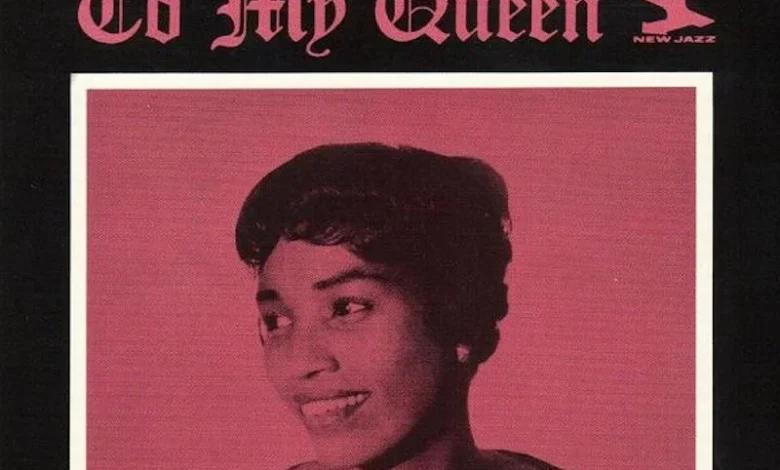
At the center of this catalog sits his 1962 career-defining masterwork, To My Queen, a tender, lovingly crafted suite released on the New Jazz label. Backed by a dynamite quartet featuring a young, visionary Andrew Hill on piano, bassist George Tucker, and the remarkably inventive drummer Andrew Cyrille, the album stands as a monument of modal and post-bop exploration. Far from merely serving as a vehicle for technical display, To My Queen showcased Dickerson’s ability to weave intricate, emotionally resonant tapestries that balanced intellectual rigor with poignant accessibility.
The Early Years and Rise in Philadelphia
Born in Philadelphia, Pennsylvania, in 1928, Walt Dickerson absorbed the rich musical tapestry of a city that served as a crucial incubator for modern jazz. During the post-World War II era, Philadelphia’s vibrant club scene nurtured generations of jazz greats, offering young musicians an immersive education through late-night jam sessions and mentorship from established artists.
Dickerson formally honed his craft on the vibraphone, an instrument that had gained prominence in jazz largely through the pioneering work of Red Norvo and Lionel Hampton, before being redefined by Milt Jackson in the context of bebop. However, Dickerson was determined to carve out an entirely distinct lane for himself. Uninterested in mimicking the blues-drenched, fluid bop lines of Jackson, Dickerson looked toward the developing modal concepts and avant-garde sensibilities that were beginning to permeate the jazz underground in the late 1950s.
Seeking a broader platform for his evolving sound, Dickerson relocated to the West Coast in the mid-1950s, spending several years in California where he performed, studied, and refined his compositional techniques. This period of incubation allowed him to develop the asymmetrical phrasing and unique mallet techniques that would later define his signature recordings. By the early 1960s, he was ready to make his mark on the national stage, prompting a move to New York City—the epicenter of the jazz universe.
The New York Breakthrough and To My Queen
Upon arriving in New York City, Dickerson quickly integrated himself into the city’s burgeoning creative community. His distinct approach caught the attention of Prestige Records, which signed him to its subsidiary, New Jazz. Between 1961 and 1964, Dickerson recorded a series of critically lauded albums as a leader, including This Is Walt Dickerson, A Sense of Direction, Relativity, and Jazz Impressions of Lawrence of Arabia.
None of these efforts, however, matched the cohesive brilliance and emotional depth of 1962’s To My Queen. Recorded on April 20, 1962, the album was conceived as a sustained suite dedicated to his wife, Elizabeth, serving as a deeply personal declaration translated into abstract musical forms.
The personnel assembled for the session represented a gathering of some of the most forward-thinking minds in modern jazz. Pianist Andrew Hill, who was then forging his own idiosyncratic, angular approach to harmony, proved to be an ideal foil for Dickerson’s compositional style. Hill’s sparse, probing chord voicings complemented Dickerson’s shimmering, sustained metallic tones, creating a translucent texture that felt both fragile and resolute. Meanwhile, drummer Andrew Cyrille—who would go on to enjoy a legendary career as a master of avant-garde rhythm, most notably with pianist Cecil Taylor—brought a fluid, non-literal sense of timekeeping that pushed the ensemble away from rigid swing beats and into a more open, organic dialogue. Bassist George Tucker anchored the session with a steady, grounding pulse that allowed Dickerson and Hill to explore harmonic outer reaches without losing the music’s emotional center.
Despite receiving critical praise from jazz publications of the era, To My Queen and Dickerson’s subsequent releases did not achieve the commercial breakthroughs experienced by more mainstream hard bop acts of the period. The jazz market in the early 1960s was rapidly shifting, caught between the traditional sounds of the 1950s, the rising tide of soul jazz, and the polarizing emergence of free jazz led by Ornette Coleman and John Coltrane. Dickerson’s music occupied a sophisticated middle ground—too complex and asymmetrical for casual radio play, yet too structurally rigorous for the complete abandonment of form championed by the radical avant-garde.
Withdrawal, Resurgence, and the Sun Ra Collaboration
Frustrated by the commercial realities of the music industry and the lack of institutional support for innovative artists, Dickerson made a startling decision in the mid-1960s: he largely withdrew from the active recording and touring circuit. For several years, he maintained a low profile, focusing on teaching, personal composition, and raising his family, occasionally performing locally in Philadelphia without seeking national attention. This self-imposed exile contributed to his status as an elusive, almost mythic figure among jazz historians and dedicated collectors, who traded worn copies of his Prestige and New Jazz LPs like rare currency.
Dickerson’s return to the recording studio in the 1970s marked a fascinating second chapter in his career. Benefiting from a renewed interest in avant-garde and spiritual jazz, Dickerson began issuing music on his own audio-phile-oriented label, Sound States, as well as European imprints.
The pinnacle of this late-career resurgence was his monumental collaboration with the visionary bandleader and cosmic philosopher Sun Ra. The resulting 1978 album, Visions, captured two uncompromising sonic architects operating at the height of their powers. Recorded as a series of duets between Dickerson’s vibraphone and Sun Ra’s piano and synthesizer, the album was a masterclass in telepathic improvisation and deep listening.
The pairing of Dickerson and Sun Ra was a match made in avant-garde heaven. Both artists shared a profound belief in music as a spiritual discipline, a cosmic medium capable of transcending earthly limitations. On Visions, Sun Ra’s dense, percussive, and unpredictable keyboard explorations meshed seamlessly with Dickerson’s plush metallic tones. The resulting soundscapes were at once challenging, deeply atmospheric, and surprisingly tender—a testament to the mutual respect and shared aesthetic vision of the two musicians. The album solidified Dickerson’s reputation among contemporary modernists, proving that his early promise had not faded during his years away from the commercial spotlight.
Historical Assessment and Broader Implications
In the decades following his active recording period, Walt Dickerson’s contributions to jazz have undergone a significant critical re-evaluation. While he remains something of an underground legend rather than a household name, contemporary jazz scholars, musicians, and archival record labels have worked diligently to ensure his artistry is not lost to history.
The re-release of his classic albums on specialty labels, alongside critical retrospectives in publications dedicated to creative improvised music, has illuminated the profound impact of Dickerson’s stylistic choices. By demonstrating that the vibraphone could be utilized for subtle, impressionistic, and avant-garde expression rather than simply uptempo bop fireworks, Dickerson paved the way for subsequent generations of mallet percussionists who sought to explore unconventional textures and modal frameworks.
Furthermore, Dickerson’s career trajectory offers a poignant case study in the systemic challenges faced by uncompromising jazz artists during the latter half of the twentieth century. The commercial pressures that drove him into relative seclusion during the mid-1960s highlight the precarious financial and institutional ecosystem that sustained—and frequently marginalized—some of the genre’s most visionary practitioners. Yet, his eventual return and triumphant work with Sun Ra stand as a powerful reminder of the resilience of true creative spirit, proving that visionary art ultimately outlasts the commercial vicissitudes of its era.
As modern audiences continue to explore the expansive frontiers of 1960s modal jazz and 1970s spiritual improvisation, the work of Walt Dickerson commands renewed attention. From the intimate, haunting beauty of To My Queen to the cosmic dialogues of Visions, Dickerson’s recorded legacy remains a testament to a singular artistic vision—one that prioritized emotional depth, structural integrity, and the pursuit of an utterly unique sonic voice above all else.