Ryuichi Sakamoto’s 1989 Masterpiece Beauty: A Testament to "Outernationalism" and Transnational Collaboration

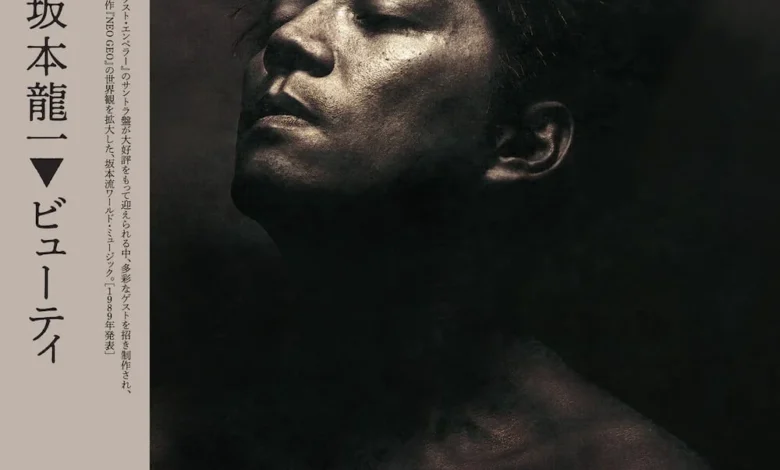
In 1989, amidst a rapidly shifting global landscape, Japanese composer Ryuichi Sakamoto released Beauty, an album that, while perhaps less celebrated than some of his earlier or later works, stands as a profound testament to his pioneering philosophy of "outernationalism." This seminal record, a vibrant audio tapestry, defiantly transcends the conventional boundaries of "world music," instead weaving together a rich mosaic of influences, cultures, and collaborations that solidified Sakamoto’s position as a visionary artist operating at the nexus of global creativity. Beauty is not merely an album; it is an ambitious sonic expedition, a meticulously crafted cultural map that charted new territories in artistic exchange and continues to resonate with its expansive vision.
The Genesis of an "Outernational" Vision
The late 1980s were a period of significant cultural flux. The Berlin Wall had fallen just months before Beauty‘s release, symbolizing a thawing of geopolitical tensions and an opening of previously restricted cultural dialogues. This era witnessed a surge in cross-cultural artistic endeavors, as artists from different backgrounds increasingly found avenues to connect and collaborate, facilitated by burgeoning global communication technologies and a growing curiosity about diverse musical traditions.
Ryuichi Sakamoto, already an established figure in the international music scene, was a natural leader in this emerging era of transnationalism. Having achieved global fame with Yellow Magic Orchestra in the late 1970s and a successful solo career that embraced electronic music, film scores, and avant-garde experimentation, Sakamoto was uniquely positioned to bridge musical divides. His own experiences living and working across continents, particularly his time in New York and his deep engagement with diverse musical forms, informed his evolving artistic philosophy.
The concept of "outernationalism," as articulated by Sakamoto, represented a departure from the often-commoditized and sometimes superficial interpretations of "world music." It suggested an outward-looking, inherently global perspective that recognized the interconnectedness of human experience and artistic expression, moving beyond nationalistic or regional confines. For Sakamoto, it was about actively engaging with the world, not just observing it, and fostering genuine, reciprocal artistic dialogue.
A Symphony of Global Voices: The Collaborators of Beauty
The most striking aspect of Beauty is its extraordinary roster of collaborators, a testament to Sakamoto’s extensive network and his ability to attract some of the most distinctive voices in music. The album was not conceived as a solo effort with guest appearances; rather, it was built through a process of collaborative creation, where each participant brought their unique cultural and musical heritage to the project. This approach ensured that Beauty avoided the pitfalls of simply being a collection of disparate elements and instead fostered a cohesive, yet remarkably diverse, sonic landscape.
Among the luminaries who contributed to Beauty were:
- Brian Wilson: The legendary Beach Boys mastermind brought his unparalleled gift for melody and vocal arrangements, adding a distinctively American pop sensibility to certain tracks. Wilson’s involvement underscored Sakamoto’s ability to draw from iconic figures in Western pop music and integrate their contributions seamlessly.
- Sly Dunbar: The Jamaican drumming virtuoso, renowned for his work with Sly and Robbie, provided a foundational rhythmic backbone that infused the album with a distinctive reggae and dancehall flair. Dunbar’s precise and innovative drumming is a hallmark of many of Beauty‘s most compelling grooves.
- Robert Wyatt: The enigmatic British singer-songwriter and former Soft Machine member contributed his distinctive vocal stylings and experimental sensibilities. Wyatt’s presence added an element of art-rock and avant-garde exploration, further broadening the album’s sonic palette.
- Youssou N’Dour: The Senegalese vocalist, celebrated for his powerful voice and his role in popularizing Mbalax music globally, brought an essential African dimension to Beauty. N’Dour’s contributions lent the album an undeniable gravitas and a direct connection to West African musical traditions.
- Arto Lindsay: The American guitarist and producer, known for his work with DNA and his extensive collaborations in the Brazilian music scene, lent his distinctive guitar playing and experimental approach to several tracks. Lindsay’s involvement highlighted Sakamoto’s interest in avant-garde guitar techniques and his connections within the New York experimental music community.
The inclusion of these diverse artists, hailing from the United States, Jamaica, the United Kingdom, Senegal, and Japan, was not merely an exercise in cross-cultural pollination. It represented a deliberate effort to create a dialogue between different musical languages and cultural perspectives. Sakamoto acted as a conductor, a curator, and a fellow explorer, guiding these individual talents towards a shared artistic vision.
A Cultural Map: Influences and Innovations
Beauty is far more than a mere aggregation of international sounds; it is a carefully constructed "cultural map" that reflects Sakamoto’s eclectic interests and his profound understanding of musical history. The album explicitly incorporates elements that traverse geographical and stylistic boundaries.
One notable example is the inclusion of Okinawan folk songs. Okinawa, a prefecture of Japan with a distinct cultural identity and a rich history of musical traditions influenced by its proximity to China and Southeast Asia, provided a unique source of melodic and harmonic inspiration. Sakamoto’s incorporation of these melodies, often filtered through his signature electronic textures and arrangements, demonstrated a deep respect for regional Japanese music and its potential for global resonance. This move was significant in a period when "world music" often focused on more geographically distant traditions, highlighting the importance of acknowledging and celebrating indigenous sounds within one’s own cultural sphere.
Furthermore, the album features a cover of The Rolling Stones’ "Ruby Tuesday." This choice is not arbitrary. The Stones, themselves pioneers in incorporating diverse musical influences into their work, represented a touchstone of rock and roll history. Sakamoto’s reimagining of this classic, likely imbuing it with his characteristic electronic sheen and experimental arrangements, served to bridge the gap between established Western rock and his own contemporary sonic explorations. It demonstrated that "outernationalism" could also involve reinterpreting familiar touchstones through a global lens.
The album’s sonic landscape is characterized by a sophisticated blend of electronic instrumentation, acoustic textures, and a wide array of percussive elements. Sakamoto masterfully integrated synthesizers, samplers, and drum machines with live instrumentation, creating a sound that was both futuristic and deeply organic. The arrangements are intricate and layered, inviting listeners to discover new details with each subsequent listening. The production quality, typical of Sakamoto’s meticulous approach, ensures that the diverse sonic elements coalesce into a remarkably coherent and immersive experience.
Chronology of a Creative Process
While specific dates for the recording sessions of Beauty are not extensively detailed in general public accounts, the album’s release in 1989 places its creative gestation within the preceding years. This period, roughly from 1987 to 1989, was a critical time for Sakamoto’s artistic development and his deepening engagement with global collaborations.
- Mid-to-Late 1980s: Sakamoto continues to build his international reputation through film scores (e.g., The Last Emperor, for which he won an Academy Award in 1987), solo albums, and collaborations. His presence in New York City during this period facilitates connections with a wide range of musicians and artists.
- Circa 1987-1989: The core collaborative sessions for Beauty take place. Sakamoto invites a select group of musicians, drawing from his existing network and forging new connections. The process is likely iterative, with musicians contributing parts that are then woven into Sakamoto’s compositional framework. The selection of artists like Youssou N’Dour, Sly Dunbar, and Robert Wyatt suggests a deliberate outreach to specific cultural and stylistic traditions.
- 1989: Beauty is released by Epic Records in Japan and other territories. The album receives critical attention for its ambitious scope and its diverse cast of collaborators.
- Post-1989: Beauty becomes a significant, albeit sometimes overlooked, entry in Sakamoto’s discography, representing a pivotal moment in his embrace of "outernationalism" and his commitment to pushing the boundaries of musical genres. The album’s influence can be seen in subsequent works by Sakamoto and in the broader landscape of globalized music production.
Broader Impact and Implications
The significance of Ryuichi Sakamoto’s Beauty extends beyond its artistic merits. The album serves as a powerful case study in the potential of genuine cross-cultural collaboration and a prescient example of the "outernational" ethos.
Challenging Genre Boundaries:
Beauty actively defied the prevailing conventions of "world music" as it was often marketed and understood in the late 1980s. Instead of presenting an exoticized or homogenized view of non-Western music, Sakamoto created a space where different traditions could interact organically. This approach challenged the notion that genres are static and immutable, demonstrating how they can be fluid and dynamic when artists engage in meaningful dialogue. The album’s success in reaching a global audience, without resorting to simplistic categorization, offered a blueprint for more nuanced and respectful cross-cultural musical exchange.
The Power of "Outernationalism":
Sakamoto’s philosophy of "outernationalism", exemplified by Beauty, offers a compelling alternative to more insular or nationalistic approaches to art. It emphasizes the shared humanity and interconnectedness of cultures, encouraging artists to look outward and engage with the world with an open and curious mind. In a world that continues to grapple with issues of cultural appropriation and representation, Sakamoto’s model of collaborative creation and deep engagement provides a valuable framework for ethical and artistically rich cross-cultural projects.
A Legacy of Innovation:
The album’s experimental spirit and its willingness to blend disparate elements paved the way for future explorations in electronic music, fusion genres, and collaborative projects. Sakamoto’s ability to integrate acoustic and electronic sounds, traditional and contemporary influences, and voices from vastly different backgrounds solidified his reputation as an innovator. Beauty stands as a testament to his enduring vision and his commitment to using music as a force for connection and understanding in an increasingly globalized world. Its lasting impact lies not just in its sonic innovations but in the philosophical underpinnings of its creation, a bold statement of unity and shared artistic endeavor.
Related posts: