Expressive E Noisy 2.6 Elevates Sonic Expression with Expanded Sound Palette and Enhanced Control

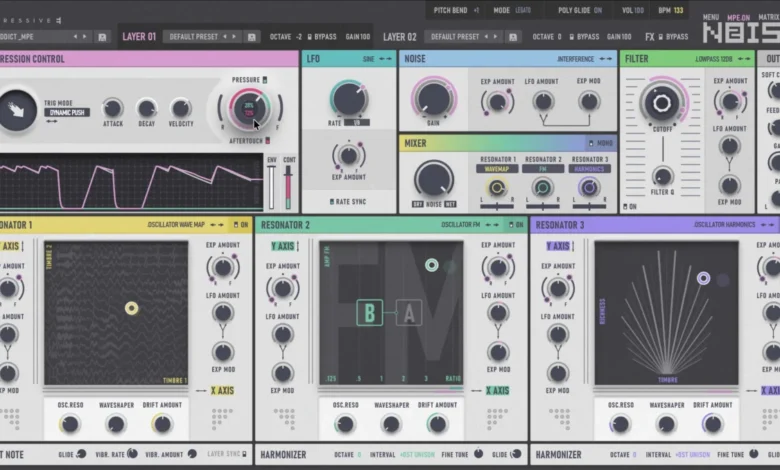
The realm of digital audio synthesis is constantly evolving, with developers striving to push the boundaries of sonic creativity and user interaction. Expressive E, a company renowned for its innovative hardware controllers like the Osmose and its underlying EaganMatrix synth engine, has released a significant update to its software synthesizer, Noisy. Version 2.6 marks a substantial expansion of Noisy’s sound palette and refines its core philosophy of intuitive expression control, positioning it as a compelling companion for Expressive E’s own instruments and a powerful standalone creative tool.
This update, which arrives at a critical juncture for MPE (MIDI Polyphonic Expression) and advanced controller integration, represents more than just a minor iteration. It introduces a wealth of new synthesis engines and sound sources, meticulously designed to offer users an unprecedented level of sonic exploration within a user-friendly interface. The core of Noisy’s design remains its unique approach: shaping sound by routing noise through various resonators. However, version 2.6 dramatically broadens the types of sonic textures that can be achieved, moving beyond its initial reputation for experimental sound design to encompass a more versatile range of musical applications.
A Deeper Dive into the EaganMatrix Legacy
To fully appreciate Noisy’s evolution, it’s essential to understand its roots. The EaganMatrix, the powerful and complex synthesis engine that debuted with the Haken Continuum and now powers the Expressive E Osmose and its controller-only sibling, the Osmose CE, is a testament to the pursuit of deeply expressive sound. While the EaganMatrix offers unparalleled depth and sonic richness, its programming can be intricate and demanding for newcomers. Noisy was conceived as a more accessible entry point into this expressive sound design paradigm. Its workflow is built from the ground up to facilitate the mapping of expressive control gestures – pressure, aftertouch, pitch bend, and more – directly to sonic parameters, making the nuanced manipulation of sound feel more immediate and organic.
Noisy 2.6, in essence, democratizes the expressive potential that the EaganMatrix embodies. While still retaining the EaganMatrix as a foundational element and allowing its use with various MPE and classic MIDI controllers, Noisy 2.6 distinguishes itself with a more streamlined and visually intuitive approach. This update positions Noisy not merely as a software synthesizer but as a semi-modular instrument focused on real-time sonic shaping with effortless hands-on control, a philosophy that resonates deeply with the ethos of Expressive E’s hardware offerings.
Unpacking the Innovations in Noisy 2.6
The designation "2.6" might suggest incremental changes, but this update signifies a transformative leap for Noisy. The most impactful advancements lie in the expansion of its resonant capabilities and the introduction of new sound-generating elements.
Expanded Resonator Architectures and Synthesis Engines
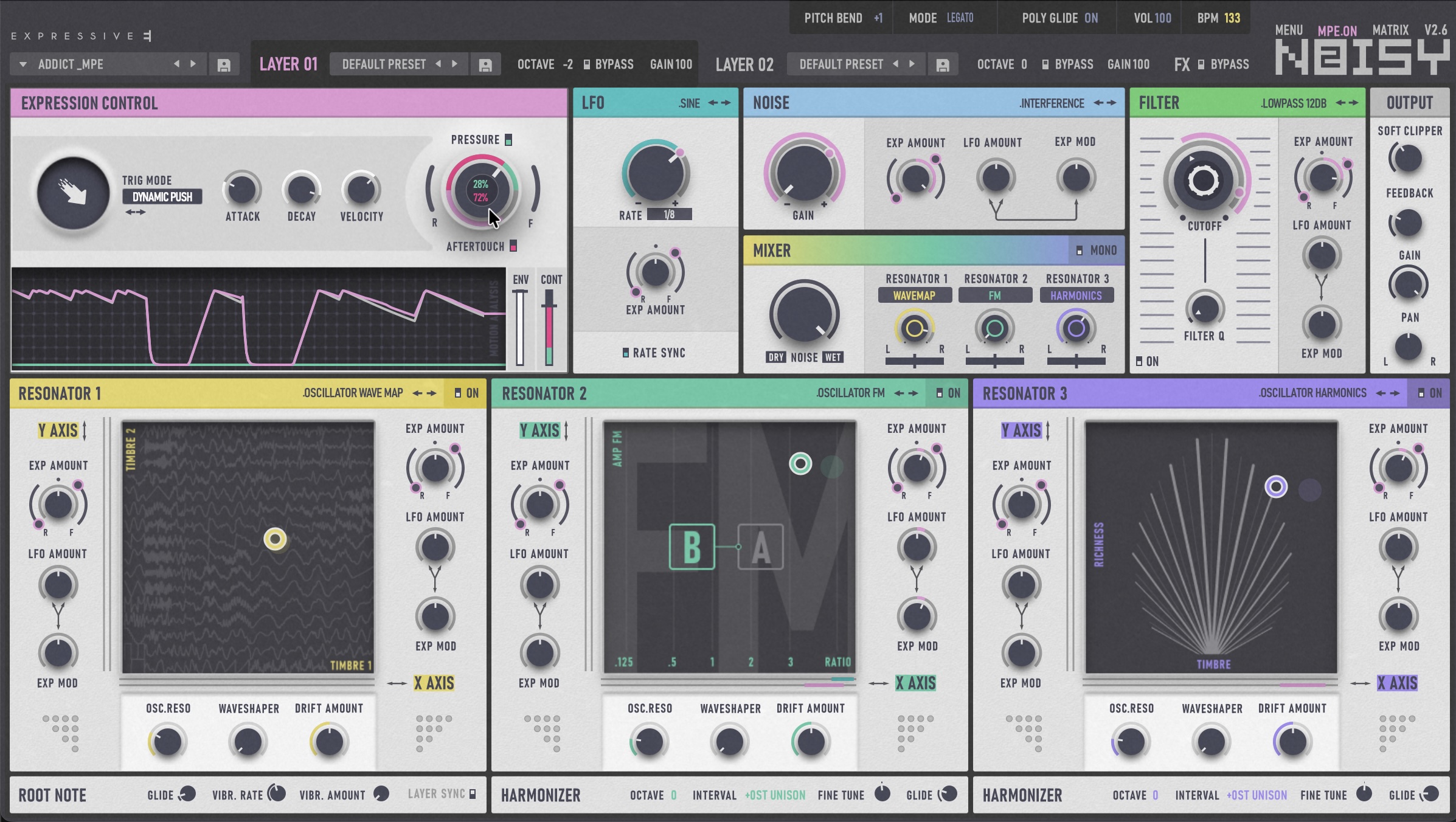
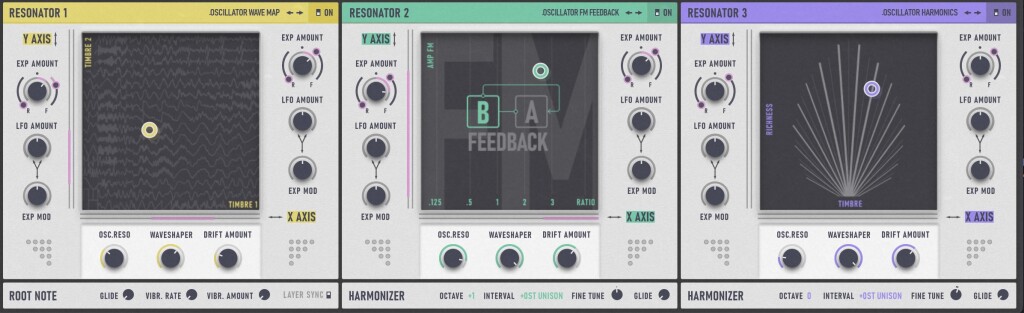
At the heart of Noisy’s sonic identity is its unique noise-to-resonator architecture. Version 2.6 significantly broadens the sonic territory accessible through this concept by introducing new resonator modes, each powered by distinct underlying synthesis engines. These additions include:
- Analog Unison: This engine allows for the creation of rich, thick, and harmonically complex sounds reminiscent of classic analog synthesizers. The unison feature provides the ability to layer multiple voices, adding a substantial and powerful character to the sound.
- FM and FM Feedback: The introduction of Frequency Modulation (FM) synthesis opens up a vast landscape of metallic, bell-like, and percussive timbres. The inclusion of FM feedback further enhances this by allowing the modulated signal to feed back into itself, creating complex and often unpredictable harmonic interactions.
- Harmonics: This engine focuses on the precise manipulation of harmonic content, allowing for the sculpting of pure, resonant tones. It offers granular control over the overtone series, enabling the creation of sounds with exceptional clarity and depth.
- Wave Map (Morphing Wavetable): This addition brings the power of wavetable synthesis to Noisy’s resonator system. Users can import or utilize built-in wavetables and morph between them, creating dynamic and evolving timbres that can range from smooth and ethereal to gritty and aggressive.
While the terminology of "resonators" applied to these synthesis engines might initially seem unconventional, it speaks to Noisy’s core design principle. The fundamental process involves feeding a noise source – whether it’s white noise, filtered noise, or more complex generated sounds – into these various synthesis engines, which then shape and color that noise into a coherent musical sound. This approach allows for an unexpected fusion of physical modeling sensibilities with traditional synthesis techniques, resulting in sounds that can possess an organic, fuzzy, or glossy character, depending on the chosen resonator and the nature of the input noise. Turning off the effects and isolating the resonator output reveals the raw power and unique personality of these engines, demonstrating that even with just noise as an input, a remarkable range of timbres can be achieved.
A Broader Spectrum of Noise Sources
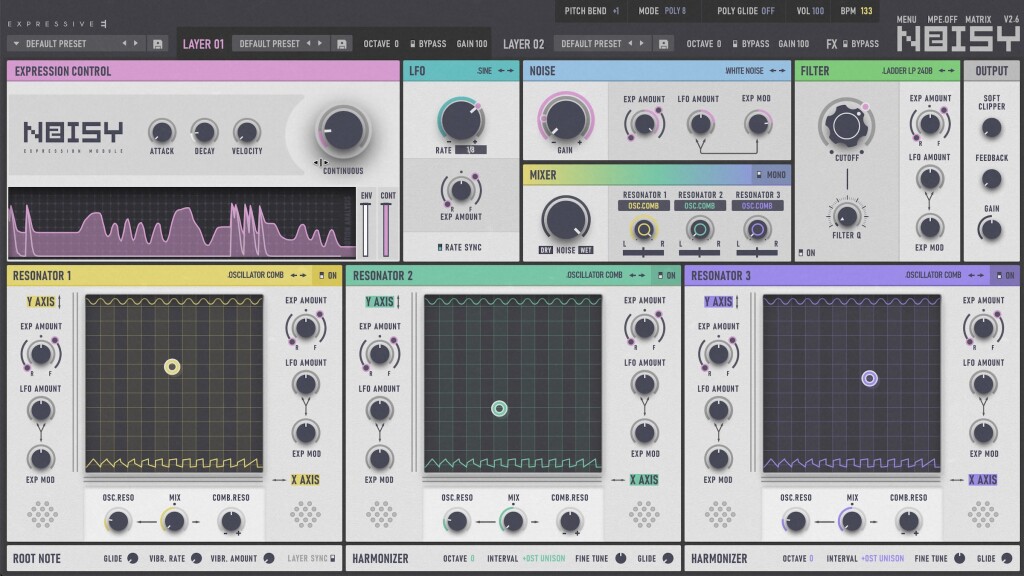
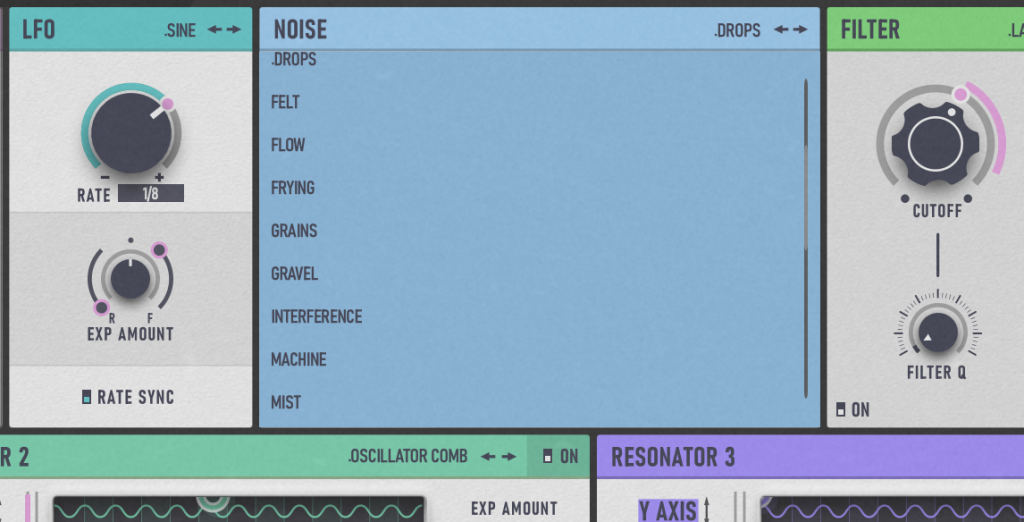
Complementing the expanded resonator capabilities, Noisy 2.6 introduces five new noise sources. These additions move beyond basic noise generation to include more nuanced and creative options. The new sources encompass:
- Basic Noise Types: These likely include standard white, pink, and brown noise, forming the foundational palette for many synthesis tasks.
- Creative and Naturalistic Sounds: This category suggests the inclusion of noise sources derived from more organic or processed origins, potentially including field recordings or synthesized textures that mimic natural phenomena. These could be crucial for crafting atmospheric pads, gritty textures, or unique percussive elements.
- Field Recording Inspired Sources: The explicit mention of field recordings hints at the ability to generate sounds that are inherently textured and evocative, drawing inspiration from the sonic environment. This can add a layer of realism or unique character to synthesized sounds.
This expansion of noise sources provides a richer palette for users to experiment with, offering a wider range of starting points for sound design. A subtle but significant feature request from users might involve the implementation of "columns" for organizing these numerous noise sources, facilitating quicker selection and recall.
Enhanced Modulation and Effects
Beyond the core synthesis engines, Noisy 2.6 also introduces enhancements to its modulation capabilities and effects processing:
- New LFO Shape: The addition of a new Low-Frequency Oscillator (LFO) shape provides an additional tool for creating rhythmic and dynamic movement within sounds. LFOs are fundamental to adding life and evolution to synth patches, and a new shape can unlock fresh modulation possibilities.
- Nine New Effects: The update includes a substantial suite of nine new effects, expanding Noisy’s ability to further sculpt and enhance its sounds. While Expressive E has not explicitly detailed which effects are entirely new versus updated, the overall complement of effects is robust. These include staple effects like plate reverb and stereo delay, alongside more specialized options. The software offers two effect slots, each capable of hosting a wide array of processors categorized under amp & color, ambiance, filter, and modulation. This allows for complex signal chains and intricate sound shaping. Furthermore, two additional effects macros provide macro-level control over effect parameters, enabling dynamic shifts and performance-oriented manipulation.
The ability to disengage effects and focus on the raw output of the synth engine is a valuable diagnostic tool, allowing users to fully appreciate the character of the synthesis itself before adding artificial spatialization or timbral manipulation. This "turn off the effects and see if you’re still feeling it" test is a hallmark of well-designed synthesizers, and Noisy 2.6 appears to pass this crucial benchmark.
Expression as a Central Tenet
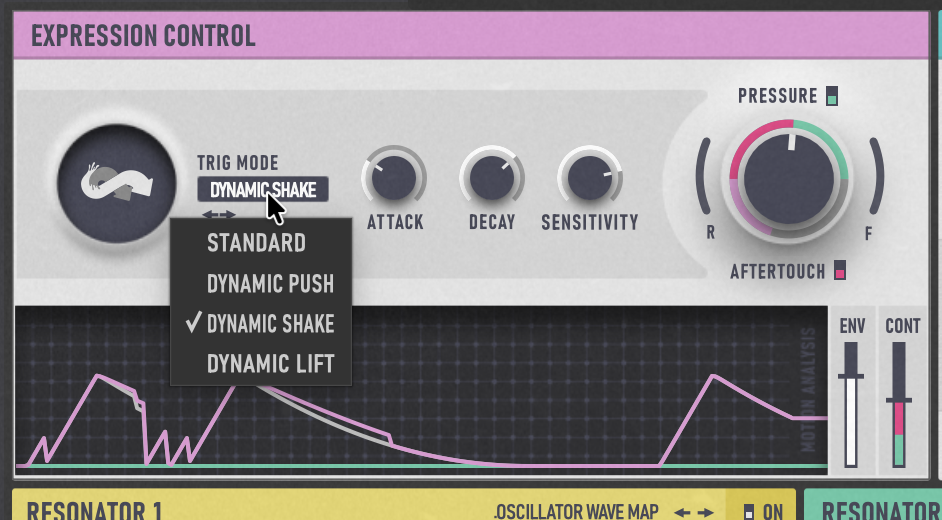
A defining characteristic of Noisy, and a core philosophy shared with Expressive E’s hardware, is its unwavering focus on expression control. This is evident from the ground up, with expression being accessible from virtually every module within the software. The dedicated Expression Control section is particularly noteworthy, offering intuitive mapping of gestures as triggers. This includes actions like push, shake, and lift, which are ideally suited for Expressive E’s Touché controller and the Osmose/Osmose CE.
However, the utility of Noisy’s expression mapping extends far beyond Expressive E’s proprietary hardware. The software seamlessly integrates with MPE controllers, allowing for nuanced control over parameters like envelope stages, pressure, and aftertouch. Even with conventional MIDI controllers, Noisy offers a compelling experience, providing options for polyphonic triggering on various synthesizers. The interface features intuitive controls for polyphony (1-8 voices), poly glide, and MPE enablement, making it adaptable to a wide range of setups. This flexibility was highlighted by the reviewer’s positive experience using Noisy with an Ableton Move controller when away from an Osmose, underscoring its versatility.
A Harmonious Integration with Expressive E’s Ecosystem
The release of Noisy 2.6 arrives at an opportune moment, aligning perfectly with the growing availability and adoption of Expressive E’s Osmose and Osmose CE. The Osmose, with its innovative keyboard that translates playing gestures into detailed MIDI CC data, has redefined the possibilities of expressive keyboard performance. Noisy 2.6, with its deep integration of these expressive parameters, serves as a natural sonic partner, allowing users to translate the nuanced control offered by the Osmose into a vast array of compelling sounds. The Osmose CE, a controller-only version, further benefits from Noisy, offering a powerful software-based synthesis engine that leverages its MPE capabilities.
The synergy between Expressive E’s hardware and software development is a strategic advantage, creating a cohesive ecosystem for musicians seeking to explore the frontiers of sonic expression. Noisy 2.6 not only enhances this ecosystem but also stands as a powerful standalone virtual instrument, capable of enriching any digital audio workstation.
Broader Impact and Accessibility
The implications of Noisy 2.6 extend beyond its technical specifications. The update democratizes access to sophisticated sound design and expressive control, making it attainable for a wider range of musicians, from seasoned professionals to those just beginning their journey into synthesis. The software’s intuitive, color-coded one-screen layout (with an additional screen for effects) contributes to its user-friendliness, reducing the learning curve often associated with complex synthesizers.
The fact that the 2.6 update is free for existing v2 users is a significant gesture, demonstrating Expressive E’s commitment to its user base. For new users, Noisy is available for purchase, and its current sale at Plugin Boutique makes it an attractive proposition. The software is compatible with both macOS and Windows, ensuring broad accessibility within the industry.
Analysis of Implications
Noisy 2.6’s release signifies a strategic move by Expressive E to solidify its position in the high-end synthesizer market, particularly within the growing MPE ecosystem. By expanding the sonic capabilities of Noisy, they are not only providing a compelling software instrument but also indirectly promoting the adoption and understanding of expressive control technologies.
The success of the Osmose has paved the way for a greater appreciation of nuanced performance. Noisy 2.6 capitalizes on this momentum by offering a software solution that can deliver similarly expressive results. The blend of familiar synthesis techniques (analog, FM, wavetable) with the unique noise-to-resonator concept creates a distinct sonic identity, setting it apart from more conventional synthesizers. This uniqueness is likely to attract sound designers and composers looking for fresh sonic textures and innovative ways to control them.
The inclusion of advanced synthesis types like Analog Unison and FM within the resonator framework is a particularly interesting development. It suggests a sophisticated understanding of how different synthesis paradigms can be integrated to produce novel sonic outcomes. This approach challenges traditional categorizations and opens up new avenues for sonic exploration.
Conclusion: A Must-Have for the Expressive Musician
In conclusion, Expressive E Noisy 2.6 is a significant and highly recommended update that vastly expands the software’s sonic capabilities and reinforces its core commitment to expressive control. The introduction of new resonators powered by advanced synthesis engines, coupled with an expanded palette of noise sources and effects, transforms Noisy into an even more versatile and powerful creative tool. Its intuitive design and seamless integration with MPE controllers, particularly Expressive E’s own Osmose and Osmose CE, make it an indispensable instrument for musicians who prioritize nuanced performance and dynamic sonic shaping. Whether used as a standalone synthesizer or as a complement to Expressive E’s hardware, Noisy 2.6 represents a compelling evolution in the pursuit of truly expressive digital sound.