The modern music industry is undergoing a seismic, algorithm-driven transformation where the boundary between organic human fandom and manufactured digital engagement has become almost entirely imperceptible. Behind the pristine social media feeds, viral TikTok sounds, and seemingly grassroots fan pages of today’s biggest pop stars and hip-hop icons lies an industrialized, highly sophisticated marketing apparatus. Major record labels—including Universal Music Group, Warner Music Group, and Sony Music—are increasingly deploying artificial intelligence, automated clipping networks, burner accounts, and phone farms to secure coveted real estate on social media feeds worldwide.
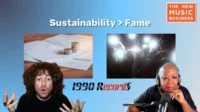
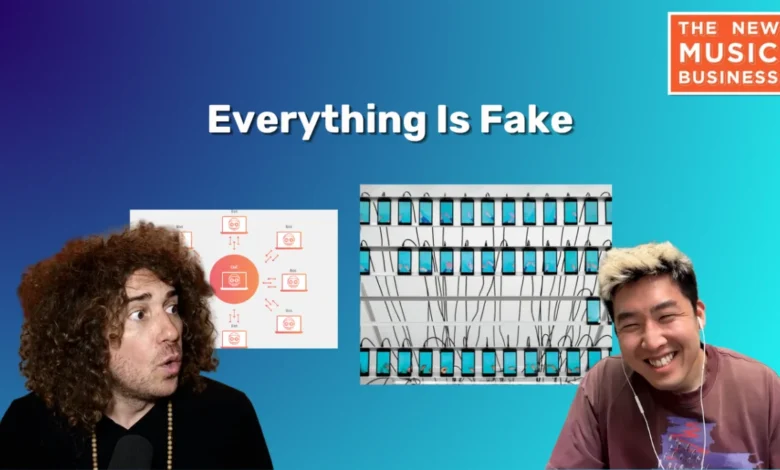
This behind-the-scenes reality was recently laid bare on an episode of the New Music Business podcast, hosted by industry educator Ari Herstand. Herstand sat down with Joe Lim, the founder and CEO of Floodify, a cutting-edge marketing technology firm that has distributed over two million short-term promotional videos for the major label triad. Lim’s insights pull back the curtain on a multibillion-dollar machine that operates at a scale most everyday music consumers cannot fathom, raising profound questions about authenticity, the ethics of modern promotion, and the realization of the ominous "Dead Internet Theory."
The State of Modern Music Marketing: Playing Catch-Up
For decades, the music business relied on traditional gatekeepers—radio programmers, print journalists, and MTV executives—to dictate which songs reached the masses. When the digital revolution disrupted physical sales, the industry spent years fumbling through the transition to streaming, often lagging behind other consumer sectors like e-commerce, gaming, and fast-moving consumer goods in adopting data-backed digital marketing.
According to Lim, the music industry has historically been slow to innovate because creative executives have traditionally prioritized artistic intuition over hard data science. While direct-to-consumer brands and tech startups were aggressively optimizing ad spend, utilizing programmatic networks, and building automated distribution loops years ago, major labels relied heavily on conventional influencer partnerships and playlist placement.
However, the explosive rise of short-form video platforms like TikTok, Instagram Reels, and YouTube Shorts forced a rapid evolution. Today, attention is the ultimate currency, and capturing it requires absolute saturation. Major labels have realized that waiting for organic virality is a losing game; instead, they manufacture the conditions for virality through engineered scale. This shift has elevated specialized tech companies like Floodify, which bridge the gap between algorithmic distribution demands and major label marketing budgets.
Anatomy of an Industrialized Campaign: Burners, Fan Pages, and Clipping
To understand how modern hits are manufactured on social media, one must look closely at the mechanics of clipping networks, fan pages, and burner accounts. In the contemporary digital ecosystem, a single artist profile is no longer enough to dominate the conversation. Instead, labels and marketing agencies deploy thousands of interconnected secondary accounts.
Burner accounts are anonymous or pseudonymous profiles created specifically to push promotional content without directly tying it back to the artist or the label. Fan pages, which often appear to be run by devoted, passionate teenagers in their bedrooms, are frequently seeded, subsidized, or entirely operated by marketing contractors. These pages post relentless streams of content featuring an artist’s unreleased tracks, lyrical snippets, or concert footage.
Clipping takes this a step further. It involves taking long-form interviews, podcast appearances, live streams, or music videos and slicing them into hundreds of punchy, high-retention 5-to-15-second clips. These clips are designed to trigger specific emotional responses, fuel memes, or highlight catchy hooks. Through commercialized clipping platforms—such as WHOP and similar peer-to-peer task networks—marketers crowdsource this labor. Freelancers and digital entrepreneurs are incentivized with financial payouts to download, edit, and cross-post promotional video snippets across hundreds of accounts simultaneously, creating the illusion of a massive, organic grassroots movement.
Scaling Up: Phone Farms, Bots, and Automated Distribution
When scaling a digital campaign to promote a global album release, human labor alone cannot achieve the necessary volume. This reality has driven some corners of the digital marketing underworld—and adjacent gray-market operations—to utilize phone farms and automated bot networks.
A phone farm typically consists of physical racks containing dozens or even hundreds of smartphones connected to automated software scripts. These devices are programmed to scroll feeds, like content, leave contextual comments, and artificially inflate engagement metrics. While major labels maintain strict compliance guidelines regarding artificial streaming and fraudulent bot traffic on DSPs (Digital Service Providers like Spotify and Apple Music), the social media marketing tier often flirts with the absolute limits of platform terms of service.
Comment farming, in particular, has become an art form. Bots and automated accounts are deployed to populate comment sections with targeted, conversational prompts, fan debates, or lyrics. This tricks real users into engaging with the post, signaling to platform algorithms that the content is sparking a high-velocity cultural conversation. Consequently, the algorithm pushes the video to broader "For You" pages, converting synthetic engagement into genuine, organic reach.
The Role of Artificial Intelligence in Finding and Generating Viral Content
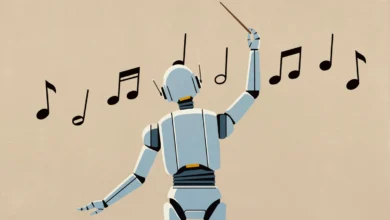
Artificial intelligence has fundamentally altered how marketers identify trends and produce promotional assets. Rather than relying on human editors to manually comb through hours of footage to find potential viral moments, modern music marketers use AI-driven video analysis tools.
These algorithms scan long-form artist content, evaluating facial expressions, vocal inflections, pacing, and historical platform data to predict which specific micro-moments have the highest probability of performing well on TikTok or Instagram. Once identified, AI tools can automatically reframe the video for vertical aspect ratios, generate dynamic captions, add engaging visual effects, and even synthesize alternative versions of the audio track optimized for short-form retention.
Furthermore, generative AI is increasingly utilized to scale content creation. While copyright and legal hurdles still surround AI-generated vocal cloning and music composition, marketers face fewer restrictions when using AI to generate visual backdrops, lyric animations, and synthetic influencer avatars. These digital assets can be churned out at a fraction of the cost and time required for traditional video production, allowing labels to test dozens of creative concepts concurrently before allocating major ad budgets to the winning variants.
The Dead Internet Theory Realized in Music Promotion
The widespread deployment of bots, AI-generated content, automated comment farms, and synthetic fan accounts brings a chilling modern reality closer to home: the "Dead Internet Theory." This internet subculture hypothesis posits that the vast majority of online traffic and content interaction is no longer generated by real human beings, but by automated bots interacting with other bots, orchestrated by corporate or state entities to manufacture consensus.
In the context of the music industry, this theory is no longer a fringe conspiracy—it is an active commercial strategy. When an artist’s new single drops, a significant percentage of the initial likes, comments, retweets, and video clips may be generated by non-human actors.
This creates a surreal feedback loop. Real fans log onto social media, encounter an artificial wave of enthusiasm engineered by Floodify or similar marketing engines, and assume the track is a massive cultural phenomenon. Driven by the psychological impulse of the bandwagon effect, these real users then join in, creating genuine viral momentum out of synthetic beginnings. It begs a profound philosophical question: if an artificial spark ignites a very real, human fire, does the artificiality matter?
What Independent Artists Can Learn From Label Strategies
While independent artists often look at the million-dollar marketing budgets and massive technical infrastructures of Universal, Warner, and Sony with a sense of resignation, industry experts argue that there are vital lessons to be learned from these enterprise-level tactics.
Independent creators do not need phone farms or massive ad budgets to adopt the core principles of modern music marketing: scale, consistency, and systematic repurposing.
- Embrace Systematic Clipping: Independent artists should view every piece of content they create—studio sessions, rehearsal footage, casual smartphone rants, and live performances—as raw material. By breaking long-form content down into dozens of micro-clips, artists can maintain a relentless daily posting schedule across multiple platforms.
- Build a Network of Supporters: Instead of relying solely on their own personal profiles, indies can mobilize their existing fan bases to act as clipping networks, offering exclusive unreleased tracks, merch, or direct access in exchange for community-driven promotion.
- Understand Algorithmic Literacy: Success on modern platforms requires treating the algorithm not as an adversary, but as a distribution partner. Creators must study retention curves, hook placement, and trending formats to ensure their music has the best possible chance of capturing fleeting digital attention.
Is Authenticity Dead? Playing the Game to Make a Career
The ultimate tension in the modern music business centers on the paradox of authenticity. Music has historically been celebrated as the purest expression of human emotion, vulnerability, and lived experience. Yet, the machinery required to break a contemporary artist into the mainstream relies heavily on artifice, manipulation, automation, and algorithmic engineering.
As Joe Lim noted during his discussion with Ari Herstand, artists and marketers alike face a stark choice: maintain absolute ideological purity and risk remaining completely unheard in an oversaturated digital landscape, or understand the rules of the modern game, play them strategically, and build a sustainable career.
For upcoming musicians, the takeaway is pragmatic rather than cynical. The democratization of music production and distribution means that millions of tracks are uploaded to streaming services every single week. In such a hyper-competitive environment, great music alone is rarely enough to guarantee discovery. Navigating the new music business demands a dual approach: maintaining genuine artistic integrity in the studio, while deploying calculated, data-driven, and technologically advanced marketing tactics in the digital marketplace. As major labels continue to refine their use of AI, burner networks, and automated scaling, the ability to navigate this synthetic wilderness will ultimately define who survives and thrives in the future of the music industry.