PREVIEW | Composer & Conductor Tomer Adaddi Conducts From Jerusalem To Toronto: A Symphonic Journey Featuring Cantor Chaim Stern


The program is curated to bridge the gap between sacred liturgy and secular brilliance, offering a diverse repertoire that includes traditional cantorial masterpieces (chazzanut), beloved Broadway showtunes, and international classics. This symphonic fusion is intended to showcase the versatility of the cantorial voice while celebrating the global nature of Jewish musical heritage.
The Artistic Vision and Featured Performers
At the center of the gala is Cantor Chaim Stern, a tenor whose vocal prowess is matched by his deep roots in Jewish musical tradition. Born into a multigenerational cantorial family in Jerusalem, Stern’s arrival in Toronto marks a new chapter for Beth Tzedec, a congregation known for its commitment to high-level musical liturgy. Stern’s performance will be bolstered by two distinguished guest soloists: Cantor Rachel Brook of Chicago’s Anshe Emet Synagogue and Cantor Gideon Zelermyer of Montreal’s Congregation Shaar Hashomayim.
The inclusion of Cantor Zelermyer is particularly noteworthy; his work with the late Leonard Cohen on the Grammy-winning album You Want It Darker brought the cantorial sound to a global mainstream audience. Meanwhile, Cantor Rachel Brook represents the vibrant contemporary cantorate in the United States, bringing a sophisticated blend of traditional soul and modern vocal technique. Together with Stern, these performers will explore the "Symphonic Journey" through trios and solo performances that highlight the emotional depth of the Jewish experience.
A Master at the Podium: Tomer Adaddi
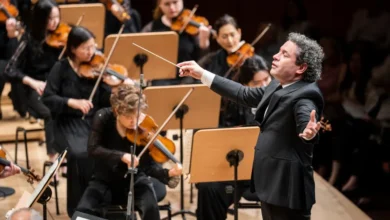
The orchestral component of the evening is overseen by Tomer Adaddi, a multiple-award-winning composer and conductor whose career spans the worlds of pop, classical, and liturgical music. Adaddi’s presence at the podium ensures a high degree of technical precision and emotional resonance. Known for his collaborations with global icons such as Andrea Bocelli, Michael Bublé, and the operatic trio Il Volo, Adaddi brings a "crossover" sensibility to the gala.
Adaddi’s credentials include guest conducting for the Israel Philharmonic Orchestra and the Jerusalem Symphony. His compositional work is equally lauded; in 2010, his song "Milim" (Words) represented Israel at the Eurovision Song Contest, performed by Harel Skaat. His ability to arrange complex symphonic scores for cantorial voices is a cornerstone of the June 2 event, as he seeks to elevate traditional melodies into the realm of grand orchestral performance.
The Historical and Cultural Context of Chazzanut
To understand the significance of "From Jerusalem To Toronto," one must look at the history of the cantorial tradition, or chazzanut. Historically, the cantor (hazzan) is the designated messenger of the community (shaliach tzibbur), tasked with leading the congregation in prayer and chanting sacred texts. This tradition is not merely about vocal performance; it is viewed as a spiritual bridge between the earthly and the divine.

The "Golden Age of Chazzanut," which flourished in the early 20th century, saw cantors like Yossele Rosenblatt and Mordechai Hershman become international celebrities. During this era, cantorial music incorporated European operatic techniques, including virtuosic coloratura and dramatic Italianate phrasing, while maintaining the specific melodic modes (nusach) of Jewish prayer. This period saw cantors filling major concert halls across Europe and the Americas, effectively turning the synagogue’s liturgical music into a respected art form on the world stage.
Cantor Chaim Stern is a modern torchbearer of this legacy. By blending the rigorous discipline of classical chazzanut with contemporary Jewish soul, Hasidic, and Klezmer traditions, Stern revitalizes an ancient art for a 21st-century audience. His training at the Petah Tikvah Cantorial School in Israel provided the foundation for this synthesis, allowing him to navigate the complexities of operatic literature alongside the soulful improvisations inherent in Jewish prayer.
Cantor Chaim Stern’s Path to Toronto
The "Jerusalem to Toronto" theme is a literal reflection of Stern’s career trajectory. After establishing himself in Israel, where he performed with the Jerusalem Symphony and the Israeli Chamber Orchestra, Stern moved to Europe. From 2020 to 2025, he served as the Chief Cantor of the Great Synagogue of Munich. His tenure in Germany was marked by a period of cultural rebuilding and the promotion of Jewish music in venues like the Prinzregententheater and the Munich Jewish Chamber Orchestra.
Stern’s decision to move to Toronto and join the Beth Tzedec Congregation is seen as a major acquisition for the city’s Jewish community. Toronto is home to one of the most active and culturally diverse Jewish populations in the world, and Beth Tzedec, as Canada’s largest Conservative synagogue, has a long history of fostering musical excellence. The gala concert serves as a public introduction, allowing the congregation and the city to witness the "symphonic journey" that brought Stern to this new stage.
The Role of Beth Tzedec in the Toronto Arts Scene
Beth Tzedec Congregation, located on Bathurst Street, has long functioned as more than a house of worship; it is a vital cultural hub. The institution has hosted numerous high-profile concerts, lectures, and community events, often serving as a bridge between different denominations and cultural groups. By hosting a 28-piece orchestra and international soloists, the congregation reinforces its role as a patron of the arts.
The gala concert is also a testament to the Hennick Family’s support, whose endowment of the Senior Cantor position ensures that the musical traditions of the synagogue are preserved and elevated. In an era where many religious institutions are scaling back their musical programs, Beth Tzedec’s investment in a full symphonic gala highlights a commitment to cultural vitality.
Technical Aspects of the Symphonic Program
The 28-piece orchestra featured in the gala is a significant technical undertaking. Cantorial music is traditionally performed either a cappella or with piano/organ accompaniment. Expanding these melodies to a full orchestral scale requires sophisticated orchestration that does not overwhelm the nuances of the cantor’s voice. Tomer Adaddi’s expertise in this area is crucial. The arrangements will likely utilize the strings to provide the "weeping" quality often associated with Jewish soul music, while the brass and woodwinds will add a cinematic grandeur to the Broadway and international selections.
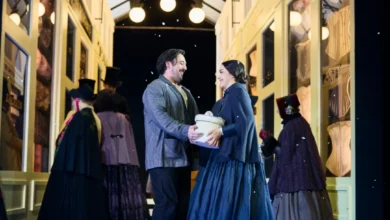
The program’s inclusion of Broadway hits is a nod to the historical overlap between Jewish cantors and the American musical theater. Many of the 20th century’s greatest composers and performers had roots in the cantorate or were the children of cantors. By performing these works alongside liturgical pieces, Stern and his guests acknowledge the profound influence of Jewish melody on the "Great American Songbook."
Analysis of Implications for the Community
The "From Jerusalem To Toronto" concert arrives at a time when the preservation of cultural heritage is increasingly prioritized by community leaders. For the Toronto Jewish community, the event is a celebration of resilience and continuity. It signals that traditional forms of expression, such as chazzanut, remain relevant and can be successfully integrated with modern symphonic standards.
Furthermore, the collaboration between cantors from Toronto, Montreal, and Chicago fosters a sense of North American Jewish unity. It highlights a shared artistic language that transcends borders. For the broader Toronto public, the gala offers an opportunity to experience a high-caliber musical performance that explores themes of migration, identity, and spiritual longing—themes that resonate with many in a city built on the stories of newcomers.
Summary of the Event Chronology
The planning for this gala began shortly after Cantor Stern’s appointment was announced, with the goal of creating a "welcome" event that reflected his international stature. The timeline of the event’s development reflects a meticulous attention to detail:
- Late 2024: Appointment of Cantor Chaim Stern as the Hennick Family Senior Cantor.
- Early 2025: Conceptualization of the "Symphonic Journey" theme by the Beth Tzedec arts committee.
- Spring 2025: Recruitment of Tomer Adaddi as conductor and the selection of guest soloists from Chicago and Montreal.
- June 2, 2025: The gala performance at Beth Tzedec, featuring the 28-piece orchestra.
As the date approaches, the anticipation within the classical and liturgical music communities continues to grow. The concert is expected to draw a capacity crowd, including dignitaries, musicians, and members of the public interested in the unique intersection of symphonic music and Jewish tradition.
Conclusion
From Jerusalem To Toronto: A Symphonic Journey is more than a mere recital; it is a statement of cultural intent. It showcases the evolution of Cantor Chaim Stern from a student in Jerusalem to a chief cantor in Munich, and finally to a leader in the Toronto community. Through the expert guidance of Tomer Adaddi and the support of Beth Tzedec, the gala promises to be a definitive moment in the city’s 2025 cultural calendar, proving that the ancient art of the cantor still possesses the power to inspire and unite in a modern, symphonic context.