The High-Stakes Clash Over Free Speech, Billionaire Venue Control, and the Ed Sheeran Tour Boycott Controversy

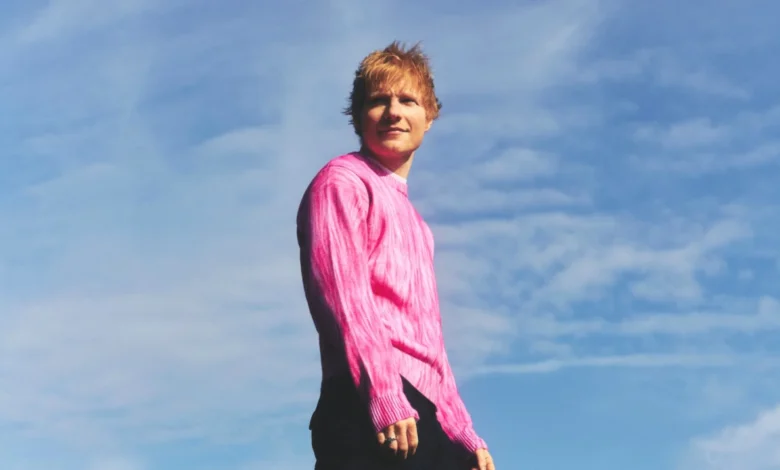
The global music community finds itself deeply embroiled in a contentious debate surrounding censorship, corporate power, and artistic freedom following the abrupt removal of rapper Macklemore from Ed Sheeran’s ongoing United States tour. The controversy, which erupted after venue owners objected to Macklemore’s vocal on-stage support for Palestine, has triggered a broader reckoning regarding who truly controls major cultural platforms. While Ed Sheeran has faced fierce public backlash for failing to safeguard his support act, political figures, industry insiders, and fellow artists are increasingly arguing that the incident highlights a far more alarming structural issue: the unchecked influence of billionaire venue owners over public discourse.
The Genesis of the Tour Controversy
The roots of the dispute trace back to earlier this month during Ed Sheeran’s high-profile US stadium tour. Macklemore, performing as a supporting act, utilized his platform during at least two separate concert appearances to deliver brief, passionate speeches expressing solidarity with Palestine. These on-stage remarks immediately drew intense scrutiny and organized opposition.
Shortly after the performances, the Israeli American Council launched a formal petition demanding Macklemore’s immediate removal from the remainder of the tour lineup. However, the decisive pressure materialized behind closed doors, spearheaded by billionaire businessman Robert Kraft. As the owner of one of the major stadiums scheduled to host Sheeran’s tour later in the month, Kraft—a prominent and vocal supporter of Israel—issued an ultimatum. He reportedly threatened to cancel Sheeran’s scheduled performances at his venue unless Macklemore was dropped from the bill. Furthermore, Kraft allegedly lobbied fellow stadium owners and venue executives to adopt the same hardline stance, creating a cascading logistical threat for the tour promoters.
Faced with the prospect of multiple stadium cancellations, the Messina Touring Group—Ed Sheeran’s US tour promoter—ultimately capitulated to Kraft’s demands. On Monday, Macklemore officially confirmed that he had been cut from eight upcoming tour dates.
Chronology of Key Events
Early September: Macklemore joins Ed Sheeran’s US tour as a supporting act, performing at initial venues.
Mid-September: During concert stops, Macklemore delivers brief on-stage speeches supporting Palestine.
Mid-September: The Israeli American Council launches a public petition demanding the rapper’s removal from the tour.
Days Following: Billionaire stadium owner Robert Kraft directly intervenes, threatening to pull Sheeran’s shows and lobbying other venue owners to do the same.
Monday: Macklemore publicly confirms his removal from eight upcoming tour dates, triggering widespread industry and public debate.
Subsequent Days: In solidarity with Macklemore, other supporting acts withdraw from the tour, while critics and defenders clash online regarding Ed Sheeran’s response and the broader implications for free expression.
The Fallout and Ed Sheeran’s Response
As news of Macklemore’s exclusion spread, public and industry criticism fell heavily on Ed Sheeran. Critics argued that as a globally dominant headliner with immense commercial leverage, Sheeran should have stood by his support act, forcing promoters and venue owners to back down from their ultimatums.
In an official statement addressing the controversy, Sheeran clarified that the final decision to remove Macklemore rested with the Messina Touring Group rather than himself personally. While reports indicated that Sheeran had engaged in direct conversations with Kraft, the artist chose not to walk away from the tour. Critics contend that had Sheeran simply refused to perform without Macklemore, the tour promoters would have been compelled to test whether venue owners were willing to absorb the immense financial and public relations fallout of canceling a major stadium tour.
The situation was further exacerbated when several of Sheeran’s other supporting acts pulled out of the tour in solidarity with Macklemore. This left the headliner facing intensifying calls from activists and fans to cancel the remainder of the tour entirely.
Financial, Legal, and Logistical Realities
The debate over whether Sheeran should have unilaterally canceled his tour brings to light the complex commercial mechanics of modern live entertainment. Concert tours of this magnitude operate under intricate webs of contracts involving artists, promoters, stadium owners, ticketing agencies, sponsors, and insurance underwriters.
Industry experts and artists have weighed in on the profound commercial hurdles inherent in such a drastic move. Speaking to Channel 4 News, outspoken British singer and Palestinian advocate Paloma Faith addressed the dilemma, noting the severe financial unknowns involved.
“Ideologically, I think that would be the right thing to do, but I don’t know what the implications of that would be financially to his team or whether it could bankrupt him,” Faith remarked. She added that insurance considerations complicate matters further, stating, “I don’t know if he can [cancel the shows] insurance-wise—I don’t know the small print of that, it’s much more nuanced in a legal sense.”
Determining liability in the event of a tour cancellation driven by political disputes remains legally opaque. Contracts typically govern performance obligations, force majeure clauses, and breach terms, but rarely account for ideological vetoes exercised by venue proprietors. Consequently, an artist attempting to take a principled stand against censorship risks catastrophic personal and professional financial liabilities, including multi-million-dollar lawsuits from promoters and corporate partners.
Political and Institutional Perspectives
Beyond the music industry, the controversy has drawn commentary from prominent political figures who view the incident as a dangerous precedent for free speech in the United States.
US Representative Alexandria Ocasio-Cortez spoke out on the matter, framing the dispute as a symptom of a larger systemic problem regarding elite control over public spaces. “This is not just about one music artist, or two music artists, this is about how a handful of stadium owners and the elite can prevent an entire massive issue from being discussed,” Ocasio-Cortez told TMZ.
“In this case, the issue is the genocide in Gaza,” she continued, emphasizing that the danger extends far beyond foreign policy debates. “It doesn’t stop there, it could be speaking out about AI, it could be speaking about any issue.” The congresswoman expressed deep concern that “just a handful of stadium owners can ensure an entire person’s career can be jeopardized if they speak out about any issue.”
A Broader Industry Debate: Directing Anger Upward
While public discourse has largely concentrated on scrutinizing Ed Sheeran’s personal decisions, many veteran music executives and industry insiders argue that the online outrage is misdirected. They emphasize that focusing solely on pop stars deflects attention from the systemic vulnerabilities that allow corporate and billionaire interests to police cultural expression.
Music industry executive Sammy Andrews addressed this dynamic in a widely shared social media post, defending Sheeran’s extensive philanthropic history while refocusing attention on the structural power dynamics at play. Noting Sheeran’s decades of support for numerous charitable causes, Andrews argued that the controversy transcends any single artist or concert.
“If Kraft and the people behind him can force this, they can silence whatever they choose next,” Andrews wrote. “Women’s rights, anti-ICE voices, ANY speech they don’t want on their stages. But none of you are posting about that, right??? Instead, you’re all taking swipes at someone who has given SO much to so many causes.”
Urging critics to realign their focus, Andrews added, “Point your anger UP, not sideways, at the billionaires deciding who gets a stage, not the artist they turned into the story so you’d stop looking at them. Channel that venom at the powers that be. Write to your MP. Post about what’s happening in Gaza. Refuse to attend shows in venues that censor what’s said on their stages. Refuse to buy the brands funding genocide.”
The Evolving Intersection of Pop Culture and Politics
The Ed Sheeran tour controversy underscores a permanent shift in the modern entertainment landscape: the increasing difficulty for mainstream musicians to maintain a strictly apolitical stance. As audiences demand social accountability and ideological alignment from artists, creators frequently find themselves caught between their personal convictions, their professional obligations, and the commercial gatekeepers who control global infrastructure.
As the debate continues to unfold, industry analysts suggest that the long-term implications will extend well beyond the current US tour. The fundamental question of how artists, promoters, and audiences can protect freedom of expression within privately owned, corporate-controlled venues remains unresolved. Whether this high-profile clash serves as a catalyst for institutional reform or simply highlights the vulnerability of artists in the face of billionaire influence will depend on how the music community chooses to organize and respond in the months and years to come.